AI News on June 29, 2026

AI-Berkshire: A Claude Code-Powered Framework for Value Investing Research and Multi-Agent Analysis
Open Source

AI-Berkshire: A Claude Code-Powered Framework for Value Investing Research and Multi-Agent Analysis

AI-Berkshire is an innovative open-source research framework designed to bring traditional value investing principles into the AI era. Built on the Claude Code platform, the project integrates the investment methodologies of four legendary figures: Warren Buffett, Charlie Munger, Duan Yongping, and Li Lu. By utilizing a multi-agent parallel research architecture and adversarial analysis, AI-Berkshire provides a structured environment for deep financial evaluation. This framework represents a significant step in merging qualitative investment wisdom with cutting-edge artificial intelligence, offering a systematic approach to identifying intrinsic value through automated, intelligent agents that simulate complex research workflows.

GitHub Trending
PPT Master: A New AI-Driven Tool for Generating Native and Fully Editable PowerPoint Presentations from Documents
Open Source

PPT Master: A New AI-Driven Tool for Generating Native and Fully Editable PowerPoint Presentations from Documents

PPT Master, a trending open-source project by Hugo He, introduces a significant advancement in AI-assisted productivity by enabling the generation of native, editable PowerPoint (.pptx) files from any document. Unlike traditional AI presentation tools that often produce static images or non-adjustable layouts, PPT Master focuses on creating presentations with native shapes, animations, and speaker notes. A key differentiator is its ability to adhere to user-provided .pptx templates, ensuring that the output aligns with specific branding and formatting requirements. Additionally, the tool supports voice narration for speaker notes, offering a comprehensive solution for automated presentation creation that remains flexible for manual refinement.

GitHub Trending
Google Labs Launches DESIGN.md: A New Specification for AI Agents to Master Visual Design Systems
Industry News

Google Labs Launches DESIGN.md: A New Specification for AI Agents to Master Visual Design Systems

Google Labs has introduced DESIGN.md, a specialized format specification designed to provide programming agents with a structured and persistent understanding of visual design systems. This initiative aims to bridge the gap between design concepts and automated code implementation, ensuring that AI agents can accurately interpret and apply visual recognition principles within a development environment. By offering a standardized way to describe design systems, DESIGN.md addresses the challenges of consistency and persistence in AI-driven software engineering, potentially transforming how automated tools interact with UI/UX requirements.

GitHub Trending
openpilot: The Robotics Operating System Upgrading Driver Assistance for Over 300 Car Models
Open Source

openpilot: The Robotics Operating System Upgrading Driver Assistance for Over 300 Car Models

openpilot, an innovative project developed by commaai, has emerged as a significant robotics operating system dedicated to the automotive sector. The system is specifically engineered to upgrade and enhance the driver assistance capabilities of modern vehicles. According to the latest project data, openpilot now supports more than 300 different car models, demonstrating a high level of versatility and technical compatibility across various automotive brands. By functioning as a foundational robotics OS, it provides a scalable framework for vehicle automation, allowing for sophisticated software-driven improvements to existing hardware. This milestone highlights the growing influence of open-source robotics in the evolution of advanced driver assistance systems (ADAS) and the broader movement toward software-defined vehicle technology.

GitHub Trending
Volkswagen Plans to Terminate Strategic $1.71 Billion Automated-Driving Technology Partnership with Bosch
Industry News

Volkswagen Plans to Terminate Strategic $1.71 Billion Automated-Driving Technology Partnership with Bosch

Volkswagen is reportedly moving to end its high-stakes partnership with Bosch, a collaboration focused on the development of automated-driving technology. Since the partnership's inception in 2022, Volkswagen has invested an estimated US$1.71 billion into this technological venture. This decision marks a significant conclusion to a multi-year effort aimed at advancing autonomous capabilities within the Volkswagen fleet. The move highlights the substantial financial resources—nearly two billion dollars—that have been dedicated to this specific AI-driven initiative over the past several years. As the deal comes to an end, the automotive industry observes a major shift in the collaborative landscape between leading vehicle manufacturers and primary technology suppliers. The termination of this billion-dollar agreement underscores the evolving nature of strategic investments in the automated driving sector.

Tech in Asia
DeepSeek Launches DSpark Framework to Accelerate AI Response Speeds by 85%
Product Launch

DeepSeek Launches DSpark Framework to Accelerate AI Response Speeds by 85%

DeepSeek has officially introduced DSpark, a cutting-edge framework designed to significantly enhance the performance of artificial intelligence models. By leveraging speculative decoding techniques, DSpark achieves a remarkable increase in response speeds, boosting efficiency by up to 85%. This development represents a major step forward in optimizing AI inference, allowing for faster interactions and improved user experiences. The framework focuses on reducing latency, a critical factor in the deployment of large-scale AI systems. As the demand for real-time AI capabilities grows, DeepSeek's DSpark provides a robust solution for developers looking to maximize the responsiveness of their models without sacrificing accuracy. This launch highlights the industry's shift toward efficiency-focused innovations in the generative AI space.

Tech in Asia
Nvidia Backs Firmus for Strategic Data Center Expansion in Indonesia's Batam Special Economic Zone
Industry News

Nvidia Backs Firmus for Strategic Data Center Expansion in Indonesia's Batam Special Economic Zone

Nvidia has announced its support for Firmus' planned data center project in Indonesia, marking a significant development in the region's technological infrastructure. The facility is strategically located in Batam, positioned just 20 kilometers from Singapore, which serves as a major global tech hub. This proximity allows the project to leverage the logistical advantages of Singapore while benefiting from the specific financial frameworks of Indonesia. Furthermore, the project is set to take advantage of various tax incentives offered within Batam's Special Economic Zone. This collaboration between Nvidia and Firmus highlights the growing importance of the Batam region as a secondary site for data infrastructure, driven by geographical convenience and favorable economic policies designed to attract high-tech investments.

Tech in Asia
Baidu's Chip Arm Kunlunxin Targets $50 Billion Valuation Amid Rising Adoption of P800 Chips
Industry News

Baidu's Chip Arm Kunlunxin Targets $50 Billion Valuation Amid Rising Adoption of P800 Chips

Kunlunxin, the specialized semiconductor division of Baidu, is reportedly seeking a valuation of $50 billion as it explores strategic opportunities in Hong Kong. This significant valuation target comes on the heels of the company's P800 chip gaining substantial traction within the domestic market. Specifically, the hardware is being increasingly integrated into data centers operated by Chinese state-owned enterprises. The move highlights Kunlunxin's growing role in the high-performance computing sector and its ability to secure large-scale deployments within critical infrastructure. As the company eyes a major financial milestone in Hong Kong, the success of the P800 chip serves as a primary driver for its market positioning and long-term valuation goals.

Tech in Asia
China’s Zhipu AI Releases GLM-5.2: Open-Weight Model Matches Mythos in Specialized Cybersecurity Tasks
Industry News

China’s Zhipu AI Releases GLM-5.2: Open-Weight Model Matches Mythos in Specialized Cybersecurity Tasks

Zhipu AI (Z.ai) has announced the release of GLM-5.2, a new open-weight model that marks a significant step forward for the Chinese AI industry. According to recent researcher claims, GLM-5.2 demonstrates capabilities on par with the Mythos model in specific technical domains, particularly cybersecurity and bug-finding scenarios. While the model is noted to lag behind industry leaders like OpenAI and Anthropic in general-purpose tasks, its specialized performance suggests that the technological gap between Chinese and Western AI models is narrowing rapidly. This release emphasizes a strategic focus on high-stakes technical applications and the continued importance of open-weight architectures in the global AI ecosystem, signaling a shift in the competitive landscape of specialized artificial intelligence.

The Verge
Suno Launches Spark Incubator Program to Support Independent Artists and Expand AI Music Ecosystem
Industry News

Suno Launches Spark Incubator Program to Support Independent Artists and Expand AI Music Ecosystem

Suno, the prominent AI music generation platform, has announced the launch of "Spark," a new incubator program specifically designed to support independent artists. This initiative signals a strategic shift for Suno as it aims to evolve from a tool for generating AI content into a legitimate streaming destination and a platform for breaking new talent. The Spark program is open to unsigned singers and songwriters, offering them a comprehensive support package that includes financial grants, professional mentorship, and marketing assistance. By investing directly in human creators, Suno seeks to distance itself from the perception of being a mere generator of "AI slop" and instead establish a robust ecosystem where independent artists can thrive alongside AI technology.

The Verge
Ford Rehires Veteran Engineers as AI Implementation Falls Short of Quality Expectations
Industry News

Ford Rehires Veteran Engineers as AI Implementation Falls Short of Quality Expectations

Ford Motor Company has initiated a strategic pivot by rehiring experienced "gray beard" engineers, following an admission that artificial intelligence alone failed to meet the company's high-quality product standards. The move comes after a period of heavy reliance on AI systems, which the company now acknowledges was a mistaken approach to achieving engineering excellence. By bringing back veteran experts, Ford aims to bridge the gap between automated processes and the nuanced, high-level oversight required for complex automotive manufacturing. This shift highlights a significant realization within the industry: while AI is a powerful tool, it cannot yet replace the deep institutional knowledge and problem-solving capabilities of seasoned human professionals.

TechCrunch AI
Industry News

Historical Memory Price Trends 1960-2026: Analyzing the Evolution of DRAM, NAND, and HBM Costs

A comprehensive new dataset from DAM Stanford University tracks the historical trajectory of memory and storage prices from 1960 through projected 2026. The data highlights the massive deflationary trends in DRAM and NAND flash while shedding light on the emerging costs of High Bandwidth Memory (HBM) used in AI accelerators. By integrating the classic McCallum dataset with modern retail and analyst estimates, the report provides a detailed breakdown of DRAM generations from SDRAM to DDR5 and HBM iterations up to the projected HBM4 launch in Q3 2026. Furthermore, it offers modeled estimates of accelerator costs for industry leaders like Nvidia, AMD, Google, and Amazon, revealing how components like HBM and CoWoS packaging are reshaping the economics of high-performance computing.

Hacker News
GLM 5.2 Outperforms Claude Opus 4.8 in Semgrep Cyber Benchmarks for Open-Weight AI Models
Industry News

GLM 5.2 Outperforms Claude Opus 4.8 in Semgrep Cyber Benchmarks for Open-Weight AI Models

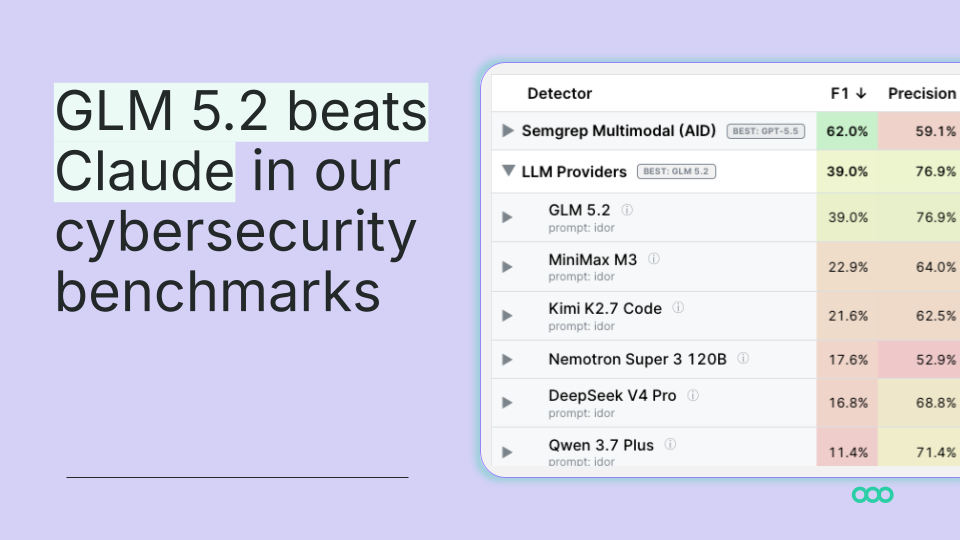
In a significant shift for the artificial intelligence landscape, Semgrep's latest cyber security benchmarks have revealed that GLM 5.2, an open-weight model, has surpassed the performance of Anthropic's Claude Opus 4.8. The testing, conducted by security researcher Katie Paxton-Fear, focused on models provided with only a prompt, highlighting the raw reasoning capabilities of open-weight alternatives in specialized technical domains. This revelation coincides with the launch of Semgrep Multimodal, a new initiative designed to integrate AI reasoning with traditional rule-based detection. The results suggest that for specific cyber security applications, open-weight models are now rivaling or exceeding the performance of leading proprietary models, potentially changing how organizations approach AI-driven security and code analysis.

Hacker News
China Reclaims Title of World's Fastest Supercomputer with LineShine, Surpassing El Capitan Despite US Trade Restrictions
Industry News

China Reclaims Title of World's Fastest Supercomputer with LineShine, Surpassing El Capitan Despite US Trade Restrictions

In a significant shift within the global high-performance computing landscape, China has officially reclaimed the title of the world's fastest supercomputer for the first time since 2018. The new system, named LineShine, has successfully overtaken the previous leader, El Capitan, to secure the number one position on the prestigious TOP500 ranking. This achievement is particularly noteworthy as it occurs amidst stringent trade restrictions and strict limits on the sale of high-powered computing components from US firms to China. While American companies continue to maintain a dominant presence across the overall TOP500 list, LineShine's ascent highlights a major milestone in China's domestic computing capabilities and its ability to navigate a challenging international regulatory environment to reach the pinnacle of supercomputing performance.

The Verge
Massive AI Fraud Scandal at Brown University: Professor Roberto Serrano Denounces Academic Integrity Crisis in the Ivy League
Industry News

Massive AI Fraud Scandal at Brown University: Professor Roberto Serrano Denounces Academic Integrity Crisis in the Ivy League

Professor Roberto Serrano, a distinguished economics professor at Brown University, has exposed a massive AI-driven cheating scandal involving at least 50 students in his advanced mathematical economics course, ECON 1170. This incident, occurring during a March midterm exam, is being cited as the largest known academic fraud case in the history of Brown and the broader Ivy League. Despite providing conclusive evidence, Serrano expressed frustration over the initial silence and lack of support from university leadership, including the president and dean. The case has now reached the Academic Code Committee, prompting a discussion on the existential threat AI poses to academic integrity. Serrano advocates for a public debate and stronger institutional support for faculty to safeguard the future of higher education and the prestige of elite institutions.

Hacker News
AI for Medical Second Opinions: Using Opus 4.8 and GPT 5.5 Pro to Analyze MRI Results
Industry News

AI for Medical Second Opinions: Using Opus 4.8 and GPT 5.5 Pro to Analyze MRI Results

This article details a first-hand account of a patient leveraging advanced AI models, specifically Opus 4.8 and GPT 5.5 Pro, to seek a second opinion on a shoulder injury diagnosis and subsequent treatment plan. After being diagnosed with a Grade III subscapularis tendon tear, the patient became skeptical of the clinic's immediate and extensive treatment recommendations. By inputting clinical data and MRI results into GPT 5.5 Pro, the patient discovered that the prescribed shockwave therapy and Traumeel injections contradicted current clinical guidelines for non-calcified tendinopathy. The patient further utilized Opus 4.8 to analyze raw DICOM MRI files, highlighting a significant shift toward patient-led medical verification. This case study underscores the potential for 2026-era AI models to empower patients with sophisticated diagnostic auditing tools.

Hacker News