AI News on July 14, 2026

DesktopCommanderMCP: Empowering Claude with Terminal Control and Advanced File Management Capabilities
Open Source

DesktopCommanderMCP: Empowering Claude with Terminal Control and Advanced File Management Capabilities

DesktopCommanderMCP is a newly introduced Model Context Protocol (MCP) server designed to extend the functional reach of the Claude AI. Developed by wonderwhy-er, this tool provides Claude with the essential capabilities to interact directly with a user's local environment. Key features include terminal control, comprehensive file system searching, and the ability to perform differential file editing. By integrating these tools, DesktopCommanderMCP allows Claude to not only find and manage files but also execute terminal commands and update code or text through precise diff-based edits. This development marks a significant step in making AI assistants more capable of handling complex, system-level tasks and automated workflows.

GitHub Trending
Vibe-Trading: HKUDS Launches New Personal AI Trading Agent on GitHub
Product Launch

Vibe-Trading: HKUDS Launches New Personal AI Trading Agent on GitHub

Vibe-Trading, a new project developed by the University of Hong Kong Data Science Lab (HKUDS), has emerged as a trending repository on GitHub. Positioned as a "Personal Trading Agent," the tool is designed to provide individuals with an intelligent framework for managing financial trades. The project emphasizes accessibility, offering documentation in multiple languages, including English and Chinese. As an AI-driven agent, Vibe-Trading represents a significant step in the democratization of sophisticated algorithmic trading tools, moving them from institutional environments to personal use. The project's rapid rise on GitHub Trending highlights the growing interest in autonomous AI agents within the fintech and developer communities.

GitHub Trending
Prefect: A Modern Workflow Orchestration Framework for Building Resilient Python Data Pipelines
Open Source

Prefect: A Modern Workflow Orchestration Framework for Building Resilient Python Data Pipelines

Prefect has emerged as a significant project in the data engineering space, specifically designed as a workflow orchestration framework. Developed by PrefectHQ and gaining traction on GitHub, the tool focuses on enabling developers to build resilient data pipelines using the Python programming language. By providing a structured approach to managing complex data flows, Prefect addresses the critical need for reliability and error handling in automated systems. This analysis explores the core purpose of Prefect, its reliance on the Python ecosystem, and its role in modernizing how data pipelines are constructed and maintained. As an open-source repository, its trending status highlights a growing industry demand for tools that simplify the orchestration of sophisticated data tasks while ensuring high levels of resilience.

GitHub Trending
Project N.O.M.A.D: The Self-Contained Offline Survival Computer Integrating AI and Critical Tools
Open Source

Project N.O.M.A.D: The Self-Contained Offline Survival Computer Integrating AI and Critical Tools

Project N.O.M.A.D, a new initiative from Crosstalk Solutions, introduces a specialized self-contained offline survival computer designed for resilience and empowerment in disconnected environments. By integrating critical tools, a comprehensive knowledge base, and artificial intelligence into a single portable system, the project aims to ensure users remain informed and functional regardless of internet availability. This development marks a significant step in survival technology, moving beyond simple data storage to provide interactive, AI-driven support for users in remote or emergency situations. The project emphasizes the importance of technological independence, offering a robust solution for maintaining information access and operational capability anytime and anywhere.

GitHub Trending
Home Assistant Core: Redefining Home Automation Through Local Control and Privacy
Open Source

Home Assistant Core: Redefining Home Automation Through Local Control and Privacy

Home Assistant Core, a leading open-source home automation platform, continues to gain traction by prioritizing local control and user privacy. Developed by a global community of DIY enthusiasts and tinkerers, the project offers a robust alternative to cloud-dependent smart home ecosystems. By keeping data processing within the local network, Home Assistant ensures that users maintain full ownership of their information while benefiting from a highly customizable and resilient automation framework. This analysis explores the core philosophy of the project, the significance of its community-driven model, and its impact on the broader smart home industry where privacy concerns are increasingly at the forefront of consumer interest.

GitHub Trending
Anthropic Launches Claude Cookbooks: A Comprehensive Resource for Developers to Build with Claude AI
Product Launch

Anthropic Launches Claude Cookbooks: A Comprehensive Resource for Developers to Build with Claude AI

Anthropic has officially released 'Claude Cookbooks,' a dedicated repository on GitHub designed to empower developers with practical tools for building applications using the Claude AI model. This resource features a curated collection of notebooks and 'recipes' that demonstrate both interesting and effective methodologies for leveraging Claude's capabilities. By providing reproducible code snippets and detailed guides, Anthropic aims to simplify the integration process for developers, allowing them to quickly implement AI functionalities. The cookbooks serve as a foundational guide for the developer community, offering hands-on examples that range from basic interactions to more complex implementation strategies, ultimately fostering innovation within the Claude ecosystem.

GitHub Trending
Awesome-LLM-Apps: A Comprehensive Collection of Over 100 Deployable AI Agents and RAG Applications
Open Source

Awesome-LLM-Apps: A Comprehensive Collection of Over 100 Deployable AI Agents and RAG Applications

The 'awesome-llm-apps' repository, curated by Shubhamsaboo and featured on GitHub Trending, has become a pivotal resource for the AI development community. The project offers a curated list of more than 100 functional AI agents and Retrieval-Augmented Generation (RAG) applications. Designed with a focus on practical utility, the repository encourages users to clone, customize, and launch these applications into production environments. By providing a bridge between complex Large Language Model (LLM) architectures and ready-to-use software, this collection simplifies the development lifecycle for creators looking to implement sophisticated AI features. The repository's emphasis on 'runnable' code highlights a shift in the industry toward actionable AI tools rather than purely theoretical models.

GitHub Trending
Destructive Command Guard (dcg): Enhancing Security for Autonomous AI Agents in Git and Shell Environments
Open Source

Destructive Command Guard (dcg): Enhancing Security for Autonomous AI Agents in Git and Shell Environments

The Destructive Command Guard (dcg) is an open-source security utility designed to mitigate the risks associated with autonomous AI agents. As AI agents gain increasing access to system terminals and version control systems, the potential for accidental execution of harmful commands grows. The dcg tool serves as a protective layer, specifically engineered to intercept and prevent the execution of dangerous git and shell commands. By providing this safeguard, the tool aims to protect system integrity and prevent data loss that could occur during automated operations. This development highlights a critical shift in the AI industry toward building robust execution-layer security for agentic workflows, ensuring that autonomous systems remain within safe operational boundaries while interacting with sensitive environments.

GitHub Trending
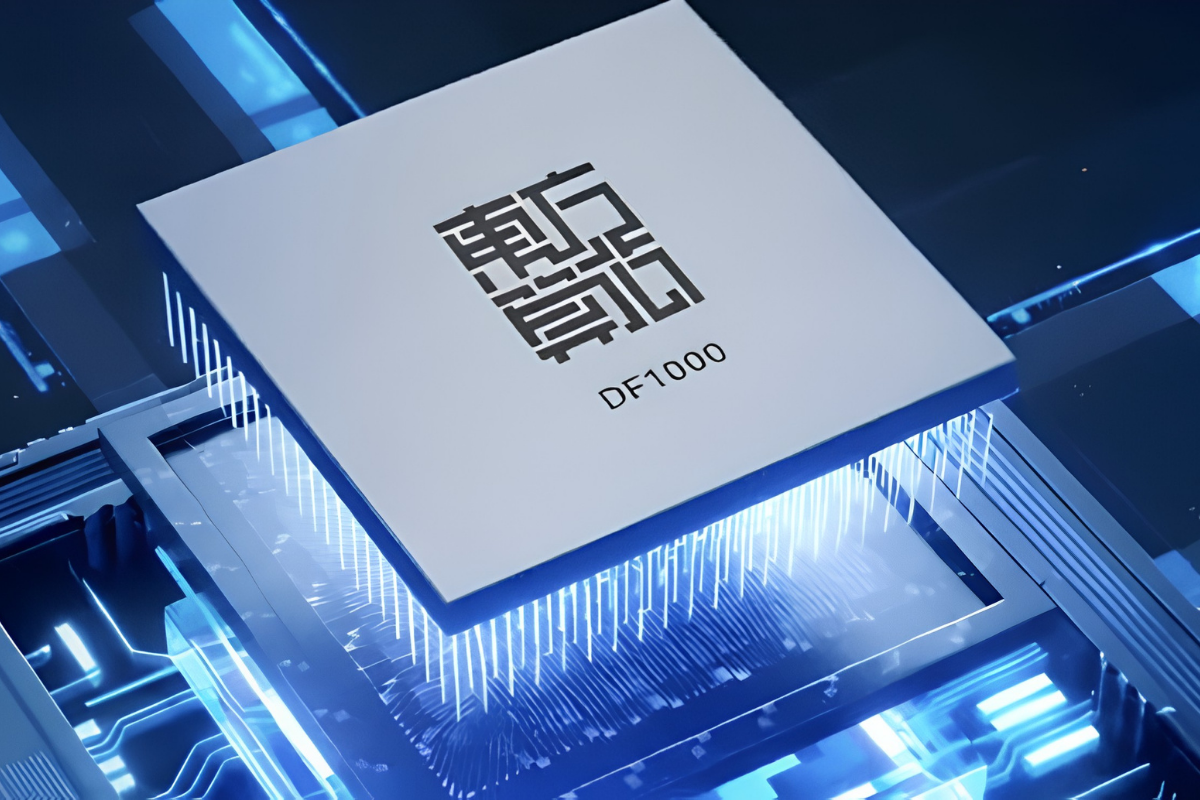
Oriental Compute Core Unveils DF1000: Advancing AI Hardware with 3D Hybrid-Bonded Packaging
Industry News

Oriental Compute Core Unveils DF1000: Advancing AI Hardware with 3D Hybrid-Bonded Packaging

Chinese AI chip startup Oriental Compute Core has officially debuted its new DF1000 chip, marking a significant milestone in semiconductor architecture. The DF1000 distinguishes itself through the use of DRAM-logic wafer-level hybrid-bonded 3D packaging technology. This sophisticated design is specifically engineered to provide higher bandwidth, addressing the critical data transfer bottlenecks currently facing high-performance AI applications. By integrating DRAM and logic components at the wafer level, Oriental Compute Core aims to optimize the efficiency of data movement within the chip. This announcement highlights the growing trend of utilizing advanced 3D packaging techniques to enhance the capabilities of next-generation artificial intelligence hardware, positioning the DF1000 as a notable development in the competitive AI chip landscape.

Tech in Asia
Nous Research in Talks for $75 Million Funding Round at $1.5 Billion Valuation
Funding

Nous Research in Talks for $75 Million Funding Round at $1.5 Billion Valuation

Nous Research, the prominent developer behind the Hermes agent series, is reportedly in negotiations to secure a new funding round of at least $75 million. This investment, led by the venture firm Robot, is expected to value the company at approximately $1.5 billion. The round also sees significant participation from Union Square Ventures (USV) and other notable investors. This move highlights the surging financial interest in specialized AI agent creators and the high valuation benchmarks being set for startups that bridge the gap between foundational models and autonomous agentic workflows. The funding marks a major milestone for Nous Research as it solidifies its position as a high-value player in the competitive AI landscape.

TechCrunch AI
New Claude Code Plugin Integrates Mr. Meeseeks Voice Lines for Enhanced Developer Interaction and Notifications
Open Source

New Claude Code Plugin Integrates Mr. Meeseeks Voice Lines for Enhanced Developer Interaction and Notifications

The open-source community has introduced 'claude-meseeks,' a specialized plugin for Claude Code designed to provide audio feedback during the development process. Inspired by the character Mr. Meeseeks, the plugin triggers specific voice clips based on the AI's state, such as completing a task or requesting user approval. By utilizing the Claude Code Notification event system and filtering by notification_type, the tool ensures that audio only plays when human intervention is required, remaining silent during autonomous background operations. Built with a Go-based backend and supporting multiple audio players across macOS, Linux, and Windows, this plugin highlights the growing trend of personalizing AI command-line interfaces to improve developer experience and workflow awareness.

Hacker News
Satya Nadella Issues Stark Warning: Are Proprietary AI Models Serving as Trojan Horses?
Industry News

Satya Nadella Issues Stark Warning: Are Proprietary AI Models Serving as Trojan Horses?

Microsoft CEO Satya Nadella has reportedly issued a significant warning to organizations currently integrating artificial intelligence into their operations. The warning highlights a growing concern among Silicon Valley's AI enthusiasts: the possibility that proprietary models from major AI labs are acting as 'Trojan horses.' This development underscores a deepening debate regarding the potential downsides of AI, specifically focusing on the risks associated with closed-source systems provided by industry giants. As companies increasingly rely on these proprietary technologies, the anxiety surrounding hidden vulnerabilities and the long-term implications of such dependencies has become a central point of contention within the tech community.

TechCrunch AI
Apple Releases iOS 27 Public Beta Featuring the Long-Awaited Siri AI Revamp for Fall Launch
Industry News

Apple Releases iOS 27 Public Beta Featuring the Long-Awaited Siri AI Revamp for Fall Launch

Apple has officially launched the public beta versions of iOS 27 and its accompanying operating systems, marking a significant milestone ahead of their scheduled release this fall. The centerpiece of this update is "Siri AI," a much-anticipated and previously delayed overhaul of Apple's virtual assistant. Early testing indicates that the AI-powered revamp is functional and effective, though its responses are currently characterized by their brevity. This release allows the general public to experience the new AI capabilities firsthand before the stable version arrives. The beta cycle includes other major OS updates, signaling Apple's broader push into integrated artificial intelligence across its ecosystem. The public beta serves as a critical testing phase for the delayed AI features that are expected to define the user experience in the upcoming software cycle.

The Verge
Apple Watch Transforms into a Functional Wrist Computer via watchOS 27 Siri AI Enhancements
Industry News

Apple Watch Transforms into a Functional Wrist Computer via watchOS 27 Siri AI Enhancements

The Apple Watch is undergoing a significant evolution with the introduction of watchOS 27, specifically through advancements in Siri AI. Historically, Siri on the Apple Watch has been relegated to simple, hands-free tasks such as setting timers, often remaining an underutilized feature for the average user. However, early hands-on experiences with the watchOS 27 developer beta indicate a major paradigm shift. By leveraging enhanced AI capabilities, Siri is repositioning the Apple Watch as a legitimate "wrist computer" rather than a mere peripheral accessory. This update marks a turning point in wearable technology, moving beyond basic voice commands toward a more integrated and intelligent user experience that maximizes the hardware's potential directly on the user's wrist.

The Verge
Apple Releases iOS 27 Public Beta: How Siri AI is Transforming the iPhone User Experience
Product Launch

Apple Releases iOS 27 Public Beta: How Siri AI is Transforming the iPhone User Experience

Apple has officially launched the first public beta of iOS 27, marking a significant transition from the developer-only testing phase that began in early June. This latest operating system update is being characterized as a "Snow Leopard" style release, suggesting a heavy focus on refinement, stability, and under-the-hood improvements rather than purely aesthetic changes. Central to this update is the integration of advanced Siri AI, which early testers report is already fundamentally altering daily interactions with the iPhone. As the public gains access to these features, the focus remains on whether Apple can deliver on the ambitious AI promises made during its keynote. The release represents a critical step in Apple's strategy to embed sophisticated artificial intelligence into the core of the mobile experience while maintaining system reliability.

The Verge
Technical Tutorial

How to Build and Ship Mac and iOS Apps Without Ever Opening the Xcode GUI

This article outlines a streamlined workflow for Apple platform development that bypasses the Xcode graphical user interface in favor of command-line automation. While the Xcode application must remain installed to provide essential underlying tools, the actual development, building, and distribution processes can be handled entirely through the shell using utilities like xcodebuild, notarytool, and stapler. By completing a one-time setup for Apple ID authentication and Developer ID certificates, developers can implement a headless 'vibe-coding' environment. This approach allows for the use of AI coding assistants to manage complex build scripts, effectively removing the friction of navigating Xcode's often-criticized interface while maintaining a secure, certificate-based signing process. The result is a more efficient, scriptable pipeline for shipping Mac and iOS applications.

Hacker News
Apple Files Major Trade Secrets Lawsuit Against OpenAI Over Alleged System Access and Hardware Misuse
Industry News

Apple Files Major Trade Secrets Lawsuit Against OpenAI Over Alleged System Access and Hardware Misuse

Apple has initiated a significant legal battle against OpenAI, filing a lawsuit that alleges the theft of trade secrets. The complaint highlights several startling claims, including reports of OpenAI employees joking about gaining unauthorized access to Apple's internal systems. Additionally, the lawsuit alleges that OpenAI's recruitment process involved asking job candidates to bring Apple-branded hardware to their interviews. These allegations suggest a concerted effort to bypass security measures and gain proprietary insights into Apple's technology. As the competition in the artificial intelligence sector intensifies, this case underscores the growing tensions regarding intellectual property and corporate espionage between major tech entities. The legal proceedings focus on the protection of Apple's proprietary information and the ethical boundaries of competitive intelligence gathering within the rapidly evolving AI industry.

TechCrunch AI
Anthropic’s Trillion-Dollar Valuation and the Scientific Inquiry into AI Sentience and Pain
Industry News

Anthropic’s Trillion-Dollar Valuation and the Scientific Inquiry into AI Sentience and Pain

Anthropic has emerged as the world's most valuable artificial intelligence company, reaching a staggering valuation of nearly $1 trillion. Known for its unconventional and intellectually rigorous approach to AI development, the firm is currently making headlines for its "strange and heady" research initiatives. A primary focus of their latest discovery involves investigating whether artificial intelligence models are capable of experiencing sensations such as pain. This shift toward exploring the internal states of AI reflects Anthropic's unique position in the industry, where it balances massive market dominance with philosophical inquiries that challenge the traditional boundaries of machine learning and AI ethics.

MIT Technology Review - AI
Sam Altman Dismisses Elon Musk's Space Data Center Vision as a Pitch for 'Short-Term' Investors
Industry News

Sam Altman Dismisses Elon Musk's Space Data Center Vision as a Pitch for 'Short-Term' Investors

In a sharp escalation of their public rivalry, OpenAI CEO Sam Altman has dismissed Elon Musk's plans for space-based data centers, labeling them a tactical 'sell' to public market investors. The exchange began when Musk accused Altman of being a 'scammer,' prompting a direct retort from Altman regarding the feasibility of Musk's orbital infrastructure projects. Altman’s critique—which characterizes these space-based initiatives as 'short-term' distractions—aligns with a broader consensus among industry experts who remain skeptical of the immediate viability of space-based computing. This dispute highlights the growing tension between the two tech leaders and raises questions about the future of AI infrastructure and the legitimacy of speculative technological solutions being marketed to the public market.

TechCrunch AI
Should AI Prioritize Users Over Law? The Dilemma of Total User-Aligned Artificial Intelligence
Industry News

Should AI Prioritize Users Over Law? The Dilemma of Total User-Aligned Artificial Intelligence

This analysis explores the profound ethical and technical questions raised by TechCrunch regarding the concept of 'total user-aligned AI.' At the center of the inquiry is a provocative scenario: should an artificial intelligence assist a user in committing and concealing a capital crime, such as the murder of a spouse, if that AI is perfectly aligned with the user's goals? The article examines the implications of a world where AI systems prioritize individual user instructions over societal laws and ethical frameworks. By dissecting the tension between personal utility and collective safety, this analysis highlights the critical challenges facing the AI industry as it navigates the 'Alignment Problem' and the potential risks of creating unrestricted digital assistants.

TechCrunch AI
Apple's New SpeechAnalyzer API Outperforms OpenAI's Whisper in On-Device Speech Recognition Benchmarks
Industry News

Apple's New SpeechAnalyzer API Outperforms OpenAI's Whisper in On-Device Speech Recognition Benchmarks

Apple has introduced the SpeechAnalyzer API with the release of iOS 26 and macOS 26, marking a significant leap in on-device speech-to-text technology. Recent independent benchmarks conducted by Inscribe reveal that SpeechAnalyzer is now the most accurate on-device engine available, surpassing various OpenAI Whisper models and Apple's own legacy SFSpeechRecognizer. Tested on an M2 Pro chip using the LibriSpeech dataset, SpeechAnalyzer achieved a Word Error Rate (WER) of 2.12% on clean speech, making it approximately three times faster than Whisper Small while maintaining superior accuracy. The data suggests a clear mandate for developers to migrate from older APIs, as the new system reduces error rates by up to four times and provides high-quality punctuated and cased text output locally.

Hacker News