AI News on November 5, 2026

Qualcomm Bets Big on AI Data Centers to Boost Earnings as Smartphone Sales Drop Twenty Percent
Industry News

Qualcomm Bets Big on AI Data Centers to Boost Earnings as Smartphone Sales Drop Twenty Percent

During its Q4 2026 earnings call, Qualcomm signaled a decisive strategic shift toward AI data centers in an effort to revitalize its bottom line following a steep downturn in its core mobile business. The company disclosed that smartphone sales experienced a dramatic decline of roughly 20 percent compared to 2025 levels. To counteract this downturn, Qualcomm is concentrating its growth ambitions on enterprise and AI infrastructure. A central component of this strategy involves leveraging established partnerships with major industry powerhouses, including Amazon and Meta, which were announced prior to the earnings release. By entering the AI data center space, Qualcomm intends to establish a meaningful presence in high-performance computing, seeking to offset falling mobile revenues with new enterprise AI demand.

The Verge•
Gemini for Home Integrates with AT&T Connected Life to Bring AI-Powered Security Features
Product Launch

Gemini for Home Integrates with AT&T Connected Life to Bring AI-Powered Security Features

AT&T has announced the official integration of its Connected Life smart home security system with Google's Gemini for Home. Identified by the company as the first home security product to plug directly into Google Home Premium, the system leverages Gemini's artificial intelligence capabilities to upgrade home monitoring. Users can now access advanced AI tools designed to summarize home activities and perform natural searches across video history. This milestone represents a strategic step in bringing generative AI assistants into connected security hardware, bridging telecommunications security infrastructure with Google's premium smart home ecosystem. Although initial details regarding broader feature rollouts remain concise, the integration marks a significant evolution in AI-assisted surveillance and home management.

The Verge•
Nothing Teases First Screen-Free AI Device Ahead of Official December Launch Under Carl Pei
Product Launch

Nothing Teases First Screen-Free AI Device Ahead of Official December Launch Under Carl Pei

Consumer electronics brand Nothing is preparing to introduce its first dedicated artificial intelligence device, scheduled for release in December. Company Chief Executive Officer Carl Pei previewed the upcoming product in a post on X, marking a critical progression just over a year after he initially shared plans regarding AI-native devices and an AI operating system. While Nothing has maintained tight secrecy regarding technical specifications and hardware functionality, the upcoming gadget is confirmed to feature a screen-free design. The announcement positions Nothing as an active competitor in the emerging AI hardware category, moving beyond traditional screen-based mobile experiences. As the December release approaches, the tech sector is closely watching how Nothing intends to execute its AI vision without relying on standard display interfaces.

The Verge•
Amazon Bee Frontier Under Scrutiny: Why Ambient Listening Wearables Face Growing Pushback and Skepticism
Industry News

Amazon Bee Frontier Under Scrutiny: Why Ambient Listening Wearables Face Growing Pushback and Skepticism

In the latest edition of The Verge's weekly newsletter Optimizer, senior reviewer Victoria Song examines the Amazon Bee Frontier, an ambient listening wearable that prompted an unconventional piece of advice from her therapist: to chuck it out a window. As tech companies market ambient devices that promise to change everyday life, the psychological and practical friction of always-on hardware is coming to the forefront. This analysis explores the tension between ambient audio tracking, consumer fatigue, and the socio-emotional boundaries raised by Song's firsthand evaluation.

The Verge•
Industry News

OpenAI Announces Agreement to Acquire Pierre Computer Company to Expand Codex Development and Review Capabilities

OpenAI has announced its agreement to acquire Pierre Computer Company, Inc., aiming directly at broadening the scope and utility of its Codex platform. According to the announcement published by OpenAI, the strategic acquisition is designed to expand Codex's existing suite of tools across three essential programming functions: building, understanding, and reviewing code. While detailed financial terms, closing schedules, and specific product integration timelines were not disclosed in the brief announcement, the move signals OpenAI's dedicated focus on bolstering developer-facing capabilities within the Codex ecosystem. By targeting core areas of the software development lifecycle, this acquisition highlights the ongoing evolution of automated programming tools and OpenAI's commitment to advancing code comprehension, generation, and quality evaluation for engineers.

OpenAI Blog•
Singapore AI Startup Featherless to Add MiniMax M3.1 Flash Model for Developer Coding Applications
Industry News

Singapore AI Startup Featherless to Add MiniMax M3.1 Flash Model for Developer Coding Applications

Singapore-based artificial intelligence startup Featherless has announced the addition of MiniMax M3.1 Flash to its platform, specifically targeting coding workflows. According to disclosures provided by Featherless, the MiniMax M3.1 Flash model encompasses a total architecture of 428 billion parameters, with 23 billion parameters activated per token during inference. This parameter configuration highlights an architecture designed to deliver high model capacity while maintaining computational efficiency on a per-token basis. The initiative marks a focused integration aimed at software development use cases, though further implementation details remain limited to the disclosed parameter specifications.

Tech in Asia•
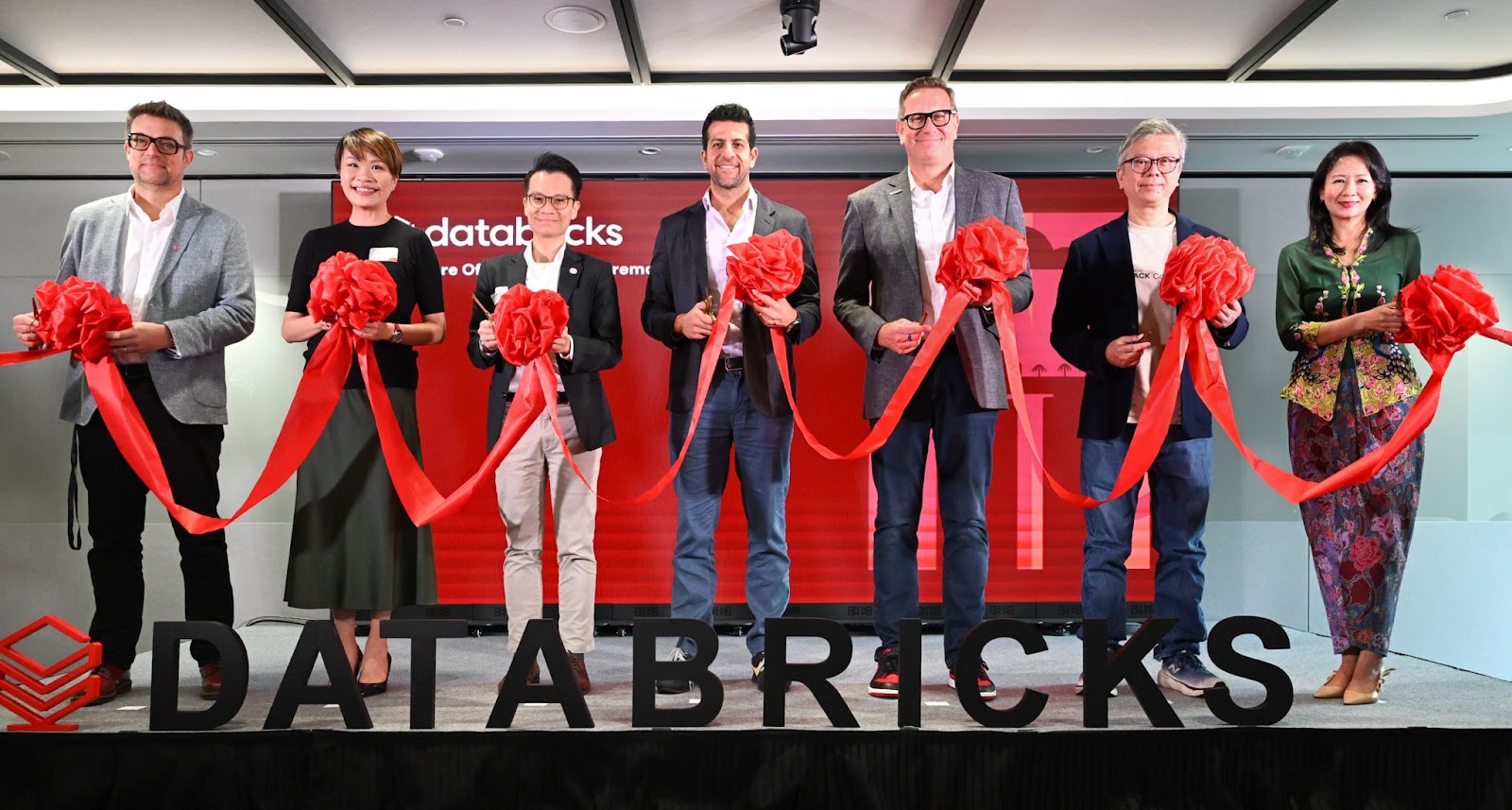
Databricks Expands Presence in Singapore With New Office, $350 Million Investment, and Startup AI Accelerator Program
Industry News

Databricks Expands Presence in Singapore With New Office, $350 Million Investment, and Startup AI Accelerator Program

Enterprise data and artificial intelligence firm Databricks has announced a major strategic expansion in Singapore, marked by the opening of a new office and a planned $350 million investment. In conjunction with this substantial capital allocation and physical footprint growth, the company has officially launched a dedicated AI accelerator tailored for emerging enterprises. The newly introduced accelerator aims to support more than 100 early-stage companies over a three-year span. By establishing a bolstered operational presence and channeling targeted resources into early-stage startup enablement, Databricks reinforces its long-term operational commitment to Singapore. This dual-pronged initiative combines direct infrastructure capital with strategic ecosystem nurturing, creating a comprehensive framework designed to advance regional data and artificial intelligence innovation through extensive founder support and sustained multi-year engagement.

Tech in Asia•
Research Breakthrough

OpenAI Develops Autonomous AI Pipeline to Discover, Validate, and Patch 948 Linux Kernel Vulnerabilities

OpenAI has developed an autonomous security pipeline capable of discovering, validating, and generating remediation patches for 948 local privilege-escalation vulnerabilities within the Linux kernel. By systematically automating the end-to-end vulnerability management cycle, the initiative marks a significant milestone in software defense and artificial intelligence applications. The Linux kernel serves as foundational infrastructure for global cloud platforms, enterprise servers, and consumer devices, making robust kernel security vital to modern digital infrastructure. OpenAI's autonomous approach addresses critical bottlenecks in cybersecurity by combining automated flaw identification with rigorous validation and precise code remediation. This development signals a major shift toward automated software assurance, demonstrating how advanced AI systems can proactively safeguard critical open-source software by eliminating hundreds of exploit paths before malicious actors can weaponize them.

OpenAI Blog•
Claude-Mem Introduces Persistent Cross-Session Memory and AI Compression for Multi-Agent Coding Frameworks
Open Source

Claude-Mem Introduces Persistent Cross-Session Memory and AI Compression for Multi-Agent Coding Frameworks

Claude-mem, an open-source project created by developer thedotmack, has emerged on GitHub Trending to solve the critical problem of context loss across distinct AI agent sessions. Designed to provide persistent cross-session context for autonomous agents, the tool automatically captures all agent operations executed during an active session, processes and compresses this activity history using artificial intelligence, and selectively injects relevant historical context back into future interactions. The project offers broad compatibility across major agentic coding and AI platforms, including Claude Code, OpenClaw, Codex, Gemini, Hermes, Copilot, and OpenCode, among others. By maintaining an intelligent record of past actions and decisions, claude-mem eliminates repetitive setup instructions and helps AI agents maintain continuity across extended, multi-step development workflows.

GitHub Trending•
Spotify Launches Portal AI Plugins to Bring Developer Portal Integrations to Claude Code, Codex, Cursor, and Pi
Open Source

Spotify Launches Portal AI Plugins to Bring Developer Portal Integrations to Claude Code, Codex, Cursor, and Pi

Spotify has released portal-ai-plugins, a dedicated integration project hosted on GitHub that bridges the enterprise capabilities of Spotify Portal into next-generation AI coding assistants. By extending support across Claude Code, Codex, Cursor, and pi, the open-source repository facilitates native interactions between developer portal services and agentic programming environments. Distributed partly through npm under the official @spotify scope, this release highlights Spotify's continued leadership in developer experience engineering, which originated with its Backstage ecosystem. The new tooling empowers software engineers using popular AI assistants to access developer portal metadata, workflows, and catalog operations directly inside their coding command-line interfaces and editors, marking a critical step in standardizing AI-driven platform engineering workflows.

GitHub Trending•
Colibri: A Hierarchical C-Based Inference Engine for Frontier Mixture of Experts Models
Open Source

Colibri: A Hierarchical C-Based Inference Engine for Frontier Mixture of Experts Models

Colibri is an open-source hierarchical inference engine developed by JustVugg to run frontier Mixture of Experts (MoE) models directly on existing hardware. Written in the C programming language, Colibri addresses the massive memory demands of modern sparse MoE architectures by implementing a three-tier execution pipeline. Under this design, active 'hot' experts reside directly on GPU compute tiers powered by CUDA and Vulkan backends, 'warm' experts are cached within system memory (RAM), and inactive or 'cold' experts are dynamically streamed from NVMe solid-state storage. By efficiently bridging NVMe, RAM, and GPU resources, the engine enables users to deploy large-scale MoE systems without requiring massive multi-GPU enterprise infrastructure.

GitHub Trending•
Worktrunk Emerges on GitHub Trending as a CLI for Git Worktree Management in Parallel AI Agent Workflows
Open Source

Worktrunk Emerges on GitHub Trending as a CLI for Git Worktree Management in Parallel AI Agent Workflows

Worktrunk, an open-source command-line tool developed by max-sixty, has captured widespread attention on GitHub Trending by targeting a key bottleneck in autonomous software engineering: Git worktree management for parallel AI agent workflows. As artificial intelligence systems transition from passive code assistants into autonomous agents that edit, build, and test software concurrently, local repository conflicts become a primary operational hurdle. Worktrunk addresses this challenge by providing dedicated command-line utilities to govern and orchestrate Git worktrees across concurrent development streams. This report examines the purpose of Worktrunk, the operational necessity of isolated worktrees for parallel agent environments, and the broader shift toward agent-centric version control tooling in modern software development ecosystems.

GitHub Trending•
Vercel Labs Introduces agent-desktop: An Open-Source CLI Enabling AI Agents to Control Desktop Systems
Open Source

Vercel Labs Introduces agent-desktop: An Open-Source CLI Enabling AI Agents to Control Desktop Systems

Vercel Labs has introduced agent-desktop, an open-source command-line interface (CLI) tool designed to empower artificial intelligence agents with desktop computer use capabilities. Trending across developer communities, the utility establishes a structured bridge between autonomous AI workflows and operating system environments across macOS, Windows, and Linux. Unlike conventional computer-use approaches that depend on vision-based pixel processing and screenshot inference, agent-desktop interfaces directly with native operating system accessibility trees. By extracting application state into structured, readable JSON envelopes and generating deterministic reference identifiers for UI controls, the lightweight tool allows external AI agents to reliably inspect, navigate, and manipulate desktop applications. Released as a modular tool without an embedded language model, agent-desktop provides developers with an efficient, token-saving foundation for next-generation autonomous desktop automation.

GitHub Trending•
Matt Pocock Releases Open-Source Skills Repository: Practical Engineering Skills Straight from the Agents Directory
Open Source

Matt Pocock Releases Open-Source Skills Repository: Practical Engineering Skills Straight from the Agents Directory

Prominent developer Matt Pocock has released an open-source repository titled 'skills', capturing widespread attention on GitHub Trending. Described by the creator as 'Skills for real engineers. Straight from my .agents directory,' the project offers a practical, curated set of operational instructions and capabilities designed to power AI coding agents. Rather than relying on theoretical or generic prompt templates, this initiative delivers battle-tested workflows drawn directly from an active production environment. The release addresses a crucial bottleneck in AI-assisted software engineering: the gap between standard language model outputs and the disciplined, structured requirements of professional software development. By open-sourcing these agent skills, the project fosters standardized, transparent, and reproducible developer-agent interactions across the software engineering community.

GitHub Trending•
Heretic: Training-Free Language Model Modification for Censorship Removal, Slop Suppression, and Sycophancy Reduction
Open Source

Heretic: Training-Free Language Model Modification for Censorship Removal, Slop Suppression, and Sycophancy Reduction

Heretic, an open-source project created by developer p-e-w and trending on GitHub, introduces an innovative training-free approach to altering large language model behavior. The framework enables users to modify pre-trained language models directly without the overhead of retraining or fine-tuning. By focusing on critical behavioral interventions, Heretic facilitates censorship removal, suppression of generic AI slop, and reduction of sycophantic responses. This lightweight modification paradigm offers a streamlined alternative to traditional alignment and post-training methods, allowing practitioners to customize model parameters, eliminate built-in refusals, and enhance output fidelity while preserving core generative capabilities.

GitHub Trending•
Product Launch

Daybreak Red Launches GPT-5.6 Cyber in AWS GovCloud US-East via Amazon Bedrock for Cybersecurity

Daybreak Red is now officially available to approved customers within AWS GovCloud (US-East), delivering access to GPT-5.6 Cyber through Amazon Bedrock. This deployment is specifically designed to support authorized cybersecurity operations in a secure cloud environment. By combining GPT-5.6 Cyber with Amazon Bedrock on AWS GovCloud (US-East), the release establishes a dedicated framework for vetted users conducting critical defense and security workflows. Access remains strictly restricted to approved clientele performing authorized tasks, emphasizing compliance, control, and targeted utility in public sector and regulated cloud infrastructure.

OpenAI Blog•
Product Launch

DevRev Leverages OpenAI GPT-6.1 Sol to Power Autonomous Enterprise Self-Service Across Computer and Operator

Enterprise software platform DevRev has integrated OpenAI's GPT-6.1 Sol model to power its Computer and Operator systems, advancing autonomous self-service capabilities for organizations. Announced via the OpenAI Blog on November 4, 2026, the deployment addresses the core technical and operational trade-offs inherent in enterprise customer and internal support environments. By deploying GPT-6.1 Sol, DevRev achieves a calibrated equilibrium among advanced logical reasoning, rapid response speed, and scalable cost efficiency. Rather than prioritizing one performance dimension at the expense of others, the implementation provides enterprise service environments with the compute optimization needed for end-to-end task execution. This development highlights the expanding adoption of specialized foundation models designed to deliver practical, cost-effective autonomy within demanding corporate service architectures.

OpenAI Blog•
Product Launch

TellPip Launches on Product Hunt: An On-Device AI Call Assistant Whispering Real-Time Client Answers

TellPip, an on-device AI meeting assistant built by independent maker Edoardo, has officially launched on Product Hunt to solve real-time client communication challenges. Unlike traditional AI meeting bots that join calls directly and process sensitive audio in the cloud, TellPip operates invisibly from a user's Mac. The desktop tool captures audio locally across popular platforms such as Zoom, Google Meet, and Microsoft Teams, utilizing an on-device transcription model that supports 25 European languages even when completely offline. By indexing local user documents, past call records, and price sheets, TellPip privately retrieves critical facts and promises during live conversations. Following each call, it automatically summarizes decisions, tracks client commitments, and drafts follow-up emails to streamline professional client-facing workflows.

Product Hunt•
Product Launch

Hashference Launches Compute-Powered AI API Enabling Frontier Model Access Through Idle Hardware and Proof-of-Work

Hashference has officially introduced an innovative API infrastructure that enables developers and autonomous software agents to access premier artificial intelligence models without standard credit card payments. Launched on Product Hunt by creator Veronika Polar, the platform lets users fund API access to more than 45 frontier models—including Claude, GPT, and DeepSeek—by utilizing idle CPU, GPU, or ASIC computing power. Operating via both OpenAI- and Anthropic-compatible endpoints, Hashference provides three distinct monetization methods: real-time per-request proof-of-work puzzles via HTTP 402, background mining to accumulate workspace credits for coding tools like Cursor and Cline, and crypto settlements. By resolving the friction of API key sprawl and credit card constraints for autonomous agents, Hashference establishes an alternative compute-driven economic model for accessing state-of-the-art machine intelligence.

Product Hunt•
Product Launch

PasteGuard for Mac Launches to Prevent Sensitive Data and API Key Leaks in AI Chats

Software developer Nguyen Quan has officially launched PasteGuard for Mac on Product Hunt, introducing a dedicated privacy utility designed to prevent accidental disclosures of sensitive information when interacting with artificial intelligence assistants. PasteGuard intercepts copied clipboard data locally to automatically sanitize sensitive credentials, including API keys, passwords, database connection strings, card numbers, and personal identifiers, replacing them with formatted placeholders before text reaches platforms like ChatGPT, Claude, Slack, or terminal environments. With zero external data transmission, an encrypted local vault, an optional Apple Intelligence verification layer, and a two-way restoration workflow triggered via keyboard shortcuts, PasteGuard establishes an on-device safeguard for software engineers, IT administrators, and privacy-conscious professionals navigating daily AI-assisted development workflows.

Product Hunt•
Product Launch

LiveReacting Launches ChatGPT Integration: Stream 24/7 and Scheduled Video Broadcasts via Conversational Prompts

LiveReacting has introduced an official ChatGPT integration, allowing creators and businesses to initiate, automate, and manage 24/7 and pre-recorded live video broadcasts through simple conversational prompts. Announced on Product Hunt by founder Alexander Shpilka, the tool enables ChatGPT users to summon LiveReacting to build looping video playlists, schedule future streams, modify active broadcasts, and monitor viewer counts in real time. Backed by cloud streaming infrastructure, users do not need to keep local machines running during broadcasts. Streams can simultaneously broadcast across YouTube, Twitch, Facebook, LinkedIn, X, and custom RTMP destinations, streamlining multi-platform digital broadcasting.

Product Hunt•
Product Launch

Datashake Launches MCP Server to Connect Live Social and Review Intelligence Directly to AI Assistants

Datashake has introduced Datashake MCP, an official Model Context Protocol (MCP) integration launched on Product Hunt by founder Philip Källberg. Designed to bridge the gap between AI assistants and external social intelligence, the new MCP server enables large language model agents to retrieve clean, structured public review and social media data in real time using conversational plain English. By standardizing access across major social networks and customer review platforms, Datashake eliminates traditional engineering bottlenecks associated with custom scrapers, headless browsers, and siloed data stores. The launch empowers enterprise analysts, developers, and autonomous agent workflows to evaluate brand sentiment, monitor competitor conversations, and conduct granular consumer research directly inside LLM chat interfaces.

Product Hunt•
Product Launch

QualityLayer Launches to Introduce Structured Engineering Disciplines and Multi-Agent Verification to AI Coding

Developer Max Ritter has officially launched QualityLayer on Product Hunt, introducing an engineering framework designed to bring discipline, architectural planning, and verification to autonomous coding agents. While popular AI agents generate software quickly, they often fail to operate like experienced engineers—typically hiding implementation plans inside ephemeral chat windows and reviewing their own code without independent checks. QualityLayer solves these architectural pitfalls by routing code changes through a disciplined seven-stage workflow: Discuss, Research, Plan, Outline, Implement, Verify, and Review. Featuring visual plan approvals, test-driven development, and a decoupled verification model where a fresh agent inspects outputs against specifications, QualityLayer runs locally across macOS, Windows, and Linux while integrating with existing developer subscriptions.

Product Hunt•
Product Launch

OpusClip 4.0 Debuts on Product Hunt: New Major Milestone Published by Rohan Chaubey

A new entry for OpusClip 4.0 was officially published on Product Hunt by Rohan Chaubey on November 2, 2026. Marking a major version designation in the OpusClip product lifecycle, the submission highlights the tool's ongoing evolution on tech discovery platforms. While the initial listing does not include expanded release notes or granular technical documentation within the source record, it registers the version 4.0 milestone under OpusClip's official product profile. This report examines the release data provided, contextualizes product registry updates on discovery platforms, and notes the current documentation status.

Product Hunt•
Product Launch

KREV AI Launches Autonomous Multi-Agent Workforce to Automate Core Operations for E-Commerce Brands

KREV AI has officially unveiled KREV 2.0 on Product Hunt, spearheaded by Rohan Chaubey and CTO Modi Sulak, delivering a multi-agent system designed specifically for e-commerce brands. Addressing the operational fatigue faced by online founders, KREV 2.0 replaces fragmented, general-purpose generative tools with a collaborative team of seven specialized AI agents: Scout, Luna, Kai, Chloe, Rue, Toshi, and Max. Together, these agents automate competitor intelligence, realistic creative generation, paid ad buying across Meta and Google, organic social scheduling, domain-based email workflows, on-site conversion optimization, and AI search visibility. Built upon an indexed repository of over 10 million competitor ads and an interconnected brand memory architecture, KREV 2.0 provides continuous, data-driven growth actions to streamline digital brand management.

Product Hunt•
Product Launch

Wanaka Studio Emerges on Product Hunt: An Analytical Overview of the New Project Listing by Zac Zuo

Wanaka Studio has officially appeared on the technology discovery platform Product Hunt, introduced under the authorship of Zac Zuo on October 28, 2026. While the project entry establishes a formal digital footprint within the software community, the primary listing record currently contains no expanded descriptive text, functional documentation, or feature breakdowns. In contemporary software development, establishing an early directory presence often marks the preparatory phase for subsequent announcements, platform reservations, or community engagement initiatives. This report examines the verified metadata associated with the Wanaka Studio release, contextualizing how early product registry entries function within tech discovery environments. By adhering strictly to confirmed data points, the analysis highlights the necessity of transparent documentation, maker attribution, and platform tracking while maintaining strict factual boundaries in the absence of disclosed technical specifications.

Product Hunt•
Product Launch

Render Sandboxes Launches to Provide Secure MicroVM Execution Environments for Autonomous AI Coding Agents

Render has introduced Render Sandboxes, a purpose-built execution environment that equips autonomous AI agents with dedicated, isolated Linux computers. Built on Firecracker microVM technology, each sandbox provisions in less than a second, supporting agent harnesses such as Claude Code and OpenAI Codex. The system allows agents to run full application environments via Docker Compose, enforce strict network egress controls, and protect sensitive credentials through automated brokering. Sandboxes automatically suspend when idle to eliminate compute charges, preserving memory and local file states until resumed. Currently available in public beta, the platform enables software development teams to reliably scale thousands of isolated agent workloads alongside their primary web applications and databases.

Product Hunt•
Product Launch

Orphex MCP Launches on Product Hunt to Power Cross-Platform Autonomous Agentic Marketing Operations

Orphex has officially introduced Orphex MCP, a specialized gateway built on the Model Context Protocol designed to bring autonomous agentic workflows to digital marketing teams. Created by industry veteran Kıvanç Ünal, the platform bridges the gap between major artificial intelligence models and fragmented advertising stacks. By integrating authentication and operations across more than 60 digital marketing, commerce, and measurement channels—including Google Ads, Meta, TikTok, and Shopify—Orphex MCP enables AI agents like Claude, ChatGPT, and Cursor to analyze consolidated performance data and execute real-time campaign actions. The system introduces built-in marketing skills, structured analysis frameworks, and enterprise-grade safety guardrails with comprehensive audit logging, allowing organizations to move beyond passive data querying toward safe, autonomous cross-channel marketing orchestration.

Product Hunt•