Google I/O 2026: New $100 AI Ultra Subscription Plan and Enhanced Features for AI Plus and Pro Tiers
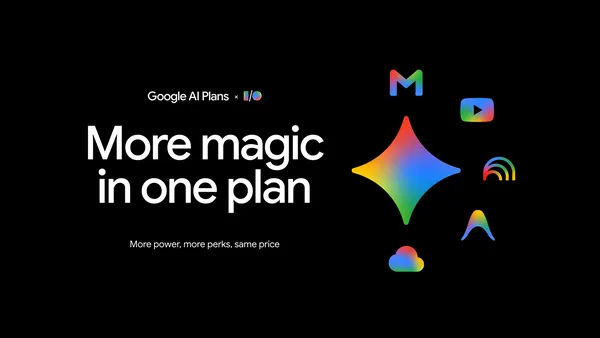
At the Google I/O 2026 event, Google announced a significant restructuring and expansion of its artificial intelligence subscription services. The most notable addition is the introduction of the 'AI Ultra' plan, positioned as a premium tier with a $100 price point. This new offering joins the existing Google AI Plus and Google AI Pro subscriptions, creating a comprehensive three-tier ecosystem for users. Beyond the new plan, Google confirmed that subscribers across all levels—Plus, Pro, and Ultra—will receive a variety of new features and benefits. This move signals Google's commitment to providing scalable AI solutions, catering to a wide spectrum of users from casual consumers to high-end professional power users seeking the most advanced AI capabilities available within the Google ecosystem.
Key Takeaways
- Introduction of AI Ultra: Google has launched a new high-end subscription tier named 'AI Ultra' priced at $100.
- Tiered Subscription Model: The AI service ecosystem now consists of three distinct levels: Google AI Plus, Google AI Pro, and Google AI Ultra.
- Enhanced Benefits: New features and benefits are being rolled out across all existing and new subscription tiers.
- I/O 2026 Milestone: These updates were officially unveiled as part of the Google I/O 2026 product announcements.
In-Depth Analysis
The Evolution of the Google AI Subscription Hierarchy
The announcement at Google I/O 2026 marks a pivotal shift in how the company packages and delivers its artificial intelligence technologies to the public. By establishing a clear hierarchy—comprising Google AI Plus, Google AI Pro, and the newly introduced Google AI Ultra—Google is moving toward a more segmented market approach. This structure suggests a strategy designed to meet varying levels of demand and technical requirements.
The 'Plus' and 'Pro' tiers, which have been part of the ecosystem, are now being supplemented by the 'Ultra' tier, indicating that Google has developed capabilities that it deems significantly more advanced or resource-intensive than what was previously offered. The inclusion of new features across all these tiers ensures that the value proposition remains competitive for the entire user base, regardless of their specific subscription level. This tiered approach allows users to select a service level that aligns with their specific needs, whether they are looking for basic AI assistance or the most powerful tools Google has to offer.
Analyzing the $100 AI Ultra Proposition
The most striking detail of the I/O 2026 announcement is the $100 price point for the AI Ultra plan. This pricing strategy places the Ultra tier in a unique category within the consumer and professional AI market. A $100 subscription fee suggests that the benefits and features included in this plan are substantial, likely targeting a segment of the market that requires high-performance AI for specialized or intensive tasks.
By setting this price, Google is defining the 'Ultra' experience as a premium service that goes beyond the standard 'Pro' offerings. The decision to introduce a plan at this level indicates a confidence in the value of the new features being integrated into the Ultra tier. It also suggests that the infrastructure and computational power required to support Ultra-level features are significant. For subscribers, the choice between Plus, Pro, and Ultra will now involve a calculation of the specific benefits provided at each price point, with the Ultra plan serving as the flagship offering for those who demand the pinnacle of Google's AI development.
Industry Impact
The introduction of a $100 AI subscription tier and the general expansion of the Google AI subscription model have several implications for the broader technology industry:
- Market Segmentation: Google is leading a trend toward more granular segmentation in AI services. Instead of a one-size-fits-all model, the industry is moving toward specialized tiers that cater to different economic and functional needs.
- Price Ceiling Definition: By establishing a $100 tier, Google is testing the upper limits of what individual and professional users are willing to pay for integrated AI services. This could set a new benchmark for competitors in the space.
- Ecosystem Integration: The update reinforces the importance of subscription-based models for AI, where continuous updates and new features are delivered as part of an ongoing service rather than a one-time product release.
- Competitive Pressure: The rollout of new benefits for Plus and Pro users ensures that Google remains competitive against other AI providers, forcing the industry to constantly innovate and add value to existing subscription plans.
Frequently Asked Questions
Question: What are the different Google AI subscription plans available after I/O 2026?
Based on the announcement, there are three primary tiers: Google AI Plus, Google AI Pro, and the new Google AI Ultra.
Question: How much does the new Google AI Ultra plan cost?
The Google AI Ultra plan is priced at $100, according to the official announcement.
Question: Will existing subscribers of Google AI Plus and Pro receive new features?
Yes, Google has stated that new features and benefits are being introduced for subscribers of Google AI Plus, Pro, and Ultra tiers.