
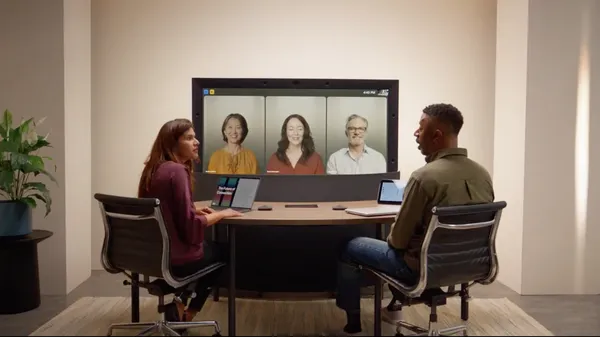
Google Beam Introduces Experimental Features to Enhance Hybrid Group Meetings with True-to-Life Presence
Google has unveiled a new experiment for Google Beam, specifically designed to improve the dynamics of group meetings in hybrid environments. The initiative focuses on delivering true-to-life size and sound to remote participants, aiming to bridge the physical gap between in-office and remote employees. By prioritizing realistic visual and auditory representation, Google seeks to make hybrid interactions feel more inclusive and connected. This research-driven update addresses the common challenges of digital communication, such as the lack of spatial awareness and the feeling of detachment during virtual sessions. The experiment represents a significant step in Google's ongoing efforts to refine how teams collaborate across different locations, ensuring that every participant, regardless of their physical setting, experiences a sense of genuine presence and engagement.
Key Takeaways
- True-to-Life Visuals: The experiment utilizes life-size representations of colleagues to simulate an in-person meeting environment.
- Realistic Audio Integration: Enhanced sound technology is employed to provide a more natural and immersive auditory experience during group sessions.
- Enhanced Inclusivity: The primary goal of the update is to foster a sense of belonging and connection for remote participants in hybrid settings.
- Focus on Connection: By reducing the barriers of digital screens, the experiment aims to make virtual interactions feel as authentic as physical ones.
In-Depth Analysis
The Evolution of Presence in Hybrid Work
The core of the new Google Beam experiment lies in the concept of "true-to-life size." In traditional video conferencing, participants are often relegated to small tiles on a screen, which can lead to a psychological disconnect and a sense of hierarchy between those in the room and those joining remotely. By scaling remote participants to their actual physical size, Google Beam attempts to normalize the presence of every individual. This visual parity is crucial for maintaining natural eye contact and non-verbal cues, which are often lost in standard digital formats. When a colleague appears at a life-size scale, the brain more easily processes the interaction as a face-to-face encounter, potentially reducing the cognitive load associated with virtual meetings.
Furthermore, the integration of true-to-life sound complements the visual experience. Sound in a standard meeting often lacks directionality, making it difficult for participants to distinguish who is speaking in a crowded room or to feel the spatial context of the conversation. By implementing realistic sound, Google Beam ensures that audio cues align with the visual placement of participants. This spatial audio approach is essential for group meetings where multiple voices and side conversations can occur. It allows for a more fluid exchange of ideas, as participants can intuitively follow the flow of conversation based on where the sound is originating, much like they would in a physical conference room.
Bridging the Inclusivity Gap
One of the most significant challenges in the modern workplace is the "hybrid divide," where remote workers may feel like second-class citizens compared to their in-office counterparts. Google's experiment directly addresses this by focusing on making meetings feel "more inclusive and connected." Inclusivity in this context refers to the ability of every participant to contribute and engage without the friction caused by technological limitations. When remote participants are seen and heard in a true-to-life manner, they occupy a more prominent physical and auditory space in the meeting, making it harder for them to be overlooked or talked over.
This sense of connection is not just about the quality of the video or audio, but about the emotional resonance of the interaction. The experiment suggests that by mimicking the physical properties of a real-world meeting, technology can facilitate a deeper level of empathy and collaboration. When people feel more connected, they are more likely to share ideas freely and engage in the spontaneous problem-solving that is often the hallmark of successful team meetings. Google's research into these immersive elements indicates a shift from simply "seeing" a colleague to truly "feeling" their presence in the shared workspace.
Industry Impact
The implications of this Google Beam experiment for the AI and collaboration industry are profound. As companies continue to navigate the complexities of hybrid work, the demand for tools that go beyond basic video calling is increasing. By setting a benchmark for true-to-life presence, Google is pushing the industry toward more immersive and human-centric communication technologies. This move signals a transition from functional communication—where the goal is simply to transmit information—to experiential communication, where the goal is to replicate the nuances of human interaction.
For the broader AI industry, this experiment highlights the importance of integrating advanced computer vision and spatial audio processing to create seamless user experiences. As these technologies mature, we can expect to see a wider adoption of telepresence solutions that prioritize psychological comfort and social presence. This could eventually lead to a standard where the distinction between "remote" and "local" becomes nearly invisible, fundamentally changing how global teams operate and interact on a daily basis.
Frequently Asked Questions
Question: What is the main objective of the new Google Beam experiment?
The main objective is to improve hybrid group meetings by making them feel more inclusive and connected through the use of true-to-life size and sound, simulating a more natural in-person experience for all participants.
Question: How does "true-to-life size" benefit meeting participants?
True-to-life size helps remote participants appear at a natural scale, which facilitates better non-verbal communication, maintains visual parity between remote and in-office staff, and helps reduce the feeling of detachment often found in traditional video calls.
Question: Why is "true-to-life sound" important for group meetings?
Realistic sound provides spatial context, allowing participants to more easily identify who is speaking and follow the natural flow of conversation. This reduces the confusion often caused by non-directional audio in complex group settings.
