Google I/O 2026 Quiz: Exploring Interactive Announcements Vibe Coded Within the Google AI Studio Environment
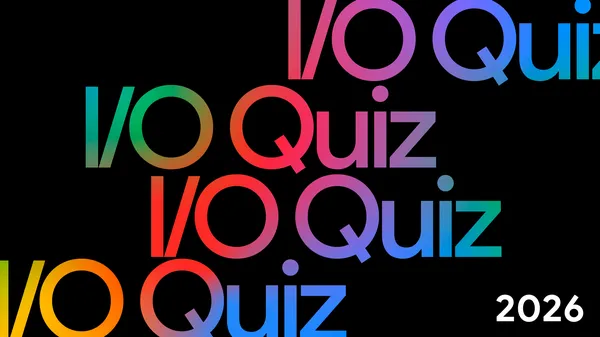
Google has officially introduced an interactive quiz designed to highlight the primary announcements from the I/O 2026 event. This engagement tool was developed using Google AI Studio, specifically employing a methodology described as "vibe coding." By leveraging the capabilities of Google AI Studio, the company has created a platform for users to test their knowledge of the latest technological breakthroughs and updates shared during the conference. The release emphasizes the practical application of Google's AI development tools in generating user-facing content. This initiative not only serves as a summary of the event's highlights but also showcases the efficiency of modern AI-assisted coding environments in producing functional, interactive experiences for a global audience interested in the future of Google's ecosystem.
Key Takeaways
- Interactive Engagement: Google has launched a dedicated quiz to help users explore and retain information regarding the top announcements from I/O 2026.
- Tool Integration: The quiz was built entirely within Google AI Studio, demonstrating the platform's utility for rapid application development.
- Vibe Coding Methodology: The project utilizes "vibe coding," a modern approach to software creation that emphasizes high-level intent and AI-assisted execution.
- Event Synthesis: The tool serves as a centralized way for the community to interact with the diverse range of technological updates presented during the I/O 2026 keynote.
In-Depth Analysis
Leveraging Google AI Studio for Interactive Engagement
The creation of the I/O 2026 quiz within Google AI Studio represents a significant shift in how major technology companies approach post-event engagement. Rather than relying on traditional static summaries or manual web development, Google has utilized its own AI-centric development environment to synthesize the event's core messages into an interactive format. Google AI Studio serves as the foundational layer for this project, providing the necessary infrastructure to process the vast array of announcements made during I/O 2026 and translate them into a structured quiz format.
This implementation highlights the versatility of Google AI Studio as more than just a research tool; it is a functional environment capable of producing consumer-ready interactive content. By using the studio to build a quiz about its own announcements, Google is providing a meta-demonstration of the tool's capabilities. The process involves taking the complex data points from the I/O 2026 presentations—ranging from software updates to hardware innovations—and organizing them into a user-friendly interface that encourages active participation rather than passive consumption.
The Emergence of "Vibe Coding" in Developer Workflows
A central aspect of this release is the mention of "vibe coding." This term refers to a development paradigm where the creator focuses on the overall direction, feel, and high-level logic of the application, while the AI handles the granular implementation details. In the context of the I/O 2026 quiz, vibe coding allowed the creators to quickly iterate on the quiz's structure and content without the traditional overhead associated with manual coding.
The use of vibe coding in Google AI Studio suggests a future where the barrier to entry for creating sophisticated interactive tools is significantly lowered. By focusing on the "vibe" or the intended user experience, developers can use natural language and high-level prompts to guide the AI in generating the necessary code and logic. This approach is particularly effective for event-based content, where speed and relevance are paramount. The I/O 2026 quiz stands as a primary example of how this methodology can be applied to real-world scenarios, transforming a list of announcements into a dynamic experience in a fraction of the time required by traditional methods.
Industry Impact
Democratization of App Development
The successful deployment of a vibe-coded quiz using Google AI Studio signals a broader trend toward the democratization of software development. As AI tools become more adept at interpreting high-level intent, the technical expertise required to build interactive applications continues to decrease. This shift allows content creators, educators, and marketers to build tools that were previously the exclusive domain of professional software engineers. The industry impact is profound, as it enables a wider variety of voices to create functional digital experiences, fostering innovation across different sectors of the tech economy.
Real-time Content Generation for Major Events
The ability to generate interactive summaries and quizzes almost immediately following a major conference like I/O 2026 sets a new standard for event coverage. In the AI industry, where information moves rapidly, the capacity to provide immediate, structured, and engaging follow-up material is invaluable. This move by Google suggests that we are entering an era where AI will not only be the subject of major announcements but also the primary vehicle through which those announcements are communicated and reinforced to the public. This creates a feedback loop where AI tools are used to explain and promote the very AI advancements they helped create.
Frequently Asked Questions
Question: What is "vibe coding" as mentioned in the Google AI Blog?
Answer: Vibe coding is a development approach used in Google AI Studio where the creator focuses on the high-level intent and desired user experience (the "vibe"), while the AI assists in generating the underlying code and structure to bring that vision to life.
Question: How can I access the I/O 2026 quiz?
Answer: The quiz is available through the Google AI Blog and was designed to help users engage with the top announcements from the I/O 2026 event in an interactive format.
Question: What tool was used to create the I/O 2026 quiz?
Answer: The quiz was created using Google AI Studio, showcasing the platform's ability to build interactive content and applications based on recent technological announcements.