
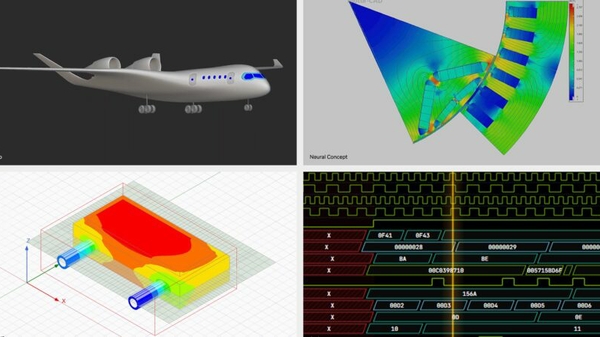
Industrial Software Leaders Partner with NVIDIA to Build Autonomous AI Engineers Using NemoClaw Technology
At GTC Taipei during COMPUTEX, NVIDIA announced a landmark collaboration with over a dozen industrial software leaders to develop secure, autonomous AI engineers powered by NVIDIA NemoClaw. While accelerated computing has successfully reduced simulation times from weeks to hours, the surrounding engineering workflows—including computer-aided design (CAD), meshing, and simulation setup—remain significant manual bottlenecks. NemoClaw is designed to address these challenges by automating the end-to-end process, from initial design and debugging to post-processing and report generation. This initiative marks a pivotal shift in the industrial sector, moving toward fully autonomous digital assistants capable of managing complex engineering tasks. By integrating AI agents into the simulation lifecycle, the partnership aims to streamline industrial productivity and overcome the final hurdles in modern engineering workflows.
Key Takeaways
- Strategic Collaboration: NVIDIA is working with more than twelve industrial software leaders to integrate autonomous AI capabilities into engineering workflows.
- Introduction of NemoClaw: The NVIDIA NemoClaw platform is being utilized to build secure, autonomous AI engineers that can handle complex technical tasks.
- Addressing Workflow Bottlenecks: The initiative focuses on automating time-consuming manual processes such as CAD, meshing, simulation setup, and debugging.
- End-to-End Automation: Beyond setup, the AI agents will manage post-processing and the generation of summary reports, streamlining the entire simulation lifecycle.
- GTC Taipei Announcement: The development was officially unveiled at GTC Taipei during the COMPUTEX event, highlighting its significance for the global industrial sector.
In-Depth Analysis
Overcoming the Simulation Bottleneck
For years, the primary focus of accelerated computing in the industrial sector has been the reduction of raw simulation time. While this effort has been remarkably successful—compressing tasks that once took weeks into a matter of hours—it has revealed a secondary set of challenges. The actual simulation is only one part of a much larger engineering workflow. The stages preceding and following the simulation, such as computer-aided design (CAD), meshing, and the intricate setup of simulation parameters, have remained largely manual and labor-intensive. These stages often act as bottlenecks, preventing organizations from fully realizing the speed benefits of accelerated hardware.
NVIDIA's announcement at GTC Taipei addresses this imbalance directly. By introducing autonomous AI engineers built on NemoClaw, the industry is moving toward a model where the "human-in-the-loop" requirement is reduced for repetitive and highly technical setup tasks. This transition is essential for scaling engineering operations, as it allows human engineers to focus on high-level design decisions while the AI handles the granular details of meshing and debugging. The goal is to create a seamless flow where the speed of the simulation is matched by the speed of the preparation and analysis phases.
The Role of Autonomous AI Agents in Engineering
The shift toward "Autonomous AI Engineers" represents a sophisticated application of AI agents within the industrial software ecosystem. Unlike standard automation scripts, these AI entities are designed to be autonomous and secure, capable of navigating the complexities of industrial software environments. The scope of their utility covers the entire end-to-end workflow. In the pre-processing stage, they handle CAD adjustments and meshing—tasks that require precision and often involve significant trial and error.
Furthermore, the integration of NemoClaw enables these agents to perform simulation debugging, a traditionally difficult task that requires deep domain expertise. By identifying errors in the simulation setup before or during the run, these AI engineers can save valuable computational resources and time. The workflow concludes with post-processing and the generation of summary reports. By automating the synthesis of simulation data into actionable reports, NVIDIA and its partners are ensuring that the insights gained from accelerated computing are delivered to decision-makers faster than ever before. This end-to-end approach ensures that the security and autonomy of the AI are maintained throughout the sensitive industrial design process.
Industry Impact
The collaboration between NVIDIA and over a dozen industrial software leaders is poised to redefine the standards of digital manufacturing and engineering. By providing a framework for autonomous AI engineers, NVIDIA is essentially offering a new layer of the industrial software stack. This move is significant because it transitions AI from a general-purpose tool into a specialized engineering assistant with deep integration into existing CAD and simulation software.
For the industry, this means a potential reduction in the time-to-market for complex products, ranging from automotive components to aerospace systems. As these AI agents become more prevalent, the barrier to entry for complex simulations may lower, allowing smaller firms to compete with larger entities by leveraging AI to handle the heavy lifting of simulation setup. Moreover, the emphasis on "secure" autonomous agents addresses a critical concern in the industrial sector: the protection of intellectual property. As AI takes a more active role in the design process, ensuring that these autonomous workflows remain secure within the corporate infrastructure will be paramount for widespread adoption.
Frequently Asked Questions
Question: What is NVIDIA NemoClaw and how is it used in industrial software?
NVIDIA NemoClaw is a technology platform used by industrial software leaders to build secure, autonomous AI engineers. These AI agents are designed to automate various stages of the engineering workflow, such as CAD, meshing, and simulation setup, which were previously manual bottlenecks.
Question: Which specific engineering tasks are being automated by these AI engineers?
According to the announcement, the AI engineers are capable of handling computer-aided design (CAD), meshing, simulation setup, debugging, post-processing, and the generation of summary reports. This covers the entire end-to-end workflow surrounding industrial simulations.
Question: Why is this development significant for the engineering industry?
While accelerated computing has already made simulations faster, the manual work required to set up and analyze those simulations has remained a slow point. By automating these surrounding tasks with autonomous AI, companies can significantly increase their overall engineering productivity and reduce the time required to complete complex projects.
