
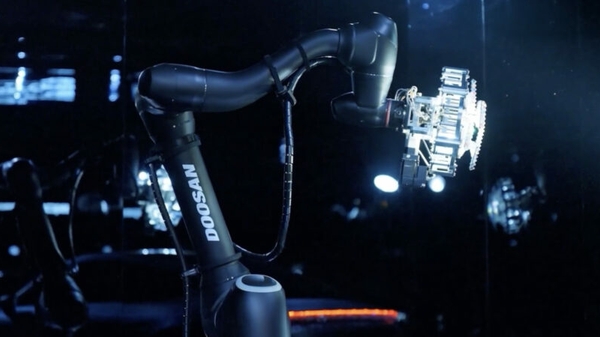
NVIDIA and Doosan Group Expand Strategic Collaboration to Advance Physical AI and Robotics Infrastructure
NVIDIA and Doosan Group have announced a significant expansion of their partnership, focusing on the development of physical AI, robotics, and AI factory infrastructure. This collaboration brings together NVIDIA’s full-stack accelerated computing platforms with Doosan’s diverse industrial capabilities. The partnership involves key Doosan subsidiaries, including Doosan Robotics, Doosan Bobcat, Doosan Enerbility, and Doosan Corporation Electro-Materials BG. By leveraging NVIDIA's technology, Doosan aims to enhance its offerings in industrial automation, power generation, and advanced electronics materials. This strategic move is designed to accelerate the deployment of AI-driven solutions across various industrial sectors, marking a pivotal step in the creation of next-generation AI factories and autonomous physical systems that bridge the gap between digital intelligence and physical operations.
Key Takeaways
- Strategic Expansion: NVIDIA and Doosan Group are broadening their collaboration to target physical AI, robotics, and AI factory infrastructure.
- Multi-Divisional Involvement: The partnership integrates several Doosan entities, including Doosan Robotics, Doosan Bobcat, Doosan Enerbility, and Doosan Corporation Electro-Materials BG.
- Technology Integration: The initiative combines NVIDIA’s full-stack accelerated computing with Doosan’s expertise in industrial automation, power generation, and electronics materials.
- Focus on Infrastructure: A primary goal is the advancement of AI factory infrastructure to support modern industrial requirements.
In-Depth Analysis
Integrating Accelerated Computing with Industrial Automation
The collaboration between NVIDIA and Doosan Group represents a significant convergence of high-performance computing and heavy industry. By utilizing NVIDIA’s full-stack accelerated computing platforms, Doosan Group aims to transform its traditional industrial processes into AI-driven operations. This integration is particularly relevant for Doosan’s capabilities in industrial automation and power generation. The use of accelerated computing allows for the processing of vast amounts of data in real-time, which is essential for the complex decision-making required in modern manufacturing and energy sectors. This technological foundation is expected to enhance the efficiency and precision of Doosan’s existing systems, providing a robust framework for the next generation of industrial solutions.
The Multi-Faceted Role of Doosan Subsidiaries
A defining characteristic of this partnership is its broad scope across the Doosan Group’s diverse business units. Each subsidiary brings a unique industrial application to the table:
- Doosan Robotics and Doosan Bobcat: These divisions are central to the robotics and physical AI aspect of the collaboration. By integrating NVIDIA’s AI capabilities, these entities can develop more autonomous and intelligent machinery for construction, manufacturing, and logistics.
- Doosan Enerbility: This division focuses on power generation. The partnership aims to apply AI to energy infrastructure, potentially optimizing power plant operations and maintenance through advanced data analytics.
- Doosan Corporation Electro-Materials BG: This unit provides the foundational materials necessary for advanced electronics. The collaboration will likely explore how AI can improve the development and manufacturing of these critical components, which are essential for the hardware that runs AI software.
Advancing Physical AI and Factory Infrastructure
The term "Physical AI" refers to the application of artificial intelligence in systems that interact directly with the physical world. Through this collaboration, NVIDIA and Doosan are positioning themselves at the forefront of this field. The development of AI factory infrastructure is a key component of this effort. An AI factory is not merely an automated plant but a facility where AI is integrated into every level of the production cycle—from design and simulation to assembly and quality control. By combining NVIDIA’s software and hardware stacks with Doosan’s physical machinery and industrial experience, the two companies are working toward a future where factories are more adaptive, efficient, and capable of handling complex tasks with minimal human intervention.
Industry Impact
The partnership between NVIDIA and Doosan Group is poised to have a substantial impact on the industrial AI landscape. By successfully bridging the gap between advanced computing and heavy machinery, this collaboration sets a precedent for how traditional industrial giants can pivot toward high-tech, AI-centric business models. The focus on AI factory infrastructure suggests a shift in the industry toward more modular and intelligent manufacturing environments. Furthermore, the advancement of physical AI could lead to breakthroughs in robotics and autonomous equipment, making industrial operations safer and more productive. As these technologies mature, they are likely to influence standards for industrial automation and energy management globally, reinforcing the importance of accelerated computing in the physical world.
Frequently Asked Questions
Question: What is the primary goal of the NVIDIA and Doosan Group collaboration?
Answer: The primary goal is to advance opportunities in physical AI, robotics, and AI factory infrastructure by combining NVIDIA’s accelerated computing platforms with Doosan’s industrial automation and power generation expertise.
Question: Which Doosan subsidiaries are involved in this partnership?
Answer: The collaboration involves Doosan Robotics, Doosan Bobcat, Doosan Enerbility, and Doosan Corporation Electro-Materials BG.
Question: How does NVIDIA contribute to this collaboration?
Answer: NVIDIA provides its full-stack accelerated computing platforms, which serve as the technological engine for the AI and robotics solutions being developed by the Doosan Group.
