
Managing AI Coding Through Agent Evaluation: A Case Study of Refactoring 310,000 Lines of Code
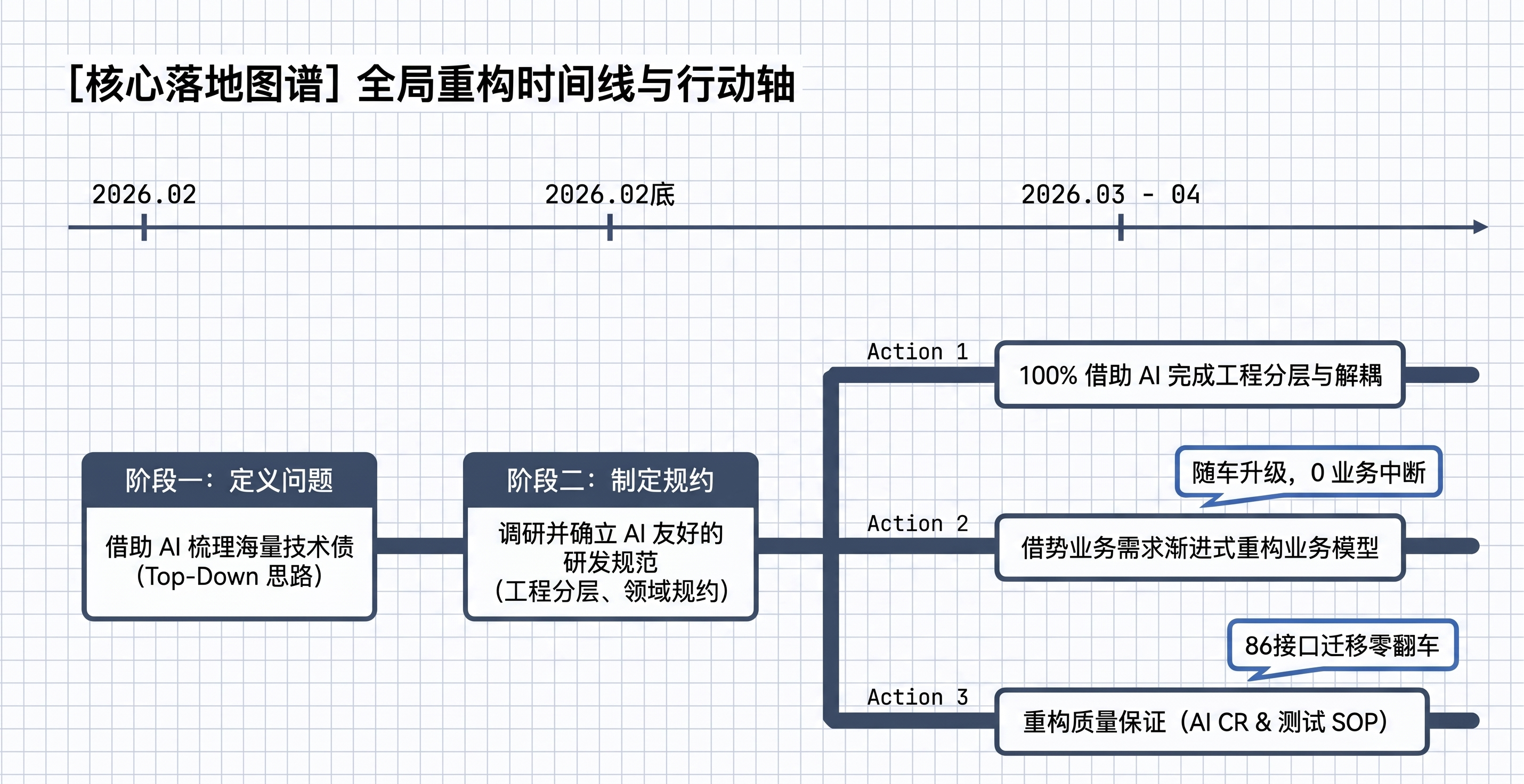
The Meituan technical team has introduced a groundbreaking approach to managing AI-driven development, centered on the refactoring of 310,000 lines of code. As AI now generates over 90% of code in certain environments, the team argues that the primary challenge is no longer the speed of generation but the constraints placed upon the AI to prevent systemic chaos. By adopting 'Agent evaluation thinking,' Meituan has implemented a structured framework involving technical debt sorting, rule construction, a standardized refactoring SOP, and a Pre-PR mechanism. This strategy successfully transforms high-cost, specialized refactoring projects into sustainable, daily iterative actions, ensuring that AI-generated code remains organized, maintainable, and aligned with technical standards.
Key Takeaways
- Constraint Over Speed: When AI generates more than 90% of a system's code, the ability to constrain and guide the AI becomes more critical than the speed of code production.
- Agent Evaluation Logic: Managing AI coding requires a shift toward 'Agent evaluation thinking' to ensure that AI-generated outputs do not amplify technical chaos.
- Four Pillars of Management: Successful large-scale AI refactoring relies on technical debt sorting, rule construction, a standardized refactoring SOP, and a Pre-PR mechanism.
- Sustainable Iteration: The goal of these practices is to turn high-cost refactoring into a continuous, daily action that occurs alongside regular development iterations.
In-Depth Analysis
The Shift from Generation to Constraint
In the current landscape of software engineering, the Meituan technical team highlights a significant paradigm shift: the transition to a state where over 90% of code is generated by AI. In this environment, the traditional metric of success—how fast code can be written—is no longer the bottleneck. Instead, the primary challenge lies in the potential for AI to amplify chaos if left unguided. Without a unified set of specifications and constraints, the sheer volume of AI-generated code can lead to a rapid accumulation of technical debt and architectural inconsistency. The team's practice suggests that the focus of engineering management must shift from facilitating speed to establishing rigorous constraints that govern AI behavior.
Implementing Agent Evaluation Thinking in Refactoring
To address the complexities of refactoring 310,000 lines of code, Meituan utilized what they term "Agent evaluation thinking." This approach treats the AI as an autonomous agent that requires constant evaluation and boundary-setting. The methodology is built upon several key components:
- Technical Debt Sorting: Before AI can effectively refactor code, the existing technical debt must be systematically identified and categorized. This provides the AI with a clear map of what needs improvement.
- Rule Construction: Establishing a robust set of rules is essential. These rules act as the guardrails for the AI, ensuring that the generated code adheres to specific architectural and stylistic standards.
- Refactoring SOP (Standard Operating Procedure): By creating a standardized process for refactoring, the team ensures that the AI follows a consistent workflow, reducing the risk of errors and ensuring that the refactoring process is repeatable.
- Pre-PR (Pull Request) Mechanism: This mechanism serves as a final checkpoint. By evaluating code before it reaches the PR stage, the team can catch inconsistencies early, ensuring that only high-quality, compliant code is integrated into the main codebase.
From Specialized Projects to Daily Iteration
One of the most significant outcomes of Meituan's practice is the transformation of the refactoring process itself. Traditionally, large-scale refactoring (such as a 310,000-line project) is viewed as a high-cost, specialized task that requires dedicated time and resources. However, by integrating AI management tools and Agent evaluation logic, Meituan has demonstrated that refactoring can become a "daily action." By embedding these processes into the regular development cycle, technical debt is addressed continuously as part of every iteration, rather than being allowed to accumulate until a massive intervention is required.
Industry Impact
Meituan's approach sets a vital precedent for the AI-native development era. As more organizations move toward AI-heavy coding workflows, the "Meituan model" provides a blueprint for maintaining code quality at scale. The emphasis on "Agent evaluation" suggests that the role of the human developer is evolving into that of an AI orchestrator and evaluator. This shift highlights the growing importance of automated governance tools and standardized SOPs in software engineering. By proving that 310,000 lines of code can be refactored through continuous, AI-managed iterations, this practice challenges the industry to rethink how technical debt is managed and how AI agents are integrated into the software development lifecycle (SDLC).
Frequently Asked Questions
Question: Why is AI constraint considered more important than speed in modern coding?
When AI generates the vast majority of code (over 90%), the volume of output is so high that any lack of standards or rules is magnified. Without constraints, AI can create massive amounts of inconsistent or low-quality code very quickly, leading to systemic chaos that is difficult to manage manually.
Question: What are the core components of Meituan's AI coding management strategy?
The strategy is based on Agent evaluation thinking and includes four main pillars: systematic technical debt sorting, the construction of strict coding rules, the implementation of a standardized refactoring SOP, and a Pre-PR mechanism to verify code quality before integration.
Question: How does this approach change the way technical debt is handled?
Instead of treating refactoring as a rare, high-cost, and specialized project, this approach allows refactoring to become a continuous part of daily development. By using AI within a structured framework, teams can address technical debt incrementally during every iteration.
