
Meituan BI Architecture Evolution: Leveraging Metric Platforms and Enhanced Computing for Data Consistency
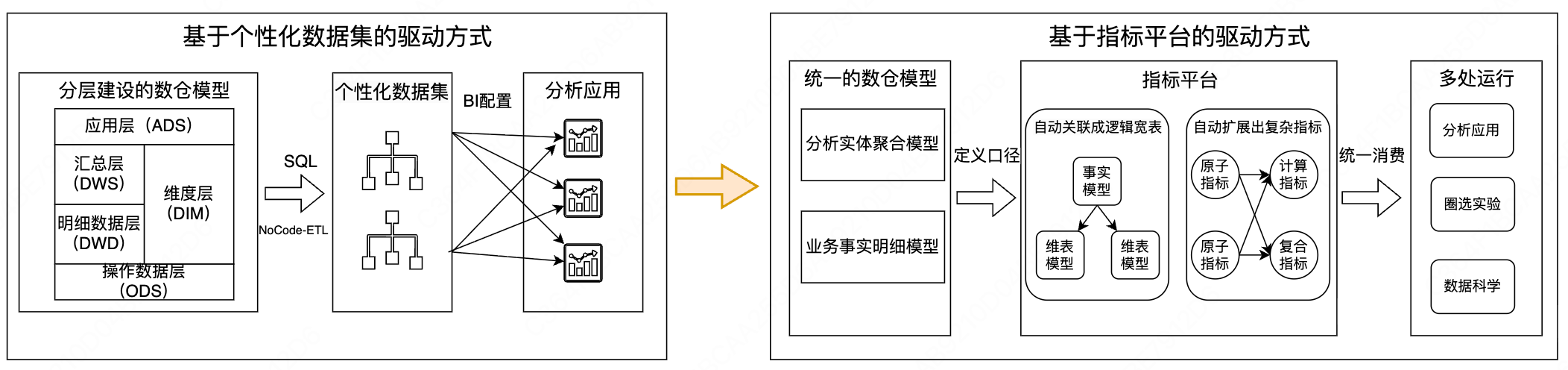
Meituan's data platform team has introduced a next-generation Business Intelligence (BI) architecture centered on a unified metric platform. By developing core capabilities in automatic semantics and enhanced computing, the team has addressed critical pain points in traditional BI systems, such as inconsistent data logic and slow query speeds. This shift from personalized dataset-driven models to a centralized metric-centric approach marks a significant advancement in Meituan's data processing efficiency and accuracy. The new architecture specifically targets the challenges of data definition confusion and performance bottlenecks, providing a more robust framework for enterprise-level data analysis and decision-making.
Key Takeaways
- Metric-Centric Architecture: Meituan has transitioned its BI framework to a new generation model that prioritizes a centralized metric platform over fragmented datasets.
- Core Technical Capabilities: The implementation of "automatic semantics" and "enhanced computing" serves as the foundation for this architectural shift.
- Solving Data Inconsistency: The new system addresses the common industry problem of "mouth diameter" (data definition) confusion caused by personalized, siloed datasets.
- Performance Optimization: Enhanced computing capabilities have been integrated to resolve the poor query performance issues inherent in traditional BI platforms.
In-Depth Analysis
The Transition to a Metric-Centric BI Framework
Meituan's data platform team has identified a fundamental flaw in traditional Business Intelligence (BI) systems: the reliance on personalized datasets. In many legacy environments, individual users or departments create their own datasets to drive specific reports. While this offers short-term flexibility, it inevitably leads to a fragmented data landscape. Meituan's solution is the construction of a new generation BI architecture that places a unified metric platform at its core.
By centralizing metrics, the platform ensures that a single definition of a business KPI (such as "active users" or "gross merchandise value") is used across the entire organization. This structural change moves the logic away from individual reports and into a governed, centralized layer. The original news highlights that this approach is designed to mitigate the chaos often associated with personalized data management, ensuring that all stakeholders are looking at the same "version of the truth."
Overcoming Semantic Confusion and Performance Barriers
To support this metric-centric vision, Meituan has focused on two critical technical pillars: automatic semantics and enhanced computing.
Automatic Semantics addresses the issue of data logic confusion, often referred to in technical terms as "mouth diameter" inconsistency. In traditional setups, different analysts might calculate the same metric using slightly different SQL logic, leading to conflicting results. Automatic semantics allows the system to interpret and apply standardized business logic automatically, reducing human error and ensuring that the semantic meaning of data remains consistent regardless of who is querying it.
Enhanced Computing is the second pillar, specifically targeting the technical limitations of query engines. As data volumes grow and metrics become more complex, traditional BI tools often struggle with latency. Meituan's investment in an enhanced analysis engine ensures that even complex, multi-dimensional queries across the metric platform remain performant. This capability is essential for maintaining user engagement and ensuring that data-driven decisions can be made in real-time without the frustration of slow-loading dashboards.
Industry Impact
Meituan's exploration into metric platforms and analysis engines reflects a broader trend in the data engineering industry toward "Headless BI" and centralized semantic layers. By successfully implementing these technologies at scale, Meituan provides a blueprint for other large-scale enterprises struggling with data silos and inconsistent reporting.
The significance of this practice lies in its ability to balance user autonomy with corporate governance. While users still need to perform personalized analysis, doing so on top of a governed metric platform—powered by automatic semantics—prevents the technical debt and logic drift that typically plague fast-growing tech companies. Furthermore, the focus on enhanced computing demonstrates that architectural elegance must be matched by raw performance to be viable in a high-concurrency production environment.
Frequently Asked Questions
Question: What are the primary problems Meituan's new BI architecture aims to solve?
Meituan's new architecture is specifically designed to solve two major issues: the confusion of data definitions (logic inconsistency) and poor query performance. These problems are typically caused by the traditional reliance on personalized, fragmented datasets within BI platforms.
Question: How do "automatic semantics" and "enhanced computing" contribute to the platform?
Automatic semantics ensures that business logic and data definitions are applied consistently across the platform, eliminating discrepancies in how metrics are calculated. Enhanced computing provides the necessary processing power to ensure that queries remain fast and efficient, even as the complexity of the data analysis increases.
Question: Why is the metric platform considered the "core" of the new architecture?
The metric platform acts as a single source of truth. By centering the BI architecture on metrics rather than individual datasets, Meituan ensures that all analysis is derived from standardized, governed definitions, which improves data reliability across the organization.
