
Meituan Showcases AI Innovations at ACL 2026: From Model Evaluation to Reasoning Optimization and Generative Paradigms
Meituan's technical team has announced the acceptance of six research papers at ACL 2026, a premier international conference in computational linguistics and natural language processing. The papers cover a broad spectrum of cutting-edge AI fields, including large model evaluation, complex process reasoning, and competition-level mathematical thinking optimization. Additionally, the research explores advancements in reinforcement learning and generative recommendation systems. These contributions signify Meituan's strategic focus on building a new paradigm for generative AI, aiming to enhance the logical depth and practical utility of language models. By addressing both theoretical benchmarks and real-world application challenges, Meituan continues to position itself at the forefront of NLP research, contributing to the evolution of how AI systems reason, learn, and interact with users in complex environments.
Key Takeaways
- Prestigious Recognition: Meituan successfully had six papers accepted at ACL 2026, a top-tier global academic conference for Natural Language Processing (NLP).
- Diverse Research Scope: The research spans five critical technical directions: model evaluation, complex reasoning, mathematical optimization, reinforcement learning, and generative recommendations.
- Focus on High-Level Reasoning: A significant portion of the work targets competition-level mathematical thinking and complex process reasoning, moving beyond basic generative tasks.
- New Generative Paradigm: The collective goal of these papers is to establish and refine a new paradigm for generative AI that prioritizes optimization and structured reasoning.
In-Depth Analysis
Advancing Evaluation and Complex Reasoning Frameworks
Meituan's research at ACL 2026 places a heavy emphasis on the foundational aspects of Large Language Models (LLMs), specifically in how they are evaluated and how they handle multi-step logic. As the AI industry moves away from simple prompt-response interactions, the need for robust "Large Model Evaluation" becomes paramount. Meituan’s focus in this area suggests a push toward more nuanced metrics that can accurately capture a model's true capabilities beyond surface-level fluency.
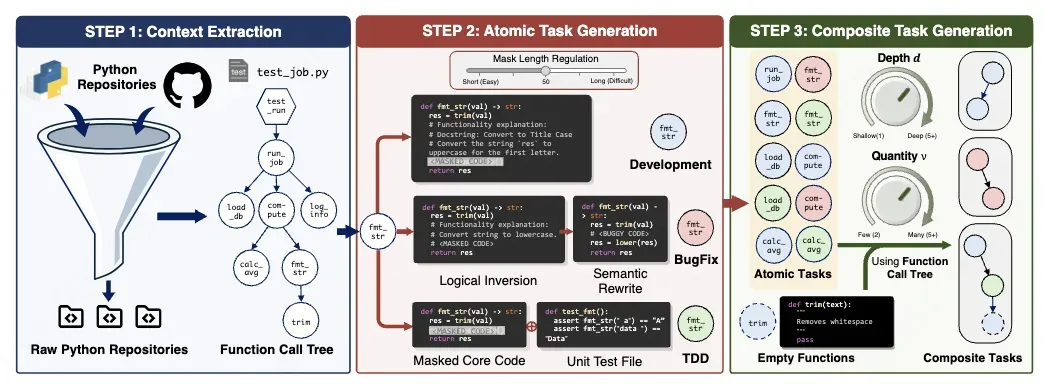
Furthermore, the exploration of "Complex Process Reasoning" indicates a shift toward solving real-world problems that require sequential logic and dependency management. By refining how models navigate intricate workflows, Meituan is addressing one of the primary bottlenecks in current AI applications: the tendency for models to lose track of logic in long-form or multi-stage tasks.
Optimization through Mathematics and Reinforcement Learning
The inclusion of "Competition-level Mathematical Thinking Optimization" highlights a trend toward high-stakes cognitive tasks. Mathematical reasoning is often considered a benchmark for a model's ability to perform symbolic manipulation and rigorous logic. By targeting competition-level standards, Meituan is pushing the boundaries of what generative models can achieve in specialized, high-accuracy domains.
This is complemented by research into "Reinforcement Learning (RL) Optimization." Reinforcement learning remains a cornerstone for aligning models with human intent and optimizing performance in dynamic environments. Meituan’s work in this area likely focuses on making these optimization processes more efficient and effective, ensuring that the generative outputs are not only creative but also strategically sound and contextually appropriate.
The Shift to Generative Recommendation Systems
One of the most practical applications discussed is "Generative Recommendation." Traditional recommendation engines often rely on discriminative models to rank items. Meituan’s research into generative paradigms for recommendations suggests a move toward more conversational, context-aware, and personalized user experiences. This approach allows the system to generate tailored suggestions and explanations, potentially increasing user engagement and satisfaction by providing a more intuitive interface for discovery.
Industry Impact
Meituan’s contributions to ACL 2026 reflect a broader industry trend where major technology platforms are no longer just consumers of AI but are primary drivers of fundamental research. By tackling complex reasoning and mathematical optimization, Meituan is helping to set new standards for what is expected from industrial-grade AI.
The focus on "Generative Paradigms" is particularly significant for the service industry. As platforms like Meituan integrate AI more deeply into their ecosystems, the ability to reason through complex logistics, provide high-level mathematical accuracy, and offer generative recommendations will become a competitive necessity. These advancements contribute to the global NLP community by providing frameworks that bridge the gap between academic theory and large-scale industrial application.
Frequently Asked Questions
Question: What is the significance of Meituan having six papers accepted at ACL 2026?
Answer: ACL is a top-tier international conference in the NLP field. Having six papers accepted demonstrates Meituan's strong research capabilities and its influence in shaping the future of computational linguistics and generative AI.
Question: What technical directions do Meituan's ACL 2026 papers cover?
Answer: The papers cover five key areas: large model evaluation, complex process reasoning, competition-level mathematical thinking optimization, reinforcement learning optimization, and generative recommendation.
Question: How does "Generative Recommendation" differ from traditional methods?
Answer: While traditional methods focus on ranking and filtering existing items, generative recommendation focuses on using generative models to create more personalized, contextually rich, and interactive suggestion experiences for users.


