
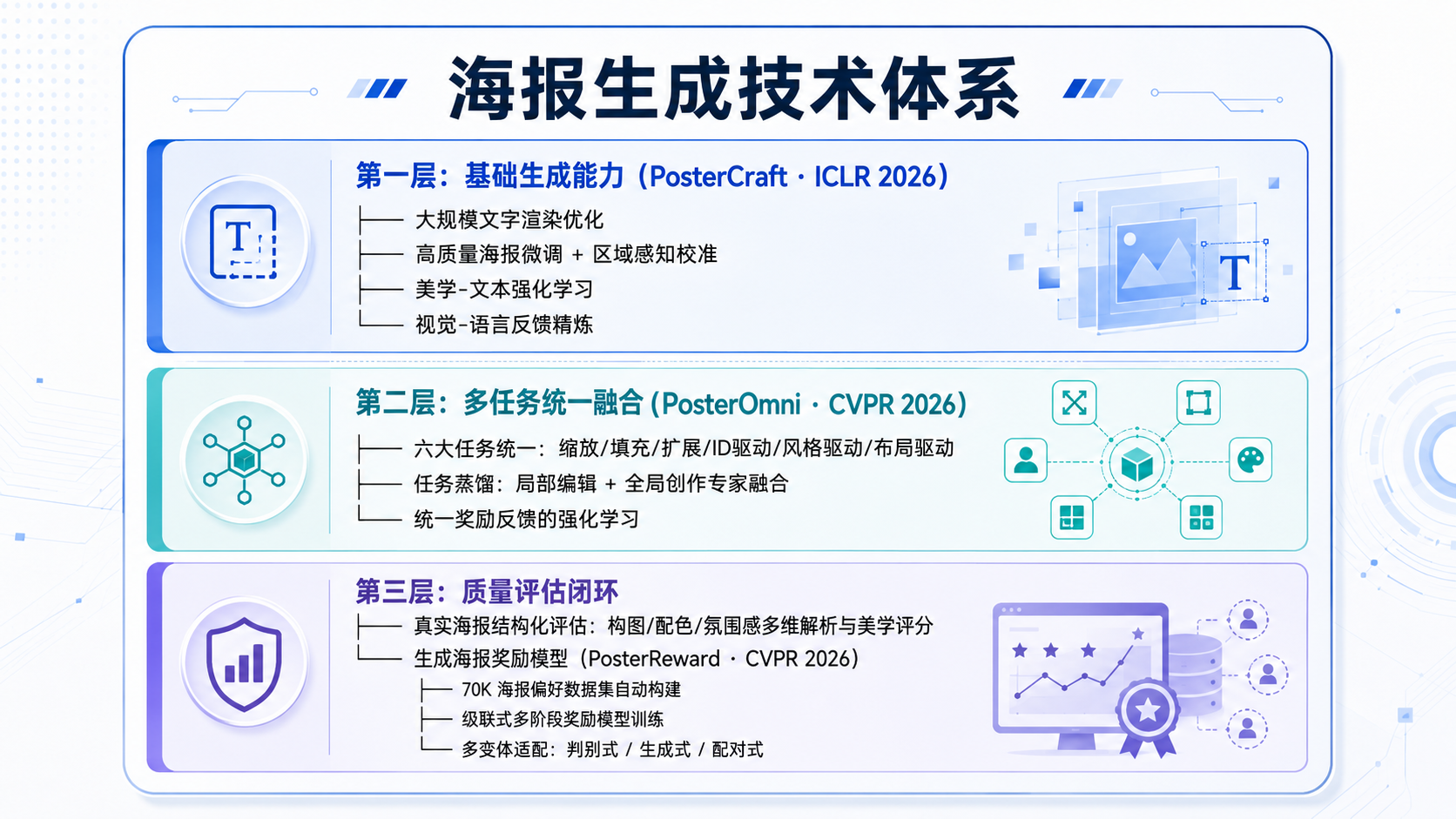
Meituan Open Sources AIGC Poster Generation System: A Technical Deep Dive into the Generation-Editing-Evaluation Loop
Meituan's Intelligent Creation Team has announced the development and open-sourcing of a comprehensive AIGC technical system dedicated to poster generation. The system is built upon a "Generation-Editing-Evaluation" closed-loop architecture, designed to streamline the creative process from initial conception to final quality assessment. Currently deployed in high-traffic scenarios such as Meituan Waimai and brand IP development, this technology represents a significant step in practical AIGC application. By making the system open-source, Meituan aims to contribute its innovations in automated design and intelligent content creation to the global developer community, providing a robust framework for scalable visual content production.
Key Takeaways
- Comprehensive Technical System: Meituan has established a full-stack AIGC framework specifically for poster generation, moving beyond simple image creation to a systematic workflow.
- Closed-Loop Architecture: The core of the innovation lies in the "Generation-Editing-Evaluation" (生成-编辑-评判) cycle, ensuring a complete pipeline from draft to final product.
- Real-World Application: The technology is already operational within Meituan's core business units, including Meituan Waimai (food delivery) and various brand IP scenarios.
- Open Source Commitment: Meituan has fully open-sourced this technical system, allowing external developers and the AI industry to utilize and build upon their poster generation innovations.
In-Depth Analysis
The "Generation-Editing-Evaluation" Technical Closed Loop
Meituan's approach to AIGC poster generation is defined by its structured "Generation-Editing-Evaluation" closed loop. This methodology addresses the common challenges in automated design where raw AI outputs often require refinement and quality control before they are suitable for commercial use.
- Generation: This initial phase focuses on the core AIGC capabilities to produce base poster designs. By building a complete technical system around this, Meituan ensures that the generation process is not an isolated event but the starting point of a professional design workflow.
- Editing: Recognizing that AI-generated content often requires human-like precision or specific brand adjustments, the "Editing" component of the loop provides the necessary tools to modify and refine the generated posters. This ensures that the final output meets specific aesthetic or functional requirements that a zero-shot generation might miss.
- Evaluation: The final stage of the loop involves a "评判" (Evaluation/Judgment) mechanism. This is critical for maintaining high standards in commercial environments. By integrating an evaluation layer, the system can programmatically or semi-automatically determine if a poster meets the quality thresholds required for deployment in Meituan's ecosystem.
Practical Implementation in Meituan Waimai and Brand IP
The transition of AIGC from theoretical research to practical application is demonstrated through Meituan's deployment in its Waimai (food delivery) and brand IP sectors. In the context of food delivery, the demand for high-volume, high-quality visual assets is immense. Merchants and the platform require constant updates to promotional materials, making automated poster generation a high-value solution.
Furthermore, the application in brand IP scenarios suggests that the system is capable of maintaining brand consistency. Creating posters for specific IPs requires adherence to strict visual guidelines, and Meituan's system appears to handle these constraints through its integrated editing and evaluation phases. The success of these implementations within Meituan's internal operations served as the precursor to the system's public release.
Industry Impact
Advancing Automated Design Standards
Meituan's decision to open-source its AIGC poster generation system is a significant contribution to the AI industry. While many companies keep their internal AIGC tools proprietary, Meituan’s move provides a blueprint for how large-scale enterprises can manage the "Generation-Editing-Evaluation" workflow. This open-source release is likely to lower the barrier for smaller companies and developers looking to implement professional-grade automated design tools.
Strengthening the Open Source AI Ecosystem
By releasing a system that has already been battle-tested in high-concurrency environments like Meituan Waimai, the Meituan Technical Team is providing the community with more than just code; they are providing a validated methodology. This strengthens the overall ecosystem by encouraging a shift toward closed-loop AI systems that prioritize quality control and editability over simple content generation.
Frequently Asked Questions
Question: What makes Meituan's AIGC poster system different from standard image generators?
Unlike standard generators that focus solely on the output, Meituan's system incorporates a "Generation-Editing-Evaluation" closed loop. This means it includes specific technical modules for refining the generated images and evaluating their quality for commercial standards, rather than just producing a single static image.
Question: In which specific areas has Meituan deployed this technology?
According to the Meituan Technical Team, the system is currently utilized in Meituan Waimai (the company's food delivery platform) and for various brand IP (Intellectual Property) scenarios. These environments require high-quality, consistent visual content at scale.
Question: Is the Meituan AIGC poster generation system available for public use?
Yes, the Meituan Intelligent Creation Team has fully open-sourced the technical system. Developers and researchers can access the framework to understand, implement, or improve upon the "Generation-Editing-Evaluation" workflow for their own poster generation needs.