
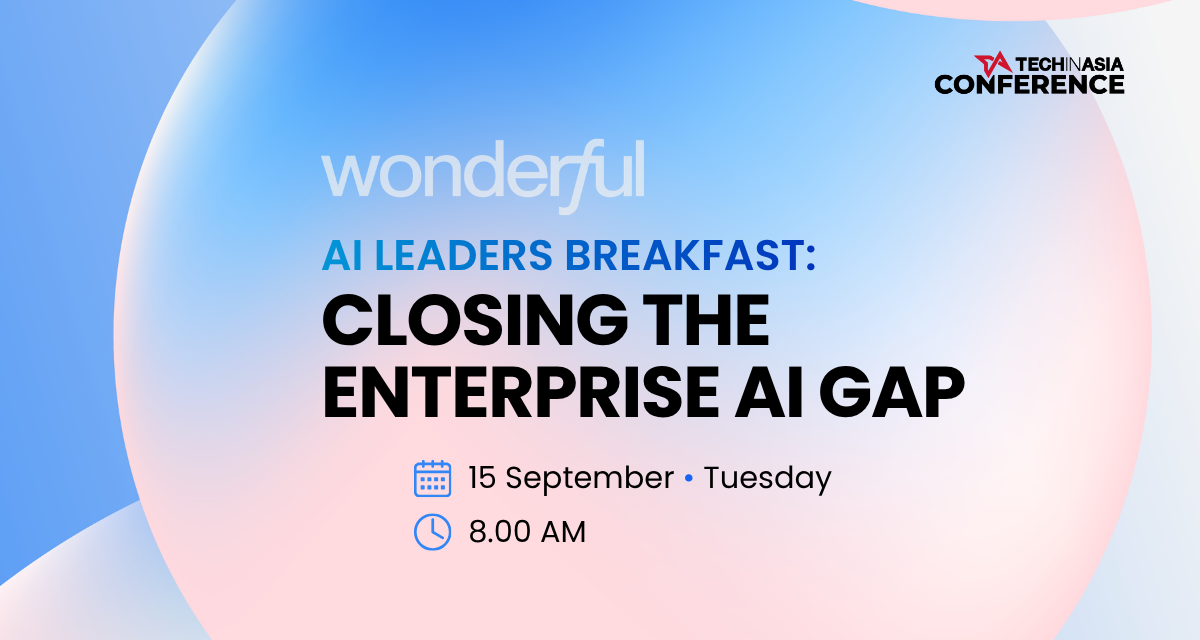
AI Leaders Breakfast: Strategic Insights into Closing the Enterprise AI Gap
The 'AI Leaders Breakfast: Closing the Enterprise AI Gap' event, hosted by Tech in Asia on August 26, 2026, addressed the significant divide between artificial intelligence potential and its practical application within large-scale organizations. Authored by Leesa Jaib, the event served as a high-level forum for industry leaders to discuss the hurdles preventing seamless AI integration. The core focus remained on the 'Enterprise AI Gap'—a term describing the challenges in moving from AI experimentation to full-scale operational deployment. This gathering highlighted the necessity for leadership-driven strategies to overcome technical, cultural, and structural barriers, ensuring that AI investments translate into tangible business value in an increasingly competitive global market.
Key Takeaways
- Focus on the Enterprise AI Gap: The event centered on the discrepancy between AI's theoretical capabilities and its actual implementation within corporate structures.
- Leadership-Centric Dialogue: Targeted at AI leaders and decision-makers, emphasizing the role of executive strategy in technology adoption.
- Tech in Asia Initiative: Hosted by a leading regional tech platform, highlighting the importance of AI maturity in the Asian enterprise ecosystem.
- Operational Challenges: Identification of the barriers that prevent organizations from scaling AI beyond the pilot phase.
In-Depth Analysis
Defining the Enterprise AI Gap in 2026
The 'AI Leaders Breakfast: Closing the Enterprise AI Gap' highlights a pivotal challenge facing modern corporations. By August 2026, the 'Enterprise AI Gap' has become a recognized phenomenon where the rapid advancement of large language models and autonomous agents outpaces the internal capabilities of traditional businesses. This gap is not merely technical; it encompasses a lack of data readiness, insufficient talent, and a misalignment between AI initiatives and core business objectives. The event title suggests that while many companies have initiated AI projects, few have successfully integrated them into the fabric of their daily operations. Closing this gap requires a holistic approach that addresses the 'last mile' of AI—ensuring that models are not only accurate but also secure, compliant, and integrated into existing workflows.
The Role of Leadership in Bridging the Divide
As indicated by the event's focus on 'AI Leaders,' the responsibility for closing the enterprise gap rests heavily on the shoulders of C-suite executives and technology heads. The transition from AI as a 'novelty' to AI as a 'utility' requires significant cultural shifts within an organization. Leadership must foster an environment where data-driven decision-making is prioritized and where employees are upskilled to work alongside intelligent systems. The 'AI Leaders Breakfast' serves as a platform for discussing how to move past the 'Proof of Concept' (PoC) trap, where projects stall due to a lack of clear ROI or scalability. By focusing on leadership, the event underscores that the most significant barriers to AI adoption are often organizational rather than purely technological.
Strategic Infrastructure and Data Governance
A critical component of closing the enterprise AI gap involves the development of robust infrastructure. For enterprises to move forward, they must solve the challenges of data silos and fragmented legacy systems. The discussions at such leadership gatherings often revolve around the necessity of a unified data strategy that can support the high-compute demands of modern AI. Furthermore, as AI becomes more pervasive, governance and ethics become central to the 'gap.' Organizations that cannot guarantee the transparency and safety of their AI systems will find it impossible to bridge the gap to full-scale deployment, as regulatory pressures and consumer trust become defining factors in the 2026 tech landscape.
Industry Impact
Accelerating the Maturity of the AI Ecosystem
The 'AI Leaders Breakfast' signifies a shift in the industry's focus from innovation for innovation's sake toward practical, scalable utility. By addressing the enterprise gap, the event helps catalyze a more mature AI ecosystem where vendors and service providers are pushed to offer more integrated, 'enterprise-ready' solutions. This shift is likely to drive increased investment in AI orchestration layers, MLOps (Machine Learning Operations), and specialized consulting services that focus on the structural transformation of businesses.
Strengthening the Regional Tech Landscape
As a Tech in Asia event, this gathering specifically impacts the Asian corporate sector, which is home to some of the world's fastest-growing digital economies. By bringing together regional leaders to solve the enterprise AI gap, the event fosters a collaborative environment that can lead to standardized best practices across industries such as finance, logistics, and manufacturing. This collective effort to bridge the gap ensures that the region remains competitive on a global scale, turning AI from a theoretical advantage into a practical engine for economic growth.
Frequently Asked Questions
What exactly is the 'Enterprise AI Gap'?
The Enterprise AI Gap refers to the disconnect between the advanced capabilities of current AI technology and the actual ability of large organizations to implement, scale, and derive measurable value from that technology in a production environment.
Why is leadership critical to closing this gap?
Leadership is essential because the primary obstacles to AI adoption are often related to organizational culture, budget allocation, data strategy, and change management—all of which require executive-level authority and vision to resolve.
How does this event impact the broader AI industry?
By focusing on the practical challenges of enterprise adoption, the event encourages the development of more reliable, secure, and scalable AI tools, shifting the industry focus from experimental research to sustainable business applications.
