
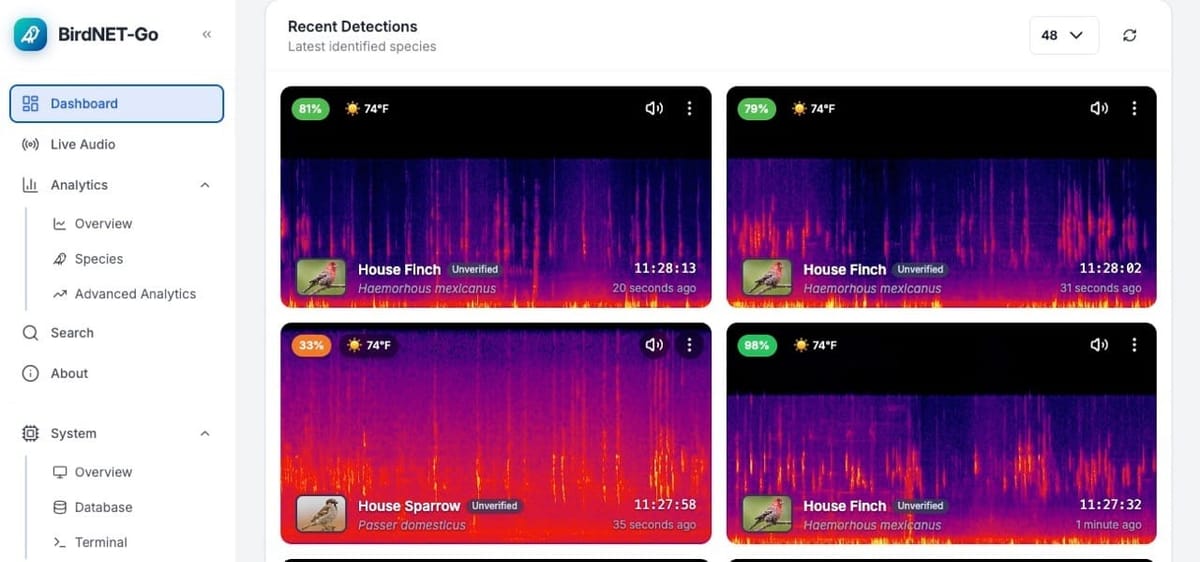
I Turned My Security Cameras Into an Automatic Bird Identification System
In a significant move toward data sovereignty and self-hosting, tech enthusiast Jason Tucker successfully migrated a massive library of 51,000 photos and videos from Apple's iCloud to a private Immich server. This transition was facilitated by a specialized tool known as ImmiBridge, which managed the high-volume transfer over the course of a single weekend. The project highlights the growing capability of homelab environments to handle enterprise-scale personal datasets, offering a viable alternative to proprietary cloud storage. By moving away from the iCloud ecosystem, the migration demonstrates how open-source tools like Immich are empowering users to reclaim control over their digital memories while maintaining the performance and accessibility typically associated with major tech providers.
Key Takeaways
- Massive Data Migration: Successfully transferred 51,000 photos and videos out of the Apple iCloud ecosystem.
- Specialized Tooling: Utilized ImmiBridge to bridge the gap between proprietary cloud storage and self-hosted infrastructure.
- Rapid Execution: The entire synchronization of 51,000 media items was completed within a single weekend.
- Self-Hosted Infrastructure: The destination for the data was a self-hosted Immich server, a popular open-source alternative for photo management.
- Homelab Integration: The project is part of a broader "homelab" initiative focusing on data independence and local storage solutions.
In-Depth Analysis
The ImmiBridge Migration Strategy
The migration of 51,000 media files represents a substantial technical challenge, particularly when moving data out of a "walled garden" like iCloud. Jason Tucker’s approach utilized ImmiBridge, a tool specifically designed to facilitate the extraction of content from iCloud and its subsequent injection into the Immich ecosystem. The fact that 51,000 items—comprising both photos and videos—were successfully moved over a single weekend suggests a high level of efficiency in the ImmiBridge sync logic. This process bypasses the traditional limitations of manual downloads and provides a streamlined pipeline for users with decades of digital history stored in the cloud.
Immich as a Self-Hosted Alternative
The choice of Immich as the primary storage and management server is a critical component of this project. Immich has emerged as a leading self-hosted solution for users looking to replicate the features of Google Photos or iCloud Photos without the associated privacy concerns or subscription costs. By hosting an Immich server locally, users like Tucker can benefit from high-speed local network access to their media, advanced indexing, and the security of knowing their data is stored on their own hardware. The successful integration of such a large dataset (51,000 items) serves as a benchmark for the scalability of the Immich platform in a homelab environment.
The Significance of the Weekend Timeframe
One of the most notable aspects of this migration is the timeframe. Synchronizing 51,000 high-resolution photos and videos typically involves terabytes of data transfer. Completing this task over a single weekend indicates that the ImmiBridge tool and the underlying Immich server architecture are optimized for bulk data ingestion. This efficiency is vital for the broader adoption of self-hosting; if the transition from cloud to local storage is too slow or error-prone, many users will remain locked into proprietary services. Tucker's experience proves that with the right tools, even massive libraries can be transitioned quickly and reliably.
Industry Impact
This migration project reflects a significant shift in the personal data management industry. As cloud storage costs rise and concerns over data privacy grow, the "Homelab" and self-hosting movements are gaining momentum. The ability to move 51,000 items using open-source tools like Immich and ImmiBridge signals that the barrier to entry for data sovereignty is lowering.
For the AI and software industry, this trend highlights a demand for interoperability. While major providers like Apple and Google often make it difficult to export data in bulk, the community-driven development of tools like ImmiBridge shows that users will find ways to reclaim their data. Furthermore, the rise of Immich suggests that open-source projects are now capable of competing with the user experience and feature sets of multi-billion dollar cloud services. This could eventually pressure major tech companies to offer better data portability or more competitive pricing to prevent a mass exodus of power users to self-hosted alternatives.
Frequently Asked Questions
Question: What is ImmiBridge and what role did it play in this migration?
ImmiBridge is a tool used to pull photos and videos from iCloud and sync them directly into a self-hosted Immich server. In this project, it was the primary mechanism that allowed for the automated transfer of 51,000 media files over a single weekend.
Question: Why would a user move 51,000 photos from iCloud to Immich?
Moving to a self-hosted Immich server is typically driven by a desire for data sovereignty, avoiding cloud subscription fees, and having full control over one's personal media library. It allows the user to host their own storage (homelab) rather than relying on a third-party provider like Apple.
Question: How long does it take to sync a large library using this method?
According to the report by Jason Tucker, a library consisting of 51,000 photos and videos was successfully synced from iCloud to an Immich server over the course of one weekend.
