
Meituan Officially Open-Sources LongCat-2.5 Under MIT License for Commercial and Training Use
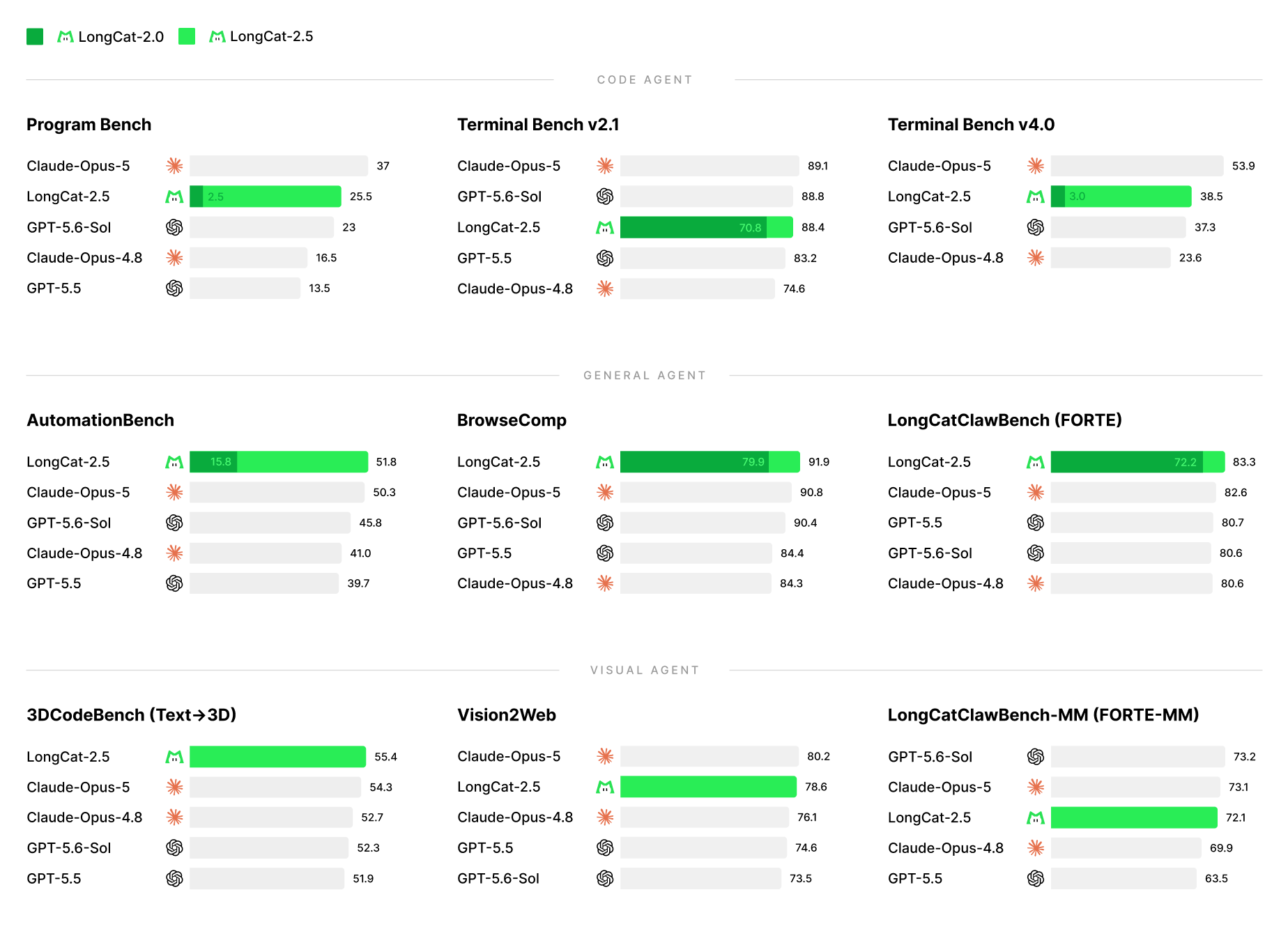
Meituan has officially announced the open sourcing of LongCat-2.5 under the MIT license, enabling commercial inference deployment and secondary training without requiring additional authorization. According to the announcement by the Meituan technical team, LongCat-2.5 is designed as a native multimodal model tailored for long-horizon agentic tasks. The release aims to provide developers and enterprises with flexible access for custom deployment and fine-tuning, strictly adhering to the permitted terms of the MIT license.
Key Takeaways
- Meituan officially open-sources the LongCat-2.5 model under the permissive MIT license.
- The release permits commercial inference deployment and secondary training with no requirement for additional authorization.
- LongCat-2.5 is introduced as a native multimodal model specifically designed for long-horizon agentic tasks.
- Released by the Meituan technical team to support flexible enterprise integration and research development.
In-Depth Analysis
Open Source Release and Licensing Terms
Meituan has made LongCat-2.5 publicly available under the MIT license, a widely recognized permissive open-source license. This licensing structure allows developers, researchers, and enterprises to freely use, copy, modify, merge, publish, distribute, and sublicense the software. Crucially, it supports commercial inference deployment and secondary training activities without the need to secure additional authorization or licensing fees from the creators, lowering barriers to adoption for commercial applications.
Model Design and Core Focus
As outlined by the technical team, LongCat-2.5 functions as a native multimodal model built to handle long-horizon agentic tasks. The architecture and training approach focus heavily on managing complex, multi-step workflows typical of advanced agent scenarios. By open-sourcing the model, Meituan provides the broader AI community with direct access to inspect, deploy, and adapt the underlying technology for specialized enterprise and research use cases.
Industry Impact
The open sourcing of advanced native multimodal models like LongCat-2.5 under permissive licenses such as the MIT license significantly influences the commercial AI landscape. By granting unrestricted rights for commercial inference and secondary training, initiatives like this empower smaller businesses and independent developers to build customized agentic solutions without proprietary lock-in. This fosters a more competitive and collaborative ecosystem for long-horizon AI application development across global markets.
Frequently Asked Questions
Question: What license does LongCat-2.5 use?
Answer: LongCat-2.5 is released under the MIT license, which permits broad usage, modification, and distribution.
Question: Can LongCat-2.5 be used for commercial purposes?
Answer: Yes, the open-source release explicitly supports commercial inference deployment and secondary training without requiring extra authorization.
Question: What type of model is LongCat-2.5?
Answer: According to the Meituan technical team, it is a native multimodal model engineered specifically for long-horizon agentic tasks.