
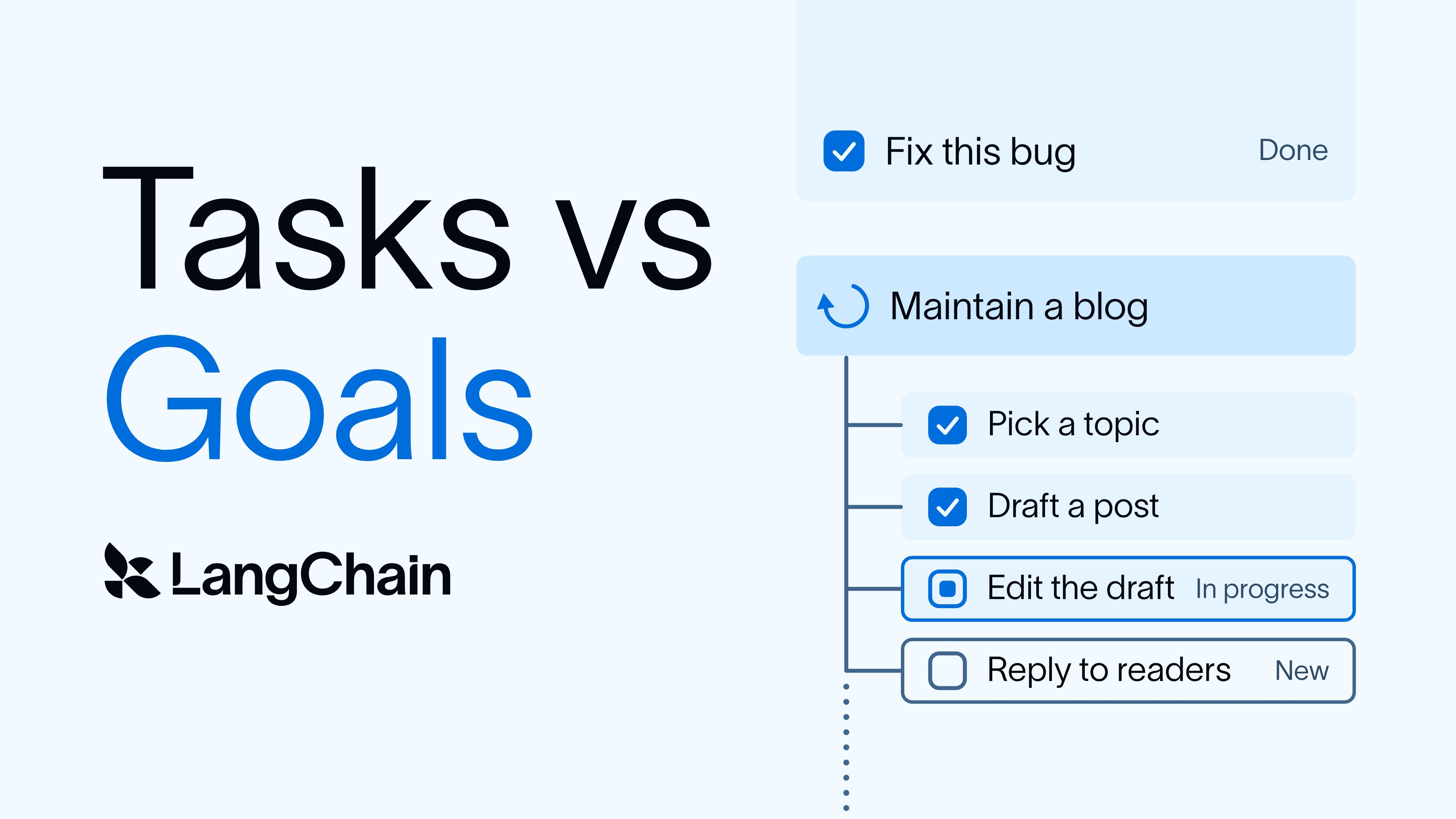
LangChain's Strategic Evolution: Moving from Task-Specific to Goal-Focused AI Agents
LangChain CEO and Co-founder Harrison Chase has announced a significant shift in the company's focus, emphasizing the evolution from task-specific agents to goal-focused agents. This transition highlights a fundamental change in how agentic AI architectures are designed, prioritizing objective-oriented outcomes over simple task execution.
Key Takeaways
- Strategic Shift: LangChain is prioritizing the development of goal-focused agents.
- Leadership Vision: CEO Harrison Chase is driving this transition within the company.
- Industry Evolution: The move reflects a broader industry trend toward AI systems that can pursue broader objectives rather than strictly defined, isolated tasks.
In-Depth Analysis
The Shift Toward Goal-Orientation
Harrison Chase, CEO and Co-founder of LangChain, has formally identified a shift in the agentic AI landscape. The core of this transition involves moving from 'task-specific' agents—AI models designed to complete narrow, pre-defined functions—to 'goal-focused' agents. Goal-focused agents are designed to understand and pursue high-level objectives, implying a higher degree of autonomy and reasoning capabilities compared to their task-specific predecessors.
Implications for Agentic AI
By prioritizing goal-focused architectures, LangChain is signaling a maturing ecosystem where AI agents are expected to handle ambiguity and complexity more effectively. While task-specific agents are highly efficient for repetitive, well-defined inputs, goal-focused agents aim to navigate multi-step processes or changing environments to achieve a specific end state, representing a critical step forward in practical AI application.
Industry Impact
The AI industry is rapidly moving toward more autonomous and adaptive systems. LangChain’s pivot reflects the growing demand for agents that do not require constant human intervention for every sub-task. If successfully implemented, this approach could significantly increase the utility of AI agents in enterprise and complex workflows, allowing developers to set outcomes rather than detailing every individual action the model must take.
Frequently Asked Questions
Question: What is the main difference between task-specific and goal-focused agents?
Task-specific agents are built to handle precise, singular functions. In contrast, goal-focused agents are designed to prioritize a desired outcome, utilizing their own reasoning to navigate the necessary steps to achieve that goal.
Question: Why is this shift significant for the AI industry?
This evolution indicates a maturation in agent technology, moving from simple automation tools toward more capable systems that can operate with greater autonomy and handle complex, objective-based requirements.


