
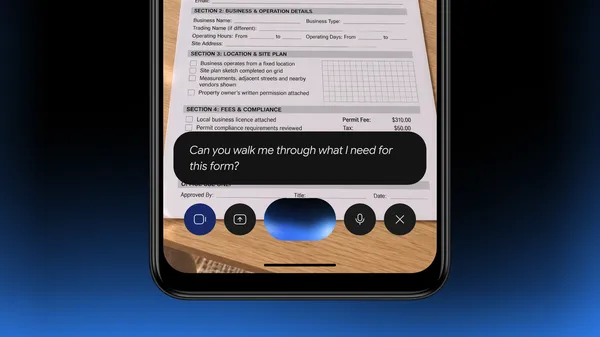
Google Gemini App Now Supports Lower-Memory Android Devices, With Gemini Live and Custom Image Creation
Google announced that the Gemini app now supports lower-memory Android devices, expanding the range of phones on which the app is available. The Google AI Blog announcement highlights two things users can do on their phones: access Gemini Live and create custom images. It also invites readers to download the app. The announcement does not list supported phone models, specify a minimum memory requirement, or give a way to check whether a particular device qualifies. Its main news is broader device support for the Gemini app. Gemini Live and custom image creation are presented as reasons to use the app, not as newly launched features.
Key Takeaways
- The Google Gemini app now supports lower-memory Android devices.
- Google highlights Gemini Live and custom image creation as two things users can access through the app on their phones.
- The Google AI Blog post invites readers to download the Gemini app but does not specify a minimum memory requirement or list compatible phone models.
In-Depth Analysis
The announcement is about which devices can run Gemini
Google's announcement makes a specific change explicit: the Gemini app is now available on lower-memory Android devices. Both the headline and the opening sentence put device support first. That framing matters because the main news is not that the app can do something it could not do before; it is that the app is available on a broader range of Android phones. The announcement uses memory as the point of distinction, but it does not define what counts as a lower-memory device. It also does not state the previous requirement or identify phones that were previously excluded. The direction of the change is clear, but its exact scope is not. For a reader looking for a direct answer about a particular phone, the post establishes that support has expanded without establishing whether that phone is among the devices covered by the announcement.
Gemini Live and custom image creation explain what users can access
After stating that the app supports lower-memory Android devices, Google names two capabilities: Gemini Live and custom image creation. Those examples give readers a practical reason to pay attention to the compatibility change. Rather than describing the update only in terms of memory, the post tells readers what they can use Gemini for on their phones. At the same time, it does not describe either capability as a new feature launch or announce changes to how either one works. It gives no feature-by-feature comparison between phone models and no details about how Gemini Live or custom image creation performs on lower-memory devices. The distinction is useful: the announcement establishes broader availability for the app and highlights two uses, but it does not establish that the experience is identical across devices.
Industry Impact
The significance for the AI industry is about access rather than a new capability. This announcement treats device compatibility as product news in its own right. The two named features help explain why: even when an announcement is not introducing a new feature, expanding the range of phones supported by an app changes who can access what the app offers. Google's message links those two points directly, pairing the expansion of Android support with concrete examples of what a user can do. That makes the announcement relevant not only to people following Gemini's features, but also to readers tracking where the app is available.
The announcement does not, however, quantify the expansion. There is no device list or memory cutoff, so the post does not provide enough information to count the newly supported models or estimate how many people can now download the app. It also does not explain what changed technically to make lower-memory device support possible. As a result, the update is evidence of broader compatibility, not evidence of a particular implementation, a measured performance improvement, or a change in adoption. Those are separate questions, and the source does not answer them.
The invitation to download the app reinforces the announcement's practical focus. Google moves from the change in compatibility to examples of what to try, then to a direct next step. The invitation should not be read as a blanket statement that every lower-memory Android phone is supported. The distinction is between an expansion of support across a category of devices and confirmation of support for a specific model. Google announces the former; the post does not provide the details needed for the latter.
Frequently Asked Questions
What changed for the Gemini app on Android?
Google announced that the Gemini app now supports lower-memory Android devices. The change described in the post is broader device compatibility. Google mentions Gemini Live and custom image creation to show what users can access on their phones, but it does not present either capability as a new feature introduced with the compatibility update.
Does Google list which lower-memory Android phones are supported?
No. The announcement does not name specific phone models or give a minimum memory requirement. It therefore cannot be used on its own to tell whether an individual phone is supported. The phrase “lower-memory Android devices” describes the expansion without specifying where the compatibility cutoff falls.
What does Google suggest trying in the Gemini app?
Google highlights Gemini Live and custom image creation and invites readers to download the app. These are the only two capabilities named in the announcement. The post does not include instructions for using them or compare how they work on different Android phones.


