AI News on July 16, 2026

Exploring Awesome-LLM-Apps: A Comprehensive Repository of Over 100 Deployable AI Agents and RAG Applications
Open Source

Exploring Awesome-LLM-Apps: A Comprehensive Repository of Over 100 Deployable AI Agents and RAG Applications

The 'awesome-llm-apps' repository, created by Shubhamsaboo and recently featured on GitHub Trending, has emerged as a significant resource for the AI development community. The project provides a curated collection of over 100 practical AI Agents and Retrieval-Augmented Generation (RAG) applications. Designed with a 'clone, customize, deliver' philosophy, the repository aims to bridge the gap between theoretical Large Language Model (LLM) capabilities and real-world deployment. By offering a vast array of functional templates, it enables developers to rapidly prototype and ship AI-driven solutions. This resource reflects the industry's shift toward practical, agentic workflows and sophisticated data retrieval strategies, providing a foundational toolkit for modern AI application development.


GitHub Trending
HKUDS Launches Vibe-Trading: A New Open-Source Personal AI Trading Agent for Automated Markets
Open Source

HKUDS Launches Vibe-Trading: A New Open-Source Personal AI Trading Agent for Automated Markets

Vibe-Trading, a new open-source project developed by the University of Hong Kong Data Science Lab (HKUDS), has emerged as a personal trading agent designed for individual users. Recently featured on the GitHub Trending list, the project aims to provide a sophisticated AI-driven tool for navigating financial markets. By positioning the software as a "personal" agent, HKUDS highlights a shift toward the democratization of advanced financial technology. The project is accessible to a global audience, offering documentation in both English and Chinese. As an academic contribution to the FinTech space, Vibe-Trading represents the intersection of data science research and practical market application, allowing developers and traders to leverage AI for personalized trading strategies.

GitHub Trending
Hallmark: A New Design Skill to Eliminate AI-Slop in Claude Code and Cursor
Open Source

Hallmark: A New Design Skill to Eliminate AI-Slop in Claude Code and Cursor

Hallmark, a specialized design skill developed by Nutlope, has emerged on GitHub to address the growing issue of 'AI-slop' in software development. Designed specifically for integration with Claude Code, Cursor, and Codex, Hallmark aims to refine AI-generated outputs by rejecting the typical 'AI-generated feel' that often characterizes synthetic content. As AI-assisted coding becomes more prevalent, Hallmark provides a framework for developers to ensure their results maintain a high standard of design and authenticity. By focusing on the aesthetic and structural quality of AI outputs, the project offers a solution for those seeking professional-grade results that do not immediately reveal their artificial origins. This tool represents a significant step in the evolution of AI coding agents, moving from simple generation to sophisticated, design-aware refinement.

GitHub Trending
AI Hedge Fund Proof of Concept: Exploring Artificial Intelligence in Automated Trading Decisions for Educational Purposes
Open Source

AI Hedge Fund Proof of Concept: Exploring Artificial Intelligence in Automated Trading Decisions for Educational Purposes

The AI Hedge Fund project, developed by virattt, is an innovative proof of concept designed to explore the integration of artificial intelligence within the financial trading sector. This initiative focuses on the practical application of AI to facilitate and automate trading decisions, providing a structured framework for understanding how machine learning can influence hedge fund strategies. Explicitly labeled for educational purposes, the project serves as a foundational tool for developers and students to study the intersection of technology and finance. By offering a conceptual model rather than a commercial product, it emphasizes the theoretical exploration of AI-driven market analysis and decision-making processes, contributing to the broader discourse on financial technology and open-source AI development.

GitHub Trending
OpenCut Emerges as a Community-Driven Open-Source Alternative to CapCut Video Editor
Open Source

OpenCut Emerges as a Community-Driven Open-Source Alternative to CapCut Video Editor

OpenCut, a new project recently featured on GitHub Trending, is positioning itself as an open-source alternative to the widely popular video editing application CapCut. Developed by the OpenCut-app team, the project aims to offer a transparent and accessible tool for creators who seek the functionality of modern video editors without the constraints of proprietary software. While the project is in its early stages of visibility, its appearance on trending lists highlights a significant interest in open-source creative suites. This development marks a potential shift in the video editing landscape, providing a community-led option for users globally.

GitHub Trending
Matt Pocock Releases 'Skills': A Deep Dive into Real Engineer Claude Configurations
Open Source

Matt Pocock Releases 'Skills': A Deep Dive into Real Engineer Claude Configurations

Renowned developer Matt Pocock has unveiled a new GitHub repository titled 'skills,' which offers a curated collection of what he defines as 'real engineer skills.' These resources are pulled directly from his personal .claude directory, representing a sophisticated approach to AI-assisted software engineering. The project highlights a significant shift in the industry, where the ability to configure and orchestrate AI models like Claude is becoming a core competency for modern developers. By sharing these internal configurations, Pocock provides a blueprint for how engineers can move beyond basic prompting to create highly specialized, context-aware AI workflows. This release has quickly gained traction on GitHub Trending, signaling a growing demand for standardized AI personas and professional-grade development configurations.

GitHub Trending
Enhancing AI Agent Safety: Destructive Command Guard (dcg) Intercepts Risky Git and Shell Commands for Secure Automation
Open Source

Enhancing AI Agent Safety: Destructive Command Guard (dcg) Intercepts Risky Git and Shell Commands for Secure Automation

Destructive Command Guard, abbreviated as dcg, is a specialized utility designed to enhance the security and reliability of AI agents. As autonomous agents become more integrated into development workflows, the risk of executing unintended or harmful system commands increases. dcg addresses this by acting as an intermediary layer that intercepts dangerous git and shell commands before they are executed. Developed by Dicklesworthstone and featured on GitHub, this tool provides a critical safeguard for developers utilizing agentic AI. By monitoring command execution, dcg ensures that AI agents operate within safe parameters, preventing potential data loss or system corruption that could arise from autonomous errors in shell environments or version control systems.

GitHub Trending
Microsoft Sales Strategy Shift: Prioritizing In-House AI Models Over OpenAI and Anthropic
Industry News

Microsoft Sales Strategy Shift: Prioritizing In-House AI Models Over OpenAI and Anthropic

Microsoft is reportedly pivoting its enterprise sales strategy by training its sales force to promote its proprietary, in-house artificial intelligence models over those of its competitors and partners, specifically OpenAI and Anthropic. According to recent reports, the tech giant is positioning its internal AI developments as more efficient and cost-effective alternatives to the models offered by its rivals. This move marks a significant strategic shift as Microsoft seeks to leverage its own technological advancements to provide better value to customers. By focusing on the economic and performance advantages of its in-house solutions, Microsoft aims to strengthen its market position and potentially reduce its reliance on external AI providers in the competitive enterprise landscape.

TechCrunch AI
NVIDIA Unveils Jetson Thor T3000 and T2000 Modules to Drive Mass-Market Robotics and Edge AI
Product Launch

NVIDIA Unveils Jetson Thor T3000 and T2000 Modules to Drive Mass-Market Robotics and Edge AI

NVIDIA has announced the launch of the T3000 and T2000 modules, built on the advanced NVIDIA Thor architecture. These new additions to the Jetson lineup are specifically designed to transition general-purpose robots and autonomous machines from research environments to large-scale commercial deployment. By providing compact and power-efficient AI supercomputing capabilities, these modules allow foundation models to run directly at the edge. This development addresses the growing industry demand for high-performance computing in robotics, facilitating the move toward mainstream autonomous systems and sophisticated edge AI applications. The introduction of these modules represents a significant step in providing the necessary hardware for sophisticated edge AI applications that require high performance within constrained power envelopes.

NVIDIA Newsroom
Japanese Enterprises and Startups Leverage NVIDIA Nemotron Open Models to Develop Industry-Specific Artificial Intelligence Solutions
Industry News

Japanese Enterprises and Startups Leverage NVIDIA Nemotron Open Models to Develop Industry-Specific Artificial Intelligence Solutions

NVIDIA has announced that a broad spectrum of Japanese organizations, including leading enterprises, startups, and research institutions, are now utilizing NVIDIA Nemotron open models. These entities are leveraging NVIDIA’s open models, data, and libraries to create industry-specialized AI applications. The primary objective of this initiative is to accelerate the development of artificial intelligence that is specifically tailored to the Japanese language, local industries, and the unique requirements of the country's workforce. This strategic adoption highlights a shift toward localized AI development, ensuring that technological advancements are aligned with regional linguistic and economic contexts through the use of NVIDIA's foundational AI resources.

NVIDIA Newsroom
xAI Open Sources Grok Build: A Powerful Rust-Based Terminal AI Coding Agent for Developers
Open Source

xAI Open Sources Grok Build: A Powerful Rust-Based Terminal AI Coding Agent for Developers

xAI has officially open-sourced Grok Build (grok), a sophisticated terminal-based AI coding agent designed to enhance the developer workflow. Built using the Rust programming language, Grok Build operates as a full-screen Text User Interface (TUI) that provides deep codebase understanding, file editing capabilities, and shell command execution. The tool is highly versatile, offering interactive modes for manual coding, headless modes for automated scripting and CI/CD pipelines, and integration options for external editors via the Agent Client Protocol (ACP). By releasing the source code and providing prebuilt binaries for macOS, Linux, and Windows, xAI aims to provide a high-performance, extensible environment for AI-assisted software development, complete with support for MCP servers, plugins, and custom hooks.

Hacker News
Roblox Announces Shutdown of Roblox Connect Avatar-Based Video Calling Service After Short Tenure
Industry News

Roblox Announces Shutdown of Roblox Connect Avatar-Based Video Calling Service After Short Tenure

Roblox has officially announced the discontinuation of Roblox Connect, its innovative video calling feature first introduced in 2023. The service was designed to bridge the gap between traditional communication and virtual interaction by allowing users to video chat through their personalized Roblox avatars. These avatars were uniquely capable of mimicking a user's real-life movements in real-time, providing a more immersive social experience. Additionally, the service allowed participants to navigate shared virtual environments together while remaining on the call. The decision to shut down the service marks a significant shift in Roblox's social feature roadmap, ending an experiment in avatar-centric communication that lasted approximately three years.

The Verge
Christopher Nolan’s The Odyssey and the Rise of AI Slop: The New Era of Cinema Cash Grabs
Industry News

Christopher Nolan’s The Odyssey and the Rise of AI Slop: The New Era of Cinema Cash Grabs

The film industry is witnessing a stark polarization between high-budget, tech-driven masterpieces and a new wave of low-quality content. Christopher Nolan’s latest adaptation of 'The Odyssey' is projected to dominate the box office with an opening weekend between $80 million and $100 million, driven by audience interest in his use of cutting-edge filmmaking technology. However, this success coincides with a burgeoning trend described as 'AI slop' movies. These productions are being identified as the modern equivalent of direct-to-video cash grabs, representing a shift in how low-budget content is produced and distributed. This analysis explores the financial projections for Nolan's work and the implications of AI-generated content occupying the space once held by traditional budget-tier films.

The Verge
OpenAI Debuts $230 Light-Up Keyboard for Codex Amid Hardware Trade Theft Legal Battle with Apple
Product Launch

OpenAI Debuts $230 Light-Up Keyboard for Codex Amid Hardware Trade Theft Legal Battle with Apple

OpenAI has officially expanded its reach into the hardware sector with the release of a $230 light-up keyboard specifically designed for its Codex agentic coding application. This strategic product launch occurs during a period of significant legal tension, as OpenAI is currently embroiled in a lawsuit with Apple. The legal dispute centers on allegations of hardware trade theft, making the timing of this hardware release particularly noteworthy. The keyboard is positioned as a companion tool for developers using OpenAI's agentic coding environment, signaling the company's intent to integrate its AI software capabilities with dedicated physical peripherals despite the ongoing legal challenges regarding its hardware development practices.

TechCrunch AI
Thinking Machines Releases Inkling: A 975B Parameter Open-Weights Mixture-of-Experts Model for Multimodal Customization
Product Launch

Thinking Machines Releases Inkling: A 975B Parameter Open-Weights Mixture-of-Experts Model for Multimodal Customization

Thinking Machines has announced the launch of Inkling, a massive open-weights Mixture-of-Experts (MoE) transformer model designed to serve as a flexible foundation for AI customization. Boasting 975 billion total parameters with 41 billion active during inference, Inkling supports a massive 1-million-token context window and was pretrained on a diverse dataset of 45 trillion tokens spanning text, images, audio, and video. Alongside the flagship model, the company introduced Inkling-Small, a more efficient version with 12 billion active parameters. Positioned as a tool to extend human judgment, Inkling emphasizes native multimodal reasoning and controllable thinking effort. It is now available for fine-tuning on the Tinker platform, marking a significant contribution to the open-weights ecosystem.

Hacker News
Google Research Explores the Algorithmic Foundations and Creativity of Diffusion Models
Research Breakthrough

Google Research Explores the Algorithmic Foundations and Creativity of Diffusion Models

Google Research has released a new publication titled "Towards demystifying the creativity of diffusion models," categorized under the domain of Algorithms & Theory. This research initiative focuses on providing a deeper, more theoretical understanding of how diffusion models—a cornerstone of modern generative AI—achieve creative outputs. By situating the study within algorithmic theory, Google Research aims to move beyond empirical observations of AI performance toward a robust mathematical framework. The goal is to demystify the complex processes that allow these models to generate novel and high-quality content, bridging the gap between technical execution and the perceived creativity of artificial intelligence. This work represents a significant step in the ongoing effort to understand the internal logic of generative systems.

Google Research Blog
Thinking Machines Challenges General AI Dominance with the Launch of Its First Open Model Inkling
Product Launch

Thinking Machines Challenges General AI Dominance with the Launch of Its First Open Model Inkling

Thinking Machines has officially entered the public AI arena with the release of Inkling, its inaugural open-source model. After operating in stealth for eighteen months to develop specialized AI infrastructure, the company is positioning itself against the prevailing "one-size-fits-all" approach to artificial intelligence. Inkling represents a significant milestone for the firm, serving as its first public proof point. The move signals a strategic shift toward modular and accessible AI tools, emphasizing the company's commitment to providing alternatives to centralized, general-purpose models. This launch marks the culmination of extensive behind-the-scenes development aimed at reshaping how AI infrastructure is deployed and utilized across various sectors, moving away from universal solutions toward more targeted, open-source architectures.

TechCrunch AI
Lessons from Shippy: How AllenAI is Redefining the Architecture of Autonomous AI Agents
Industry News

Lessons from Shippy: How AllenAI is Redefining the Architecture of Autonomous AI Agents

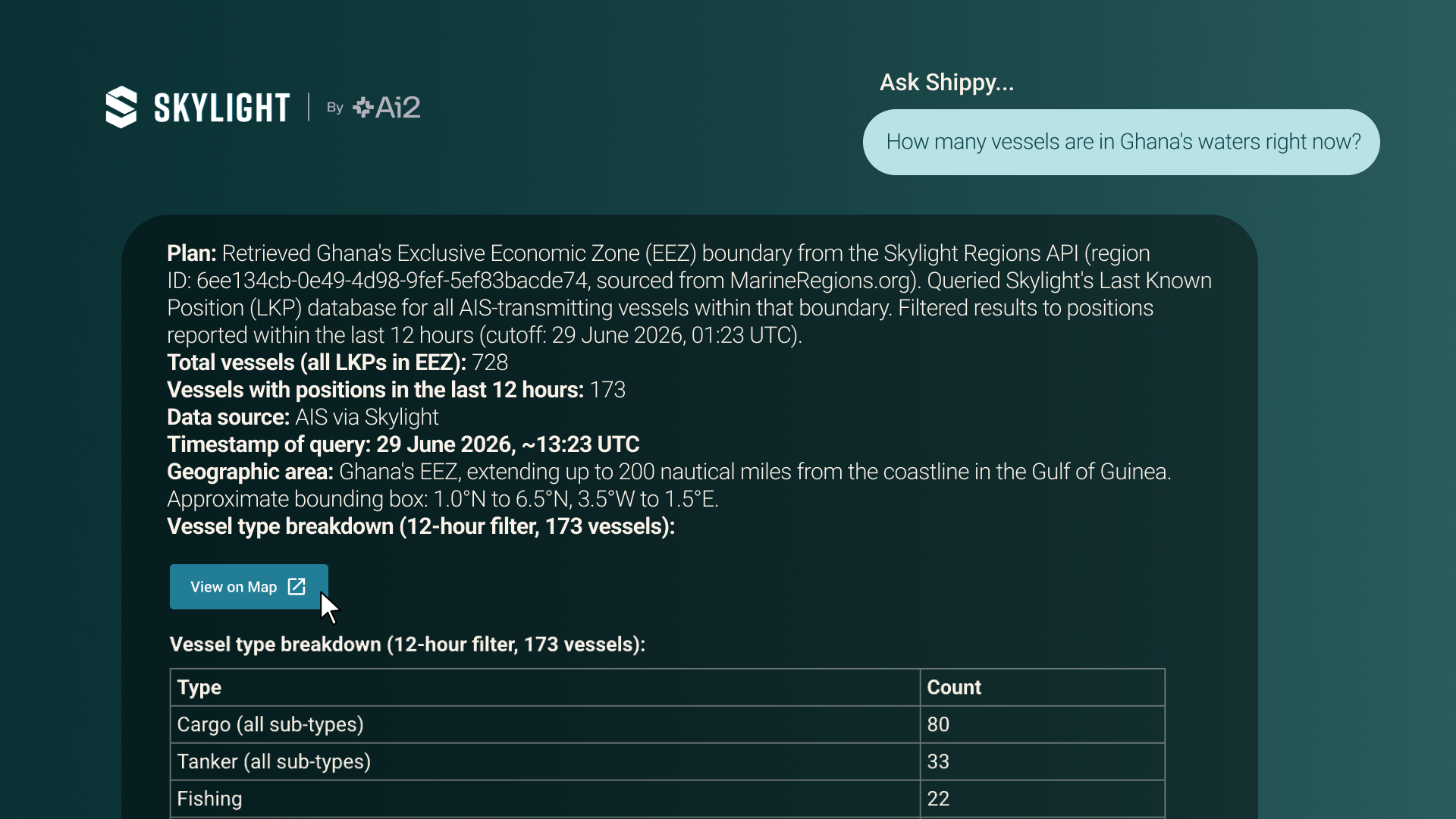
The development of Shippy by AllenAI marks a significant milestone in the transition from static Large Language Models (LLMs) to dynamic, autonomous agents. This analysis explores the core lessons learned during the Shippy project, focusing on the architectural shifts required to build reliable agentic workflows. By moving beyond simple prompt-response cycles, Shippy demonstrates the necessity of robust tool integration, iterative feedback loops, and sophisticated error-handling mechanisms. The project highlights that building effective agents is less about the underlying model's size and more about the framework that governs its interaction with external environments. These insights provide a roadmap for developers looking to create AI systems capable of executing complex, multi-step tasks with high degrees of autonomy and reliability in real-world scenarios.

Hugging Face Blog
Model Routing Is Simple. Until It Isn’t: Navigating the Hidden Complexities of AI Orchestration
Industry News

Model Routing Is Simple. Until It Isn’t: Navigating the Hidden Complexities of AI Orchestration

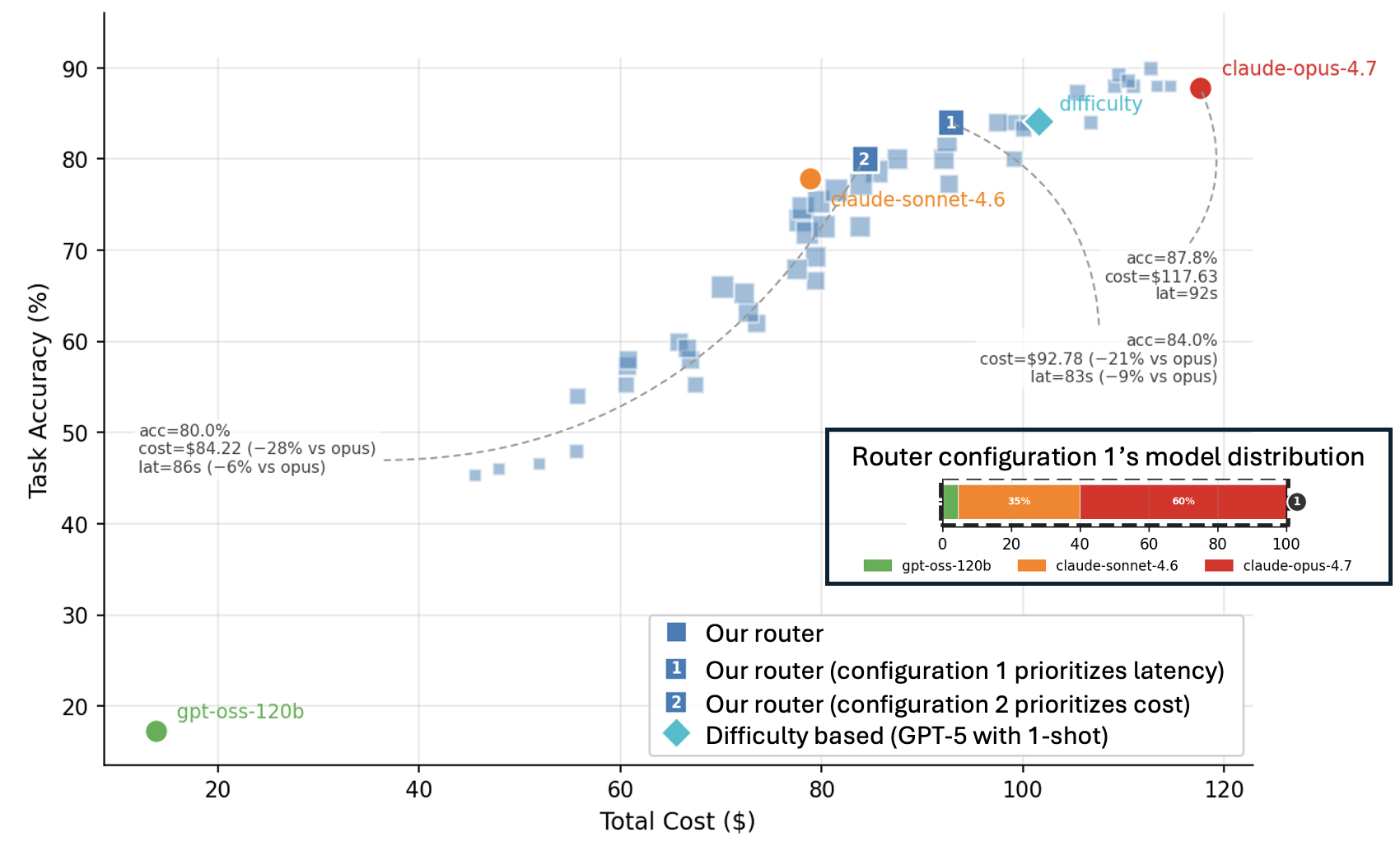
The concept of model routing—directing user queries to the most appropriate large language model (LLM)—is often presented as a straightforward solution for optimizing AI performance and cost. However, a recent exploration by IBM Research, featured on the Hugging Face blog, suggests that the transition from conceptual simplicity to production-scale implementation is fraught with challenges. While basic routing logic may seem intuitive, the reality of managing multiple models involves navigating a complex web of trade-offs between latency, accuracy, and operational expenses. This analysis delves into the dichotomy of model routing, examining why initial implementations often fail to account for the dynamic variables of enterprise-grade AI environments and how the industry is shifting toward more sophisticated orchestration strategies to bridge this gap.

Hugging Face Blog
Security Breach at Suno Reveals AI Music Generator Scraped Decades of YouTube Audio for Training Data
Industry News

Security Breach at Suno Reveals AI Music Generator Scraped Decades of YouTube Audio for Training Data

A significant security incident involving the AI music generation platform Suno has brought the company's data acquisition methods into the spotlight. According to reports, a hacker successfully utilized an employee's credentials to gain unauthorized access to Suno's internal source code. This breach led to the discovery of documentation within the code indicating that Suno had scraped decades of audio content from YouTube to train its artificial intelligence models. The revelation confirms long-standing industry suspicions regarding the origins of the massive datasets required for high-fidelity AI music synthesis. This development highlights critical vulnerabilities in internal security and raises substantial questions about the relationship between AI developers and major content hosting platforms like YouTube.

TechCrunch AI