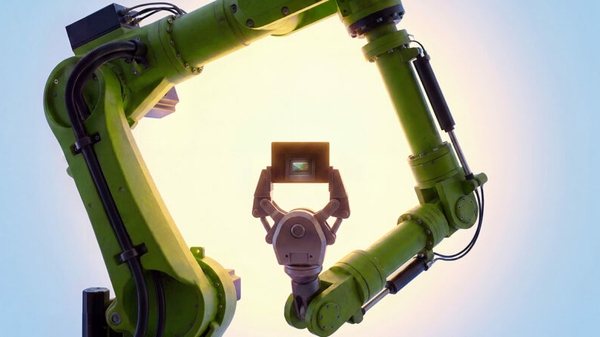
NVIDIA Unveils Jetson Thor T3000 and T2000 Modules to Drive Mass-Market Robotics and Edge AI
NVIDIA has announced the launch of the T3000 and T2000 modules, built on the advanced NVIDIA Thor architecture. These new additions to the Jetson lineup are specifically designed to transition general-purpose robots and autonomous machines from research environments to large-scale commercial deployment. By providing compact and power-efficient AI supercomputing capabilities, these modules allow foundation models to run directly at the edge. This development addresses the growing industry demand for high-performance computing in robotics, facilitating the move toward mainstream autonomous systems and sophisticated edge AI applications. The introduction of these modules represents a significant step in providing the necessary hardware for sophisticated edge AI applications that require high performance within constrained power envelopes.
Key Takeaways
- NVIDIA has officially introduced the T3000 and T2000 modules, which are built upon the high-performance NVIDIA Thor architecture.
- These new modules are specifically engineered to facilitate the transition of general-purpose robots and autonomous machines from research laboratories to large-scale, mass-market deployment.
- The T3000 and T2000 provide the necessary computational power to run complex foundation models directly at the edge, rather than relying on centralized cloud processing.
- A primary focus of these new computers is their compact and power-efficient design, making them suitable for the physical constraints of mobile robotics.
In-Depth Analysis
Transitioning from Research Labs to Mass-Market Deployment
The robotics industry is currently undergoing a pivotal transformation, moving away from the era of experimental prototypes and toward the era of mass-market deployment. For years, general-purpose robots and autonomous machines were primarily found within the confines of research labs, where they operated under controlled conditions and often with the support of external computing resources. However, the current market demand is shifting toward real-world applications where these machines must operate independently in unpredictable environments.
NVIDIA’s introduction of the T3000 and T2000 modules is a direct response to this evolution. By providing hardware that is specifically designed for mass-market robotics, NVIDIA is addressing the scalability challenges that have previously hindered the widespread adoption of autonomous systems. The transition from a lab setting to the real world requires a level of reliability and autonomy that can only be achieved through localized, high-performance computing. These new modules are intended to bridge that gap, allowing manufacturers to move their autonomous machines out of the development phase and into the hands of consumers and industrial users on a global scale. The shift toward general-purpose robots also implies a need for more versatile intelligence, moving beyond single-task machines to systems that can adapt to various roles in the mass market.
The Critical Role of Foundation Models at the Edge
One of the most significant aspects of the T3000 and T2000 announcement is their ability to run foundation models at the edge. Foundation models represent the latest frontier in artificial intelligence, providing a broad and versatile base of intelligence that allows AI systems to perform a wide variety of tasks. In the context of robotics, these models enable machines to understand their surroundings, interact with humans, and make complex decisions in real-time.
However, foundation models are computationally intensive. Traditionally, running such models required the massive processing power of data centers. For a robot operating in the real world, relying on a data center (the cloud) introduces latency and connectivity risks that can be dangerous or inefficient. The T3000 and T2000 modules solve this by acting as "AI supercomputers" that are small enough to be integrated directly into the robot. By enabling foundation models to run at the edge, NVIDIA ensures that autonomous machines have the intelligence they need to function safely and effectively without a constant tether to a remote server. This localized supercomputing capability is what allows a robot to process visual data, navigate obstacles, and execute tasks with the speed required for real-world interaction.
Engineering for Compactness and Power Efficiency
In the realm of edge AI and robotics, performance cannot come at the expense of size or energy consumption. Autonomous machines, particularly those that are mobile, are limited by the physical space available for hardware and the capacity of their onboard batteries. NVIDIA has designed the T3000 and T2000 modules with these constraints in mind, emphasizing a compact and power-efficient architecture.
The Thor architecture allows these modules to deliver high-level AI supercomputing capabilities within a form factor that does not compromise the design or mobility of the robot. Power efficiency is equally critical; a robot that consumes too much energy for its "brain" will have a shorter operational life and require more frequent charging, which is a major barrier to mass-market viability. By optimizing the T3000 and T2000 for efficiency, NVIDIA is providing a solution that supports long-term, real-world operation. This focus on the physical requirements of robotics—compactness and energy management—is essential for the mainstream adoption of autonomous machines across various industries, from delivery services to industrial automation.
Industry Impact
The introduction of the NVIDIA Jetson Thor T3000 and T2000 modules marks a significant milestone for the robotics and edge AI industries. By providing a dedicated hardware path for mass-market deployment, NVIDIA is likely to accelerate the development cycles of robotics companies worldwide. The ability to run foundation models locally will lead to more capable and versatile autonomous machines, potentially transforming sectors such as logistics, manufacturing, and consumer services. Furthermore, the focus on power efficiency and compact design sets a new standard for edge AI hardware, pushing the industry toward more sustainable and practical autonomous solutions. As these machines move from research labs into the real world, the availability of specialized AI supercomputers like the T3000 and T2000 will be a foundational element of the new robotics economy.
Frequently Asked Questions
Question: What are the T3000 and T2000 modules?
The T3000 and T2000 are new AI modules introduced by NVIDIA, based on the Thor architecture. They are designed to serve as compact, power-efficient AI supercomputers for robotics and edge AI applications, specifically targeting the mass market.
Question: What is the primary goal of these new NVIDIA Thor modules?
The primary goal is to enable the mass-market deployment of general-purpose robots and autonomous machines by allowing them to run advanced foundation models directly at the edge, ensuring they can operate independently in real-world environments.
Question: Why is "edge" computing important for autonomous robots?
Computing at the edge allows robots to process information locally and in real-time. This is crucial for maintaining low latency, ensuring safety, and allowing the machine to function without a constant internet connection to a cloud server, which is necessary for real-world deployment.