
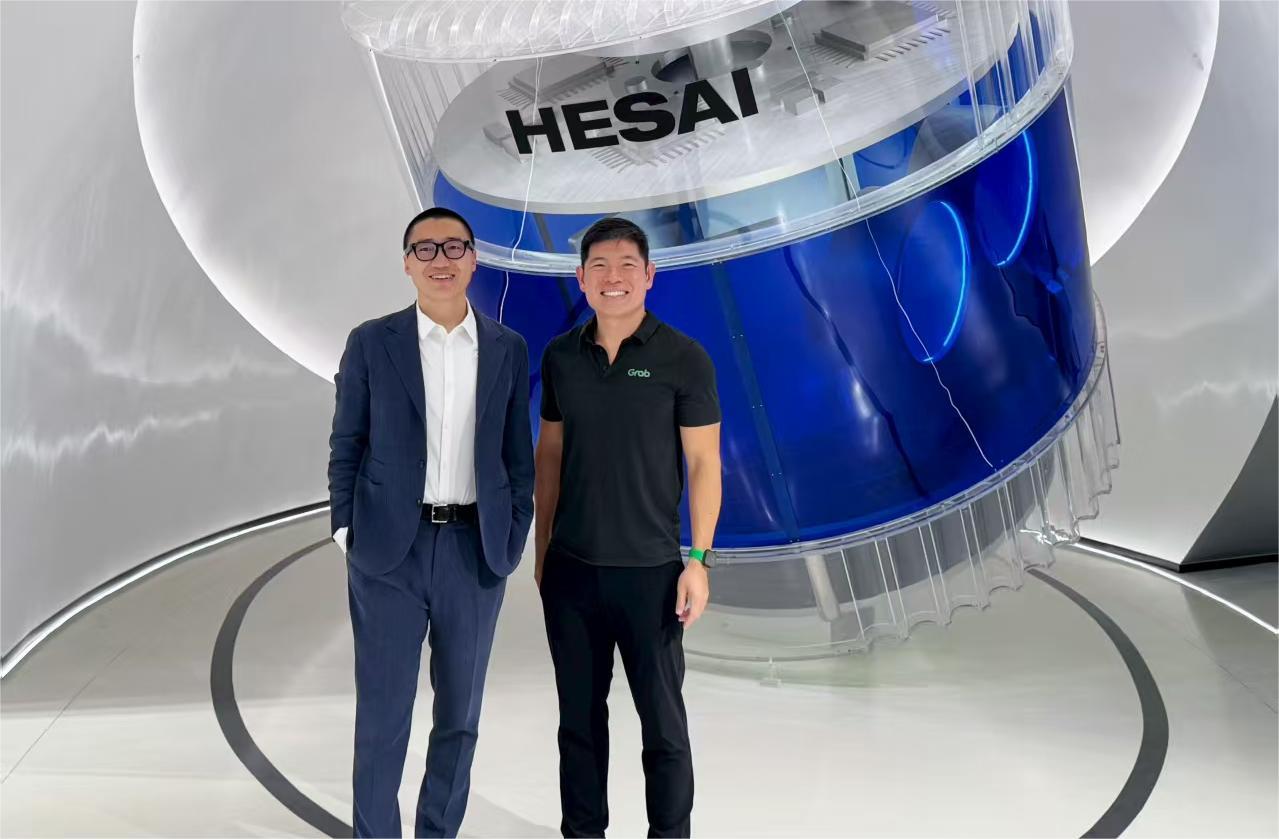
Hesai Technology Unveils EXT Sensor: The Industry's First Lidar Combining Spatial and Color Detection
Chinese lidar manufacturer Hesai has announced the launch of its new EXT sensor, marking a significant technological milestone in the autonomous driving and robotics sector. Powered by the company's proprietary in-house Picasso chip, the EXT sensor is distinguished as the industry's first lidar solution to integrate both spatial and color detection capabilities. According to Hesai co-founder Sun Kai, this dual-functionality allows the sensor to provide a more comprehensive data set for environmental perception. The development highlights Hesai's commitment to vertical integration through its custom chip design, aiming to enhance the precision of object recognition by adding a color dimension to traditional 3D spatial mapping.
Key Takeaways
- Innovative Dual-Detection: The EXT sensor is the first in the lidar industry to offer simultaneous spatial and color detection.
- Proprietary Technology: The sensor is powered by Hesai's in-house developed Picasso chip.
- Enhanced Perception: By combining color with spatial data, the sensor aims to provide more detailed environmental mapping.
- Industry Leadership: Co-founder Sun Kai positions this as a pioneering move for the lidar market.
In-Depth Analysis
The Integration of Spatial and Color Data
Traditional lidar sensors primarily focus on measuring distances to create 3D point clouds, which represent the physical structure of the surroundings. Hesai's EXT sensor introduces a significant shift by incorporating color detection into this process. According to co-founder Sun Kai, this makes the EXT the industry's first lidar to bridge the gap between spatial awareness and visual color identification. This integration is designed to help autonomous systems better distinguish between objects that might have similar shapes but different visual characteristics, potentially improving the reliability of computer vision systems.
Powering Innovation with the Picasso Chip
A critical component of this technological advancement is the use of Hesai's proprietary Picasso chip. By developing its own silicon, Hesai maintains tighter control over the hardware-software integration required to process complex color and spatial data simultaneously. The transition to in-house chip design suggests a strategic move toward vertical integration, allowing the company to optimize performance and efficiency specifically for the EXT sensor's unique dual-detection requirements.
Industry Impact
The introduction of a color-detecting lidar sensor could redefine standards for environmental perception in the autonomous vehicle and robotics industries. By providing a richer data stream that includes both depth and color, Hesai is addressing one of the historical limitations of lidar—its inability to perceive visual information like traffic lights or road signs without the aid of secondary camera systems. This breakthrough may lead to more streamlined sensor suites and more robust object classification algorithms, reinforcing China's position in the global lidar market.
Frequently Asked Questions
Question: What makes the Hesai EXT sensor different from traditional lidar?
Unlike traditional lidar that only measures spatial distance to create 3D maps, the EXT sensor is the first to combine spatial detection with color detection in a single unit.
Question: What technology powers the new EXT sensor?
The EXT sensor is powered by the Picasso chip, which was developed in-house by Hesai.
Question: Who announced the launch of this new technology?
The announcement was made by Hesai, with co-founder Sun Kai highlighting the sensor's unique capabilities as an industry first.

