Back to List
T3 Code: A Minimalist Web Interface for Programming Agents Supporting Codex and Claude
Open SourceAI ProgrammingWeb GUIDeveloper Tools

T3 Code: A Minimalist Web Interface for Programming Agents Supporting Codex and Claude

T3 Code, a new open-source project by pingdotgg, has emerged as a minimalist web-based graphical user interface specifically designed for programming agents. Currently hosted on GitHub, the tool provides a streamlined environment for developers to interact with advanced AI models, specifically supporting Codex and Claude at launch. The project aims to simplify the interface between users and coding assistants, with the developer signaling that support for additional models is currently in development. As a trending repository, T3 Code focuses on providing a clean, functional web UI to enhance the accessibility of AI-driven programming workflows.

GitHub Trending

Key Takeaways

  • Minimalist Design: T3 Code offers a lightweight web graphical interface tailored for programming agents.
  • Model Support: The platform currently supports integration with Codex and Claude models.
  • Future Expansion: Developers have indicated that support for more AI models is coming soon.
  • Open Source Origin: The project is developed by pingdotgg and is gaining traction on GitHub.

In-Depth Analysis

Streamlining Programming Agent Interfaces

T3 Code addresses the need for a simplified, web-based interaction layer for AI programming agents. By focusing on a minimalist graphical user interface (GUI), the project reduces the complexity often associated with deploying and interacting with large language models for coding tasks. The current iteration prioritizes ease of use, allowing developers to leverage the power of AI without the overhead of complex local setups or cluttered environments.

Current Model Compatibility and Roadmap

At its current stage, T3 Code provides specialized support for two major players in the AI coding space: Codex and Claude. This selection offers users a choice between different architectural strengths in code generation and reasoning. The developer, pingdotgg, has explicitly stated that the project is not limited to these two options; the architecture is designed to be extensible, with more models expected to be integrated in future updates, potentially broadening its utility across the developer community.

Industry Impact

The release of T3 Code highlights a growing trend in the AI industry toward "interface democratization." As powerful models like Claude and Codex become more accessible via APIs, the bottleneck for many developers shifts from model access to interface efficiency. By providing a dedicated, minimalist web UI, T3 Code lowers the barrier for developers to experiment with and integrate AI agents into their daily programming workflows. This contributes to the broader ecosystem of open-source tools that bridge the gap between raw AI capabilities and practical, user-friendly applications.

Frequently Asked Questions

Question: What models are currently supported by T3 Code?

As of the current release, T3 Code supports Codex and Claude. The developers have announced that support for additional models is in the pipeline.

Question: Who is the developer behind T3 Code?

The project is developed and maintained by pingdotgg and was recently featured as a trending repository on GitHub.

Question: Is T3 Code a command-line tool or a graphical interface?

T3 Code is specifically designed as a minimalist web-based graphical user interface (Web GUI) for interacting with programming agents.
Related News

Meituan Open Sources LongCat-Video-Avatar 1.5: Transitioning High-Fidelity Digital Humans to Commercial-Grade Applications
Open Source

Meituan Open Sources LongCat-Video-Avatar 1.5: Transitioning High-Fidelity Digital Humans to Commercial-Grade Applications

Meituan's technical team has officially open-sourced LongCat-Video-Avatar 1.5, a state-of-the-art (SOTA) digital human video model that bridges the gap between research-level high-fidelity and commercial-grade usability. This update introduces significant advancements in lip-syncing accuracy, physical plausibility, and long-video stability, ensuring natural and high-quality outputs even in complex commercial scenarios. Furthermore, the model enhances multi-person interaction capabilities and optimizes inference efficiency. By moving beyond experimental environments to support diverse, real-world applications, LongCat-Video-Avatar 1.5 provides a robust solution for generating digital human content at scale. This release marks a pivotal step in making high-quality digital human technology accessible and practical for a wide range of industries, shifting the focus from theoretical performance to reliable, real-world execution.

Meituan Open-Sources LongCat-Flash-Prover to Transition AI from Numerical Guessing to Rigorous Mathematical Theorem Proving
Open Source

Meituan Open-Sources LongCat-Flash-Prover to Transition AI from Numerical Guessing to Rigorous Mathematical Theorem Proving

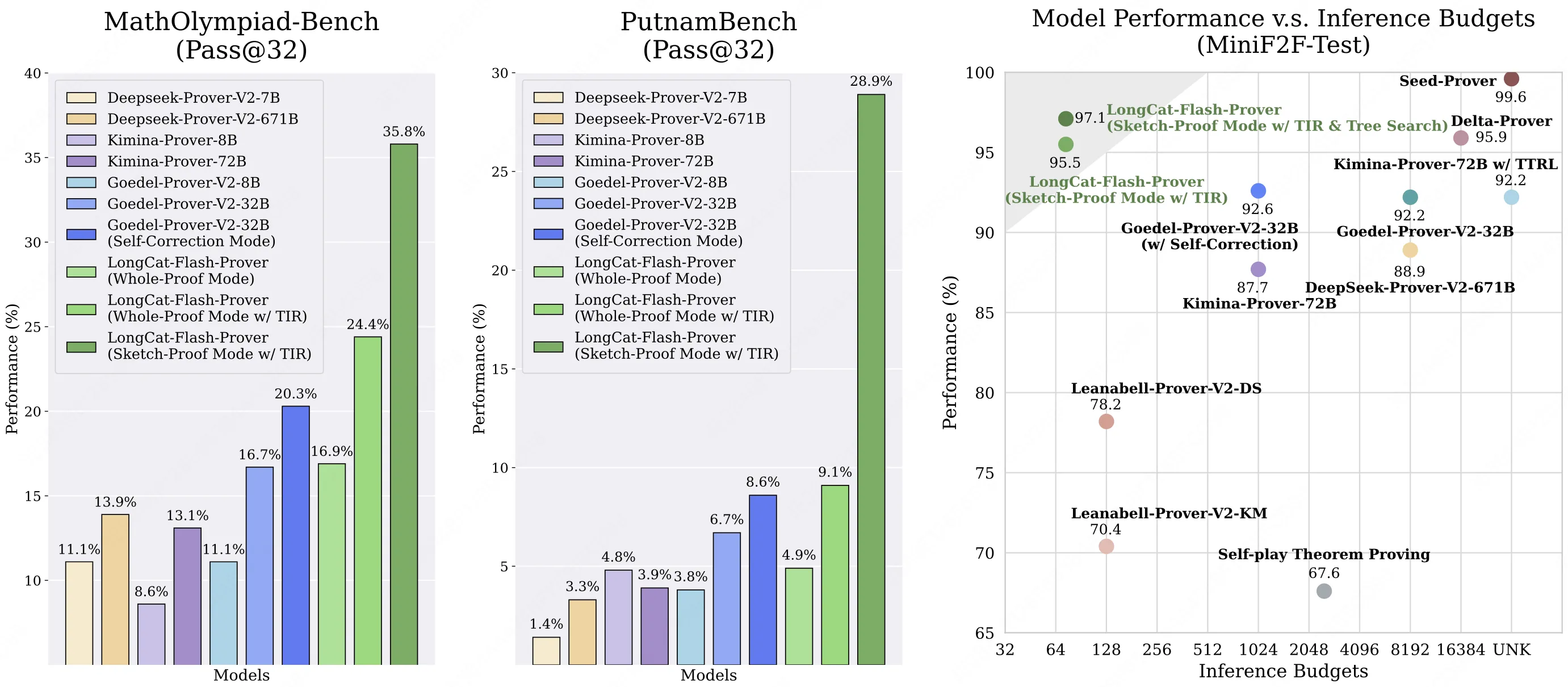
Meituan's technical team has announced the open-source release of LongCat-Flash-Prover, a specialized model designed to tackle the complexities of mathematical formalization and theorem proving. While traditional AI models often prioritize reaching a correct final numerical value, LongCat-Flash-Prover focuses on the strict logical chains required for formal proofs. The model addresses the inherent risks of ambiguity in natural language, which can cause mathematical proofs to fail. By providing a tool for formalization, Meituan aims to move AI reasoning from heuristic "guessing" toward a more rigorous and verifiable standard of logical demonstration. This release represents a significant step in addressing the challenges of complex reasoning within the AI field, emphasizing the importance of formal structures over simple answer-oriented outputs.

Meituan Open-Sources LongCat-Next: Advancing Physical World AI Through Native Multimodal Vision and Speech
Open Source

Meituan Open-Sources LongCat-Next: Advancing Physical World AI Through Native Multimodal Vision and Speech

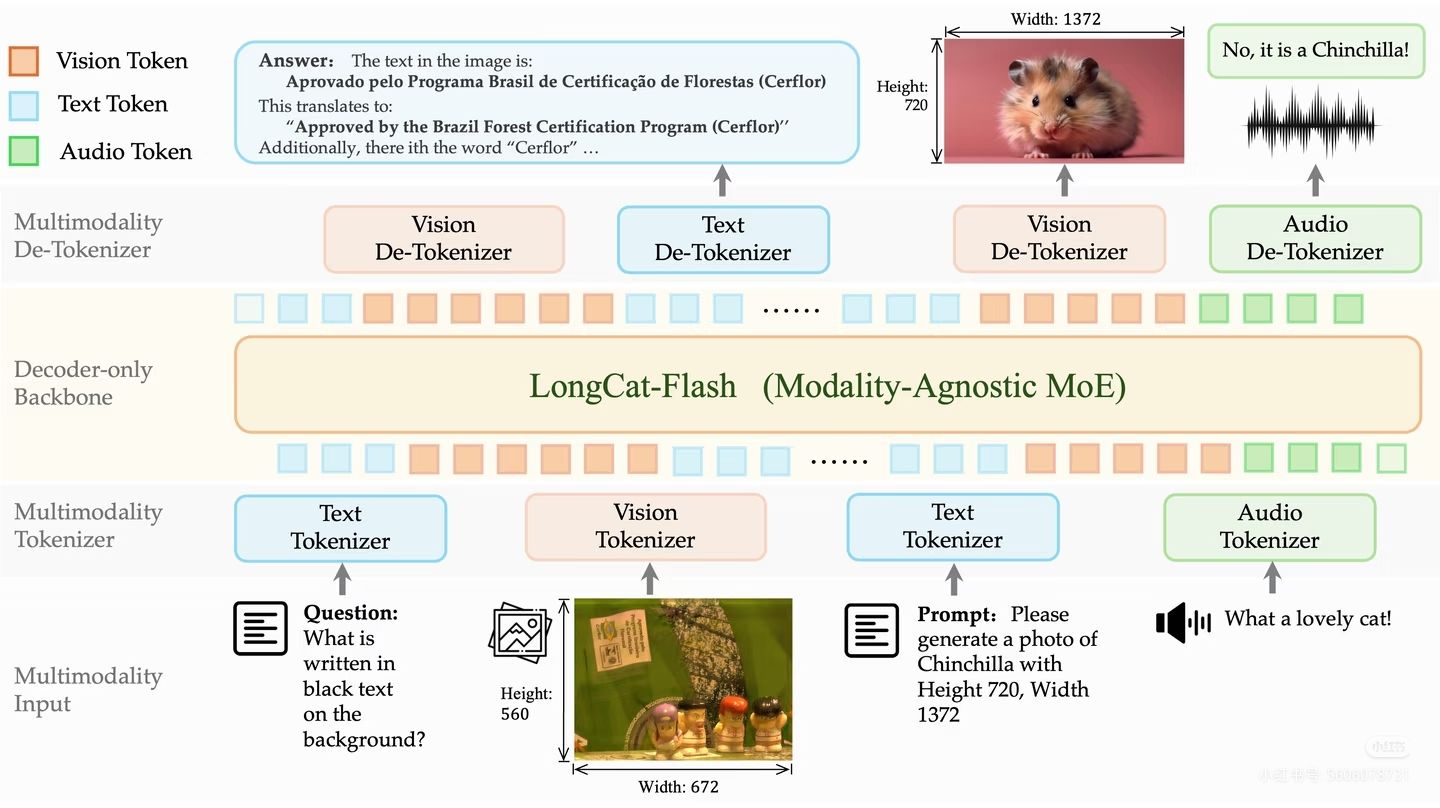
Meituan's technical team has announced the official release and open-sourcing of LongCat-Next, a native multimodal model designed to bridge the gap between artificial intelligence and the physical world. By treating vision and speech as "native languages," the model aims to enhance how AI perceives, understands, and interacts with real-world environments. The release includes the core LongCat-Next model and its discrete tokenizer, providing the developer community with the essential tools to build more sophisticated, world-aware applications. This move signifies a strategic step toward embodied intelligence and highlights Meituan's commitment to open-source collaboration in the field of multimodal AI development.