Google Translate Celebrates 20 Years: From a 2006 AI Experiment to Supporting Nearly 250 Languages
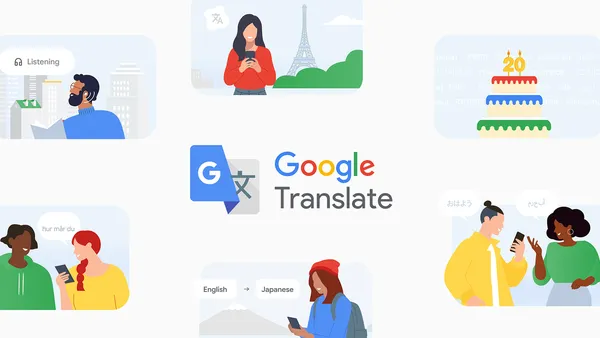
Google Translate is marking its 20th anniversary, tracing its history back to its 2006 debut as an AI experiment. Over two decades, the service has expanded its linguistic reach to support nearly 250 languages, facilitating global communication. To celebrate this milestone, Google is sharing 20 fun facts, tips, and new features designed to enhance the user experience. This evolution highlights the transition of AI-driven translation from an experimental project to a comprehensive tool used worldwide. The anniversary serves as a testament to the progress made in language technology and the ongoing efforts to connect diverse populations through accessible translation services. By reflecting on its roots and current capabilities, Google emphasizes the platform's role in breaking down global language barriers.
Key Takeaways
- Google Translate is celebrating its 20th anniversary in 2026, marking two decades of service.
- The platform originated in 2006 as an experimental project in artificial intelligence.
- The service has expanded significantly and now supports nearly 250 languages globally.
- To commemorate the milestone, Google is releasing 20 fun facts, tips, and new features for users.
In-Depth Analysis
Two Decades of AI Evolution: From Experiment to Utility
The journey of Google Translate began in 2006, positioned initially as an ambitious AI experiment. Over the course of 20 years, this project has transformed from a nascent technological trial into a cornerstone of global digital communication. The transition from an "experiment" to a service supporting nearly 250 languages underscores the massive scale of development and the refinement of the underlying AI models over two decades. This 20-year milestone reflects the longevity and the continuous iterative process that has defined the platform's history. By looking back at its 2006 roots, the celebration highlights how far artificial intelligence has progressed in understanding and processing human language, moving from a specialized test case to a ubiquitous tool used by millions.
Expanding Linguistic Horizons and Global Reach
A central theme of this 20th-anniversary celebration is the sheer breadth of language support now offered by the platform. Reaching the milestone of nearly 250 languages represents a significant expansion from the tool's early days as a limited experiment. By focusing on a vast array of global languages, the service has moved toward a more inclusive model of communication, aiming to serve diverse linguistic communities. The decision to share "20 fun facts" and "tips" as part of the celebration suggests a focus on user engagement and the practical application of these linguistic capabilities in everyday life. This expansion is not just a numerical achievement but a reflection of the platform's goal to facilitate connection across different cultures and regions through advanced translation technology.
Celebrating Innovation Through User Engagement
The 20th-anniversary milestone is being marked by a focus on the user experience, featuring a collection of facts and tips that highlight the tool's versatility. Since its inception in 2006, the platform has integrated various features that go beyond simple text translation. The anniversary content serves to educate users on the depth of the service, providing insights into its development and offering practical advice on how to utilize its nearly 250 supported languages more effectively. This approach emphasizes that while the technology is rooted in complex AI experimentation, its primary value lies in its accessibility and its ability to assist users in navigating a multilingual world.
Industry Impact
The evolution of Google Translate from a 2006 experiment to a multi-language powerhouse has significant implications for the AI industry. It demonstrates the long-term viability of AI-driven consumer products and the importance of scaling language models to include underrepresented dialects. By supporting nearly 250 languages, the platform sets a benchmark for linguistic inclusivity in technology, showing how AI can be leveraged to bridge communication gaps on a global scale over a sustained period of two decades. This milestone also highlights the importance of continuous innovation, as the transition from an experimental phase to a global standard requires constant adaptation to new linguistic data and user needs. The success of this 20-year journey provides a roadmap for how AI experiments can eventually become essential infrastructure for global society.
Frequently Asked Questions
When was Google Translate first launched?
Google Translate was launched in 2006, originally starting as an AI experiment.
How many languages does Google Translate support as of its 20th anniversary?
The service has grown to support nearly 250 languages worldwide.
How is Google marking the 20-year milestone of the service?
Google is celebrating by sharing 20 fun facts, providing user tips, and introducing new features for people to try.