
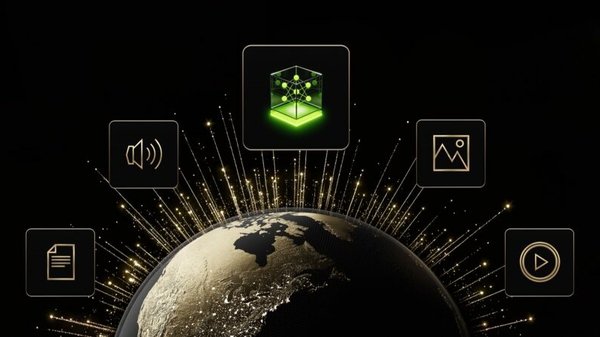
NVIDIA Unveils Nemotron 3 Nano Omni: A Unified Multimodal Model Boosting AI Agent Efficiency by Ninefold
NVIDIA has announced the launch of Nemotron 3 Nano Omni, a pioneering open multimodal model designed to revolutionize the efficiency of AI agents. By integrating vision, audio, and language capabilities into a single, unified system, the model addresses a critical bottleneck in current AI architectures: the latency and context loss caused by juggling multiple separate models. According to NVIDIA, this streamlined approach allows AI agents to operate up to nine times more efficiently while delivering faster and more intelligent responses. As an open model, Nemotron 3 Nano Omni provides a foundation for developers to build more cohesive and responsive AI systems that can process diverse data types simultaneously without the traditional overhead of multi-model data handoffs.
Key Takeaways
- Unified Multimodal Architecture: Nemotron 3 Nano Omni integrates vision, audio (speech), and language processing into a single model, moving away from fragmented multi-model systems.
- 9x Efficiency Boost: The model enables AI agents to perform up to nine times more efficiently by streamlining data processing across different modalities.
- Reduced Latency and Context Loss: By eliminating the need to pass data between separate models, the system minimizes time delays and preserves contextual integrity.
- Open Model Accessibility: NVIDIA has released this as an open model, allowing for broader adoption and innovation within the AI development community.
- Enhanced Response Quality: The unification of capabilities allows AI agents to provide smarter and faster responses to complex, multimodal inputs.
In-Depth Analysis
The Shift from Fragmented to Unified AI Architectures
For years, the development of sophisticated AI agents has been hindered by a modular but inefficient approach. Traditionally, an agent required separate models to see (vision), hear (audio), and communicate (language). This "fragmented" architecture forced the system to constantly pass data packets from one specialized model to another. As NVIDIA points out, this process is inherently flawed, leading to a significant loss of both time and context. When data is translated or transferred between disparate models, the nuances of the original input can be degraded, resulting in slower performance and less coherent outputs.
NVIDIA Nemotron 3 Nano Omni represents a fundamental shift in this paradigm. By bringing these three critical capabilities—vision, speech, and language—together into one system, NVIDIA has created a "unified" multimodal model. This integration means that the AI does not need to "hand off" information from a vision model to a language model; instead, it processes the multimodal input within a single framework. This architectural consolidation is the primary driver behind the model's ability to deliver responses that are not only faster but also more contextually aware.
Quantifying Efficiency: The 9x Performance Leap
The most striking claim accompanying the launch of Nemotron 3 Nano Omni is the potential for up to a ninefold increase in efficiency for AI agents. This efficiency gain is not merely a matter of raw processing speed but a reflection of the optimized data flow within the unified system. In traditional setups, the "juggling" of models creates a cumulative latency—each model adds its own processing time, and the communication layer between them adds further delays.
By eliminating these layers, Nemotron 3 Nano Omni allows AI agents to bypass the traditional bottlenecks of multi-model pipelines. The 9x efficiency metric suggests that tasks which previously required significant computational overhead and time can now be executed in a fraction of the duration. This has profound implications for real-time AI applications, where every millisecond of latency can impact the user experience. Smarter responses are a direct byproduct of this efficiency; because the model retains more context through its unified structure, it can make more informed decisions and provide more accurate information to the end-user.
Industry Impact
The introduction of Nemotron 3 Nano Omni as an open multimodal model is likely to set a new standard for AI agent development. By providing a single system that handles vision, audio, and language, NVIDIA is lowering the barrier to entry for creating complex, responsive AI. Developers no longer need to manage the complexities of integrating and synchronizing multiple independent models, which can significantly reduce development cycles and resource requirements.
Furthermore, the emphasis on "open" accessibility suggests that NVIDIA aims to foster an ecosystem where this unified approach becomes the baseline for next-generation AI. As industries ranging from customer service to autonomous systems look for ways to make their AI more human-like and responsive, the ability to process multimodal data with 9x efficiency will be a critical competitive advantage. This launch signals a move toward more holistic AI systems that can interact with the world in a way that more closely mimics human perception and communication.
Frequently Asked Questions
Question: What makes Nemotron 3 Nano Omni different from traditional AI models?
Unlike traditional systems that use separate models for vision, audio, and language, Nemotron 3 Nano Omni unifies these capabilities into a single system. This prevents the loss of context and time that occurs when passing data between different models.
Question: How does the 9x efficiency benefit AI agents?
The 9x efficiency boost allows AI agents to process information and respond much faster. It reduces the computational overhead and latency associated with multi-model systems, enabling smarter and more real-time interactions.
Question: Is Nemotron 3 Nano Omni available for public use?
Yes, NVIDIA has unveiled Nemotron 3 Nano Omni as an open multimodal model, making it accessible for developers to integrate into their own AI agent systems and applications.

