The Age of Async Agents: How Cognition and OpenInspect are Redefining Software Engineering
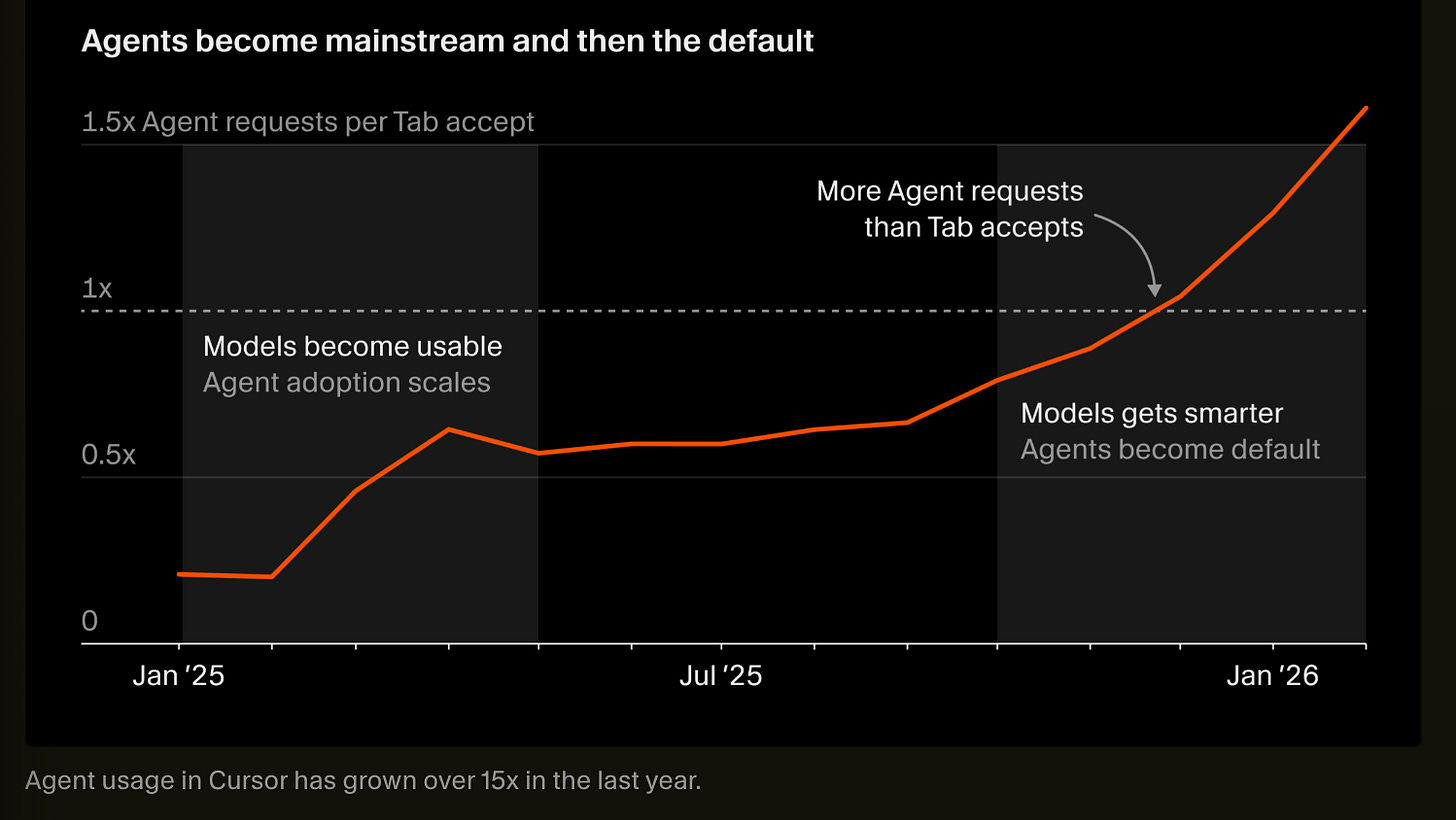
In a recent discussion featuring Walden Yan of Cognition and Cole Murray of OpenInspect, the software development landscape is shown to be shifting toward 'Async Agents.' The analysis highlights the significant progress of Devin, which is now achieving an 80% commit rate in development tasks. Central to this evolution is the transition from 'Spec-to-PR' workflows, where agents handle the entire process from initial specification to pull request. This is supported by the use of full virtual machines (VMs) and enhanced agent memory, providing the necessary infrastructure for autonomous operations. Furthermore, the emergence of these tools is enabling Product Managers (PMs) to ship code directly, signaling a major shift in traditional engineering roles and the democratization of the development process.
Key Takeaways
- High Performance Metrics: Devin is currently reaching an 80% success rate in commits, demonstrating the increasing reliability of autonomous coding agents.
- End-to-End Automation: The industry is moving toward 'Spec-to-PR' workflows, allowing agents to manage the full lifecycle from requirements to code submission.
- Robust Infrastructure: The use of full virtual machines (VMs) and dedicated agent memory is essential for maintaining consistency and handling complex, long-term tasks.
- Role Transformation: AI agents are empowering non-technical roles, specifically Product Managers (PMs), to contribute directly to the codebase and ship production-ready code.
- Asynchronous Operations: The shift toward 'Async Agents' allows for background task execution that does not require constant human supervision.
In-Depth Analysis
The Rise of the Spec-to-PR Workflow
The traditional software development lifecycle often involves a fragmented process where specifications are written by product teams and then manually interpreted and implemented by engineers. The emergence of 'Spec-to-PR' workflows, as discussed by Walden Yan and Cole Murray, represents a fundamental shift in this paradigm. In this model, an AI agent like Devin takes a high-level specification as input and autonomously navigates the codebase to produce a complete Pull Request (PR). This process encompasses understanding the requirements, identifying the necessary files to modify, writing the code, and ensuring it meets the project's standards. The fact that Devin is now achieving an 80% commit rate suggests that the gap between human intent and machine execution is closing rapidly, making the 'Spec-to-PR' model a viable standard for modern engineering teams.
Infrastructure for Autonomy: Full VMs and Agent Memory
For an AI agent to operate effectively in an asynchronous manner, it requires more than just a large language model; it requires a stable and persistent environment. The integration of full virtual machines (VMs) provides these agents with a 'sandbox' that mimics a developer's local environment, complete with compilers, debuggers, and terminal access. This allows agents to test their own code and iterate on errors without human intervention. Complementing this is the concept of 'Agent Memory.' Unlike standard chat interfaces that may lose context over long sessions, advanced agent memory allows the system to retain knowledge of the codebase, previous attempts, and long-term project goals. This combination of a dedicated execution environment and persistent memory is what enables agents to handle complex tasks that span hours or days, rather than just seconds.
Democratizing the Codebase: PMs Shipping Code
One of the most significant organizational impacts of async agents is the changing role of the Product Manager (PM). Historically, PMs have been responsible for defining the 'what' and 'why,' while engineers handled the 'how.' With the advent of agents capable of handling the technical heavy lifting, PMs are now beginning to ship code directly. By providing the agent with clear specifications, a PM can oversee the creation of a PR and move features into production without waiting for a traditional engineering sprint cycle. This does not replace the need for engineers but rather shifts the bottleneck of software production. It allows technical teams to focus on high-level architecture and complex problem-solving while agents and PMs handle routine feature implementation and bug fixes.
Industry Impact
The transition to the 'Age of Async Agents' marks a turning point for the AI and software industries. By achieving high commit rates and automating the workflow from specification to pull request, companies like Cognition and OpenInspect are proving that AI is moving beyond simple assistance into the realm of autonomous contribution. The reliance on full VMs and agent memory sets a new technical standard for what constitutes a 'professional' AI agent, moving away from simple API wrappers toward integrated development platforms. As PMs begin to ship code, we can expect a significant increase in the velocity of software delivery and a potential restructuring of how engineering teams are composed and managed. The focus is shifting from manual coding to the orchestration of autonomous systems.
Frequently Asked Questions
Question: What does an 80% commit rate for Devin signify?
An 80% commit rate indicates the percentage of tasks where the AI agent, Devin, successfully produces a code change that is accepted or deemed ready for the codebase. This high success rate demonstrates the agent's ability to handle real-world programming challenges with minimal human correction.
Question: Why are full virtual machines (VMs) necessary for AI agents?
Full VMs provide a complete, isolated operating system environment where the agent can run code, install dependencies, and execute tests. This is crucial for ensuring that the code the agent writes actually works in a real-world setting, as it allows the agent to debug its own work in a controlled environment.
Question: How does a Spec-to-PR workflow change the development process?
A Spec-to-PR workflow automates the transition from a written product specification to a functional code submission (Pull Request). This reduces the manual labor involved in translating requirements into code, allowing for faster iteration and enabling non-engineers to contribute more directly to the technical output of a project.