
Meituan Open-Sources LongCat-Next: A Native Multimodal Model for Physical World AI Integration
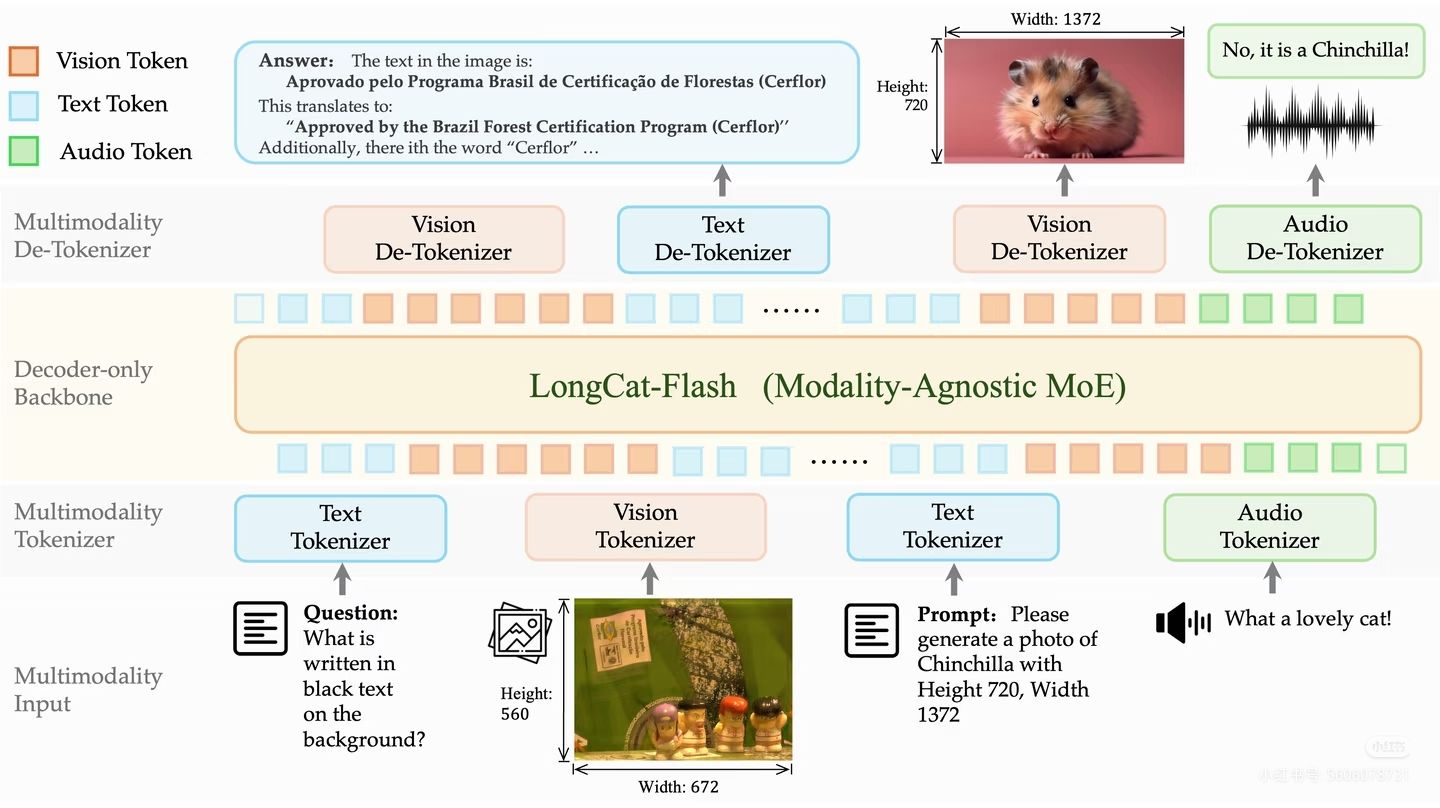
Meituan's technical team has officially announced the release and open-sourcing of LongCat-Next, a native multimodal model designed to advance AI's capabilities in the physical world. By integrating vision and speech as "native languages," the model aims to bridge the gap between digital processing and real-world interaction. Alongside the model, Meituan has open-sourced its discrete tokenizer, providing the developer community with the core components of their research. This initiative is focused on enabling AI systems to perceive, understand, and act within physical environments. The move represents a significant step in Meituan's exploration of embodied AI, offering a foundation for developers to build more sophisticated, context-aware applications that can interact seamlessly with the tangible world.
Key Takeaways
- Open-Source Release: Meituan has fully open-sourced the LongCat-Next model and its accompanying discrete tokenizer.
- Native Multimodality: The model treats vision and speech as "native languages," moving toward a more integrated multimodal architecture.
- Physical World Focus: The primary objective of LongCat-Next is to enable AI to perceive, understand, and act within the physical world.
- Developer Empowerment: By sharing their core research ideas and tools, Meituan aims to help developers build AI that interacts with real-world environments.
In-Depth Analysis
Native Multimodality: Vision and Speech as a Foundation
The release of LongCat-Next marks a strategic shift in how AI models handle diverse data types. By describing vision and speech as the "native language" (or mother tongue) of the AI, Meituan suggests a move away from modular systems where different senses are processed in isolation before being combined. In this native multimodal framework, visual and auditory inputs are likely integrated at a fundamental level, allowing the model to process environmental stimuli more holistically. This approach is designed to mimic how biological entities perceive their surroundings, where sight and sound are not secondary add-ons but core components of intelligence.
Bridging AI and the Physical World
LongCat-Next is positioned as an exploration into the frontier of "physical world AI." The technical team emphasizes that the core goal is to create systems that do more than just process text or images in a digital vacuum. Instead, the focus is on the triad of perception, understanding, and action. For AI to be effective in the physical world, it must first perceive complex environments through vision and speech, understand the context of those perceptions, and ultimately perform actions that affect the real world. This focus on "acting" suggests that LongCat-Next is a foundational step toward embodied AI, where intelligence is paired with physical or robotic systems to perform tasks in real-time environments.
The Open-Source Strategy and Technical Components
A critical aspect of this announcement is the decision to open-source not just the model, but also the discrete tokenizer. The tokenizer is a vital component in multimodal research, as it determines how continuous signals like speech and images are converted into discrete units that the model can process. By providing these core research ideas and tools to the public, Meituan is fostering a collaborative environment. This allows independent developers and researchers to build upon Meituan's architecture, potentially accelerating the development of AI applications that can navigate and interact with the complexities of the tangible world.
Industry Impact
The open-sourcing of LongCat-Next is significant for the AI industry as it lowers the barrier to entry for developing native multimodal systems. By focusing on the physical world, Meituan is addressing one of the most challenging frontiers in artificial intelligence: the transition from digital reasoning to physical interaction. This release encourages a shift toward embodied AI research, where the integration of vision and speech is seen as essential for real-world utility. Furthermore, by providing the discrete tokenizer, Meituan contributes to the standardization of how multimodal data is handled, potentially influencing future research directions in the open-source community.
Frequently Asked Questions
Question: What is LongCat-Next?
LongCat-Next is a native multimodal model developed and open-sourced by Meituan's technical team. It is designed to integrate vision and speech as core components to help AI interact with the physical world.
Question: What specific components did Meituan open-source?
Meituan has open-sourced the LongCat-Next model itself along with its discrete tokenizer, which is a key part of the model's research and data processing architecture.
Question: What is the goal of the LongCat-Next project?
The goal is to explore the path toward physical world AI, enabling developers to create systems that can perceive, understand, and act within real-world environments rather than just digital ones.