
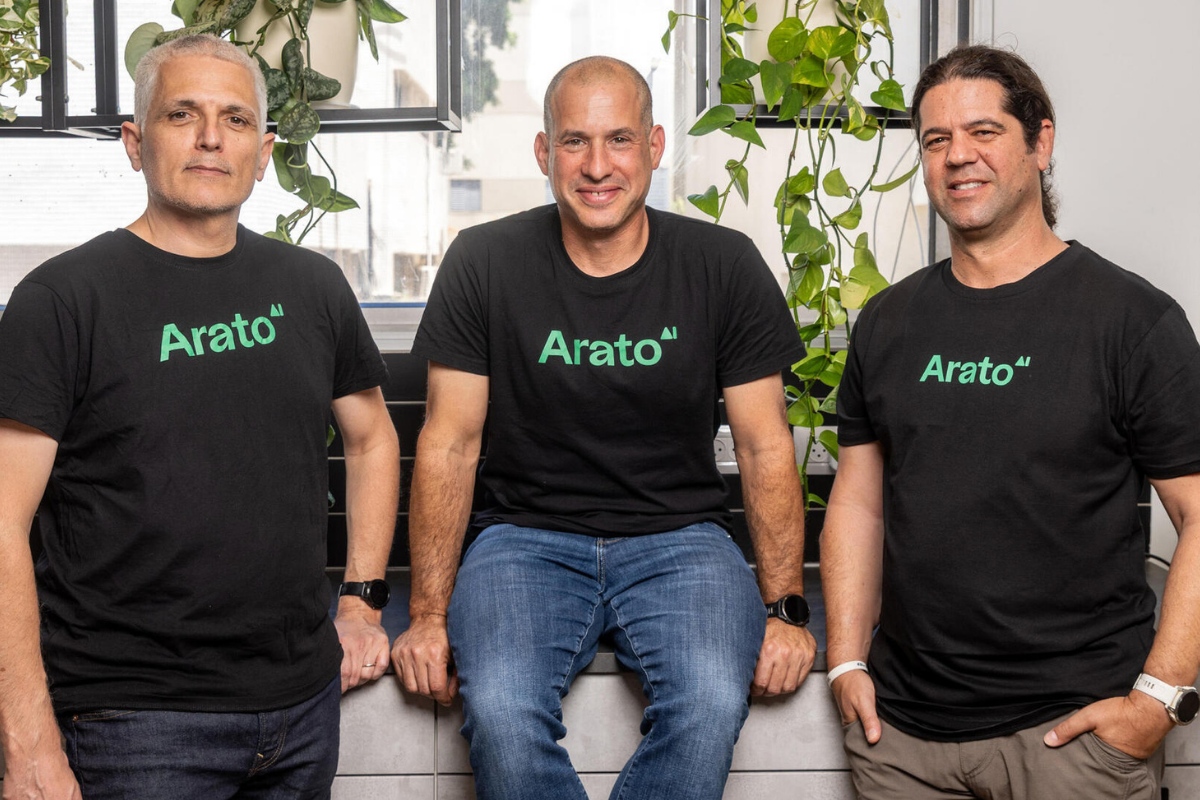
Israeli AI Testing Startup Arato Secures $10 Million Seed Funding for Multi-Modal Interaction Platform
Arato, an Israeli-based startup specializing in AI testing, has successfully raised $10 million in a seed funding round. The company's platform is designed to enhance the reliability of AI systems by running thousands of simulated user interactions. These simulations are comprehensive, covering multiple modalities including text, voice, image, and data. By providing a scalable environment for testing, Arato addresses the critical need for robust quality assurance in the rapidly evolving AI sector. The $10 million investment highlights the growing importance of specialized infrastructure tools that can validate AI performance across diverse input types before deployment. This funding will support Arato's mission to provide deep, automated insights into how AI models handle complex, real-world user scenarios.
Key Takeaways
- Funding Milestone: Arato has closed a $10 million seed funding round to advance its AI testing technology.
- Multi-Modal Capabilities: The platform supports simulated interactions across text, voice, image, and data formats.
- Scalable Testing: Arato’s technology is capable of running thousands of simultaneous simulated user interactions.
- Strategic Focus: The startup focuses on the critical 'testing and validation' phase of the AI development lifecycle.
In-Depth Analysis
The Significance of Arato's $10 Million Seed Round
The announcement of Arato's $10 million seed funding marks a substantial entry into the AI infrastructure market. For a seed-stage startup, a $10 million investment is a significant figure, suggesting strong investor confidence in the company's technical approach to AI testing. Based in Israel, a known hub for deep-tech innovation, Arato is positioning itself to solve one of the most pressing challenges in the artificial intelligence industry: ensuring that models perform predictably and safely when faced with diverse user inputs. This capital injection provides the necessary resources to refine a platform that can handle the high computational demands of simulating thousands of interactions simultaneously.
Multi-Modal Simulation: Beyond Text-Based Testing
One of the defining features of Arato's platform is its multi-modal scope. While many traditional testing tools focus primarily on text-based inputs, Arato expands this capability to include voice, image, and data. This is a critical distinction in the current AI landscape, where large language models (LLMs) and generative AI are increasingly integrated into voice assistants, computer vision systems, and complex data analytics pipelines. By simulating user interactions across these four distinct categories, Arato allows developers to identify edge cases and performance bottlenecks that might only appear in specific formats, such as a voice command's nuance or an image's metadata complexity.
Scaling Quality Assurance through Automation
The ability to run "thousands of simulated user interactions" highlights the scalability of Arato's solution. In the traditional software development cycle, manual testing or limited automated scripts often fail to capture the sheer variety of ways a human might interact with an AI. Arato’s platform automates this process at scale, creating a high-volume simulation environment. This approach not only speeds up the testing phase but also provides a more statistically significant dataset regarding a model's reliability. By covering text, voice, image, and data, the platform ensures that the AI's response logic is consistent and accurate across all possible points of user contact.
Industry Impact
The emergence of Arato and its successful funding round signals a shift in the AI industry toward a more mature "AI-Ops" and quality assurance ecosystem. As enterprises move from experimental AI pilots to full-scale production, the risks associated with model failure or unexpected behavior increase. Arato’s focus on multi-modal simulated interactions provides a blueprint for the next generation of AI testing tools. By validating AI performance across text, voice, and images, the industry can move toward higher standards of safety and user experience. This development suggests that the future of AI deployment will rely heavily on specialized third-party testing platforms that can provide independent verification of a model's capabilities and limitations.
Frequently Asked Questions
Question: What specific modalities does Arato's testing platform support?
Arato's platform is designed to run simulated user interactions across four key modalities: text, voice, image, and data.
Question: How much capital did Arato raise in its recent funding round?
Arato raised $10 million in a seed funding round to support the development and scaling of its AI testing platform.
Question: What is the primary function of Arato's technology?
The platform's primary function is to conduct thousands of simulated user interactions to test and validate the performance and reliability of AI systems.

