
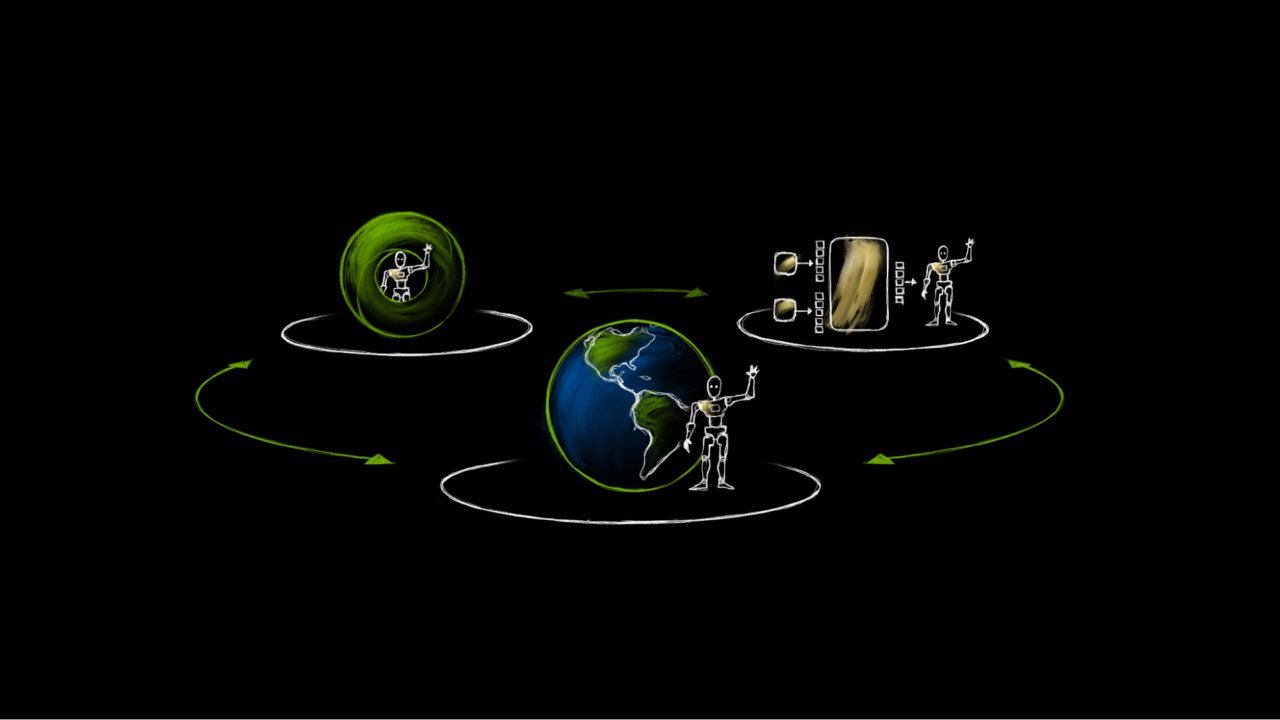
The State of Simulation for Physical AI: A Comprehensive Overview of the Current Landscape
This analysis explores the current state of simulation technologies as they relate to the development of Physical AI, based on the overview published by the Hugging Face Blog in collaboration with NVIDIA. As Physical AI—AI that interacts with the real world—continues to evolve, simulation has emerged as the critical infrastructure for training, testing, and validating embodied agents. The article examines how simulated environments are bridging the gap between digital intelligence and physical action, the role of high-fidelity physics engines, and the significance of collaborative efforts between major industry players like NVIDIA and the open-source community at Hugging Face. This overview provides a foundational look at the tools and methodologies driving the next generation of robotics and autonomous systems.
Key Takeaways
- Simulation as Infrastructure: Simulation is no longer just a testing tool but the primary environment for the end-to-end development of Physical AI.
- Strategic Collaboration: The partnership between NVIDIA and Hugging Face highlights a convergence of high-performance simulation hardware and open-source AI model repositories.
- Sim-to-Real Advancement: Current simulation technologies are focused on narrowing the gap between virtual training and real-world application through high-fidelity physics and sensor modeling.
- Scalability in Robotics: Simulated environments allow for the massive parallelization of training data, which is essential for the scaling of embodied AI models.
In-Depth Analysis
The Role of Simulation in the Physical AI Lifecycle
The development of Physical AI represents a shift from traditional software-based AI to systems that can perceive, reason, and act within a three-dimensional physical space. At the heart of this transition is the "State of Simulation." Simulation provides a safe, controlled, and highly scalable environment where AI agents can undergo millions of iterations of trial and error without the risks or costs associated with physical hardware.
In the current landscape, simulation serves three primary functions: data generation, policy training, and safety validation. By creating synthetic environments that mirror the complexities of the real world—including gravity, friction, and lighting—developers can generate the vast amounts of diverse data required to train neural networks for robotics. This is particularly crucial for edge cases that are difficult or dangerous to replicate in reality, such as autonomous vehicle collisions or industrial robot failures. The overview suggests that the "state" of this technology is moving toward even greater integration, where the simulator is a live component of the AI's learning loop.
Bridging the Gap: Sim-to-Real Challenges and Solutions
One of the most significant hurdles in Physical AI is the "sim-to-real" gap—the discrepancy between how an agent performs in a simulator versus how it performs in the physical world. The state of simulation today is defined by its ability to minimize this gap. This involves the use of advanced physics engines, such as those developed by NVIDIA, which provide real-time, hardware-accelerated simulation of rigid bodies, fluids, and soft tissues.
Furthermore, the collaboration with Hugging Face indicates a move toward standardizing how these simulated environments interact with pre-trained models. By hosting simulation assets and environments alongside AI models, the industry is creating a more cohesive ecosystem. This allows researchers to easily port models into various simulated scenarios to benchmark performance. The current overview emphasizes that the maturity of these simulation platforms is what will ultimately determine the speed at which Physical AI can be deployed in homes, factories, and city streets.
Industry Impact
The implications of advanced simulation for the AI industry are profound. First, it democratizes access to robotics research. By providing high-quality simulated environments, companies like NVIDIA and platforms like Hugging Face allow developers without access to expensive physical labs to contribute to the field of Physical AI. This is expected to lead to a surge in open-source robotics models and datasets.
Second, simulation significantly accelerates the time-to-market for autonomous systems. What used to take years of physical testing can now be accomplished in weeks through parallelized simulation. This efficiency is a major driver for the automotive, logistics, and manufacturing sectors. Finally, the focus on simulation reflects a broader industry trend toward "Synthetic Data First" strategies, where the digital twin of a system becomes as important as the system itself. As simulation technology continues to improve, the boundary between the digital and physical worlds will continue to blur, leading to more capable and reliable AI-driven physical agents.
Frequently Asked Questions
Question: What is Physical AI and why does it require simulation?
Physical AI refers to artificial intelligence systems that are embodied in physical forms, such as robots, drones, or autonomous vehicles, and must interact with the physical world. Simulation is required because training these systems in the real world is slow, expensive, and potentially dangerous. Simulation allows for rapid, safe, and scalable training by creating a virtual version of the physical environment.
Question: How do NVIDIA and Hugging Face contribute to the state of simulation?
NVIDIA provides the high-performance computing power and advanced physics engines (such as Omniverse and Isaac Sim) necessary to run complex simulations. Hugging Face provides the platform for sharing the AI models, datasets, and now, the simulation environments themselves. Together, they create an end-to-end pipeline for developing and distributing Physical AI technologies.
Question: What is the 'sim-to-real' gap?
The 'sim-to-real' gap is the difference between a simulated environment and the actual physical world. If a simulation is not accurate enough, an AI agent that learns to perform a task in simulation may fail when placed in a real robot. Improving the state of simulation involves making these virtual worlds as physically accurate as possible to ensure successful transfer.

