Google Research Unveils Science One: A Verifiable Autonomous Research Framework via Chain-of-Evidence
Google Research has introduced the Science One Framework, a significant advancement in the field of autonomous scientific discovery. The framework is designed to facilitate verifiable research through a novel "Chain-of-Evidence" methodology. By focusing on the intersection of autonomy and reliability, Science One addresses the critical challenge of ensuring that AI-driven scientific findings are traceable and grounded in verifiable data. This development, categorized under General Science, represents a strategic move toward creating more transparent and accountable autonomous systems capable of conducting complex research tasks. The framework aims to bridge the gap between automated hypothesis generation and the rigorous verification standards required in the scientific community, providing a structured approach to evidence-based discovery.
Key Takeaways
- Introduction of Science One: A new framework developed by Google Research specifically for autonomous scientific inquiry.
- Verifiability as a Core Pillar: The framework prioritizes the ability to verify autonomous research outputs, addressing trust issues in AI discovery.
- Chain-of-Evidence Methodology: Utilizes a structured "Chain-of-Evidence" to ensure every step of the research process is documented and traceable.
- Focus on General Science: The framework is designed for broad application across various scientific disciplines to enhance research efficiency.
In-Depth Analysis
The Evolution of Autonomous Research Frameworks
The announcement of the Science One Framework by Google Research marks a pivotal moment in the transition from AI-assisted research to truly autonomous scientific discovery. In the traditional scientific model, human researchers are responsible for every link in the chain of discovery, from hypothesis formulation to experimental design and data interpretation. However, as the volume of scientific data grows exponentially, the need for autonomous systems that can navigate this complexity has become apparent. Science One is positioned as a solution to this need, providing a structured environment where research can be conducted with minimal human intervention while maintaining the high standards of the scientific method.
The framework's focus on "General Science" suggests a versatile architecture. Unlike specialized AI tools that are locked into specific domains like genomics or fluid dynamics, Science One appears designed to handle the fundamental logic of scientific inquiry. This general-purpose approach is essential for creating a unified standard for how autonomous agents interact with scientific literature, experimental tools, and data repositories. By establishing a framework that can operate across disciplines, Google Research is setting the stage for a more integrated and automated scientific ecosystem.
Verifiability and the Chain-of-Evidence Mechanism
One of the most significant hurdles in adopting autonomous research systems is the "black box" problem—the difficulty in understanding how an AI reached a specific conclusion. Science One addresses this directly through its "Chain-of-Evidence" (CoE) approach. This methodology is designed to ensure that every conclusion drawn by the autonomous system is supported by a transparent and verifiable sequence of data points and logical steps. In the context of Science One, verifiability is not just an afterthought but a foundational requirement that governs the entire research process.
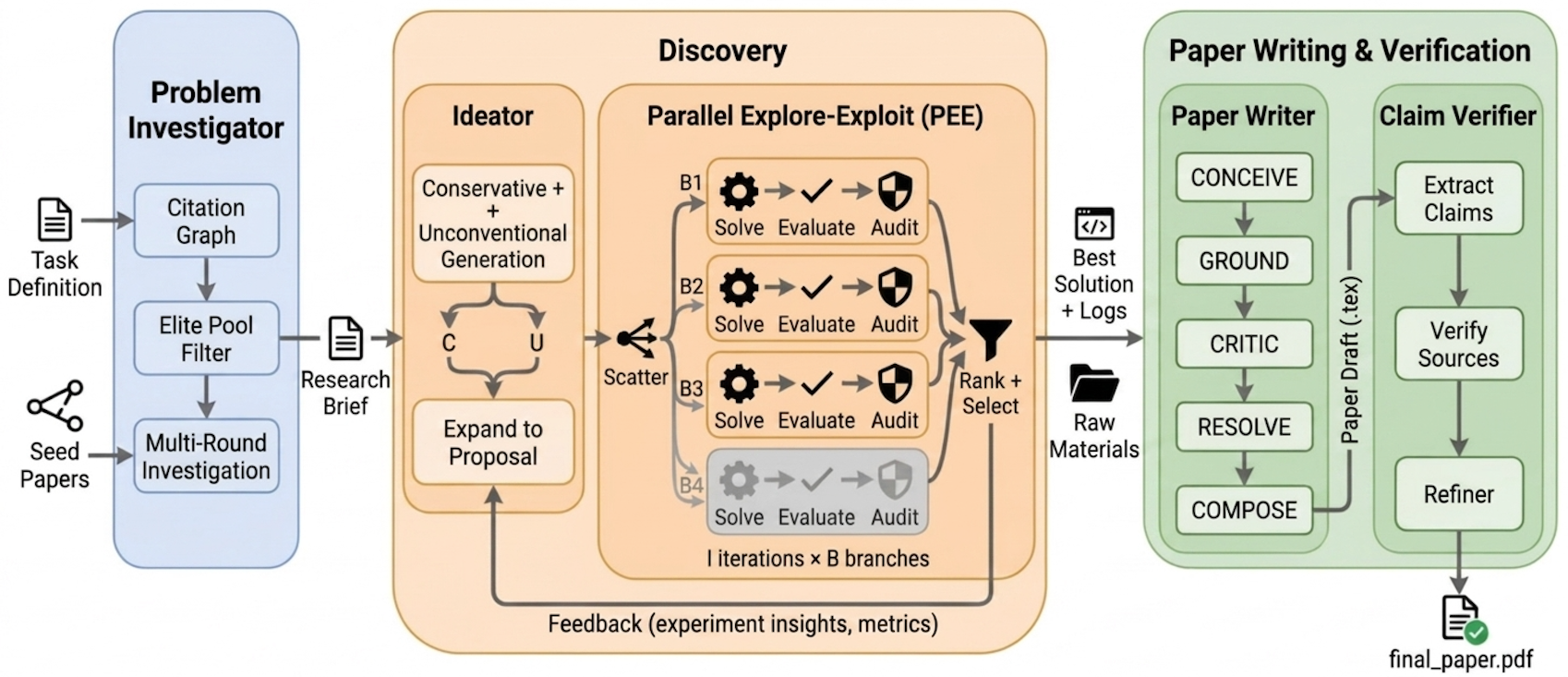
The Chain-of-Evidence functions as a digital audit trail. For every hypothesis generated or experimental result interpreted, the framework requires the system to link back to the underlying evidence. This is crucial for maintaining scientific integrity. If an autonomous system suggests a new chemical compound or a novel physical property, the CoE allows human scientists to trace the logic back to the original observations or theoretical principles. This level of transparency is intended to build trust between the scientific community and autonomous agents, ensuring that AI-driven breakthroughs can be scrutinized and validated with the same rigor as human-led research.
Industry Impact
The introduction of the Science One Framework has profound implications for the AI and scientific research industries. First, it establishes a new benchmark for reliability in AI-driven discovery. By formalizing the "Chain-of-Evidence," Google Research is encouraging the industry to move away from purely generative models toward systems that prioritize factual grounding and logical consistency. This could lead to a significant reduction in the "hallucinations" often associated with large-scale AI models when applied to technical and scientific fields.
Furthermore, Science One could accelerate the pace of discovery by allowing for the parallelization of research tasks. If autonomous frameworks can be trusted to produce verifiable results, organizations can deploy multiple agents to explore different facets of a scientific problem simultaneously. This would not only increase the efficiency of R&D departments in the private sector but also provide public research institutions with powerful tools to tackle global challenges, such as climate change or pandemic preparedness, more rapidly. The emphasis on a verifiable framework ensures that this acceleration does not come at the cost of scientific accuracy.
Frequently Asked Questions
Question: What is the primary goal of the Science One Framework?
The primary goal of the Science One Framework is to provide a verifiable and autonomous system for conducting scientific research. It aims to automate the research process while ensuring that all findings are supported by a clear and traceable "Chain-of-Evidence."
Question: How does the "Chain-of-Evidence" improve scientific research?
The "Chain-of-Evidence" improves research by providing a transparent audit trail for every step of the autonomous discovery process. This allows human researchers to verify the logic and data behind AI-generated conclusions, ensuring that the results are reliable and meet scientific standards.
Question: Is Science One limited to a specific field of science?
According to the announcement, Science One is designed as a framework for "General Science." This indicates that it is intended to be a versatile tool applicable across various scientific disciplines rather than being restricted to a single niche area of study.