
AI News on September 8, 2026

US Tech Giants Target Australia for AI Data Center Expansion Amidst 9 Gigawatt Capacity Proposals
Industry News

US Tech Giants Target Australia for AI Data Center Expansion Amidst 9 Gigawatt Capacity Proposals

US technology firms are increasingly identifying Australia as a strategic destination for artificial intelligence data center development. This interest is reflected in a massive pipeline of infrastructure projects, with current proposals reaching a total capacity of 9 gigawatts. However, recent industry data reveals a significant gap between these ambitious plans and their actual realization. As of June, none of the 9 gigawatts of proposed capacity had been commissioned. This suggests that while the intent to expand AI infrastructure in the region is high, the industry is currently navigating a complex transition phase where proposed projects have yet to reach operational status. The situation highlights both the immense potential of the Australian market and the current bottlenecks preventing the immediate deployment of large-scale AI computing power.
Tech in Asia
The Frontier AEO Tracker: Analyzing Astra Project Trends and Frontier Model Selections for DX Leaders
Industry News

The Frontier AEO Tracker: Analyzing Astra Project Trends and Frontier Model Selections for DX Leaders

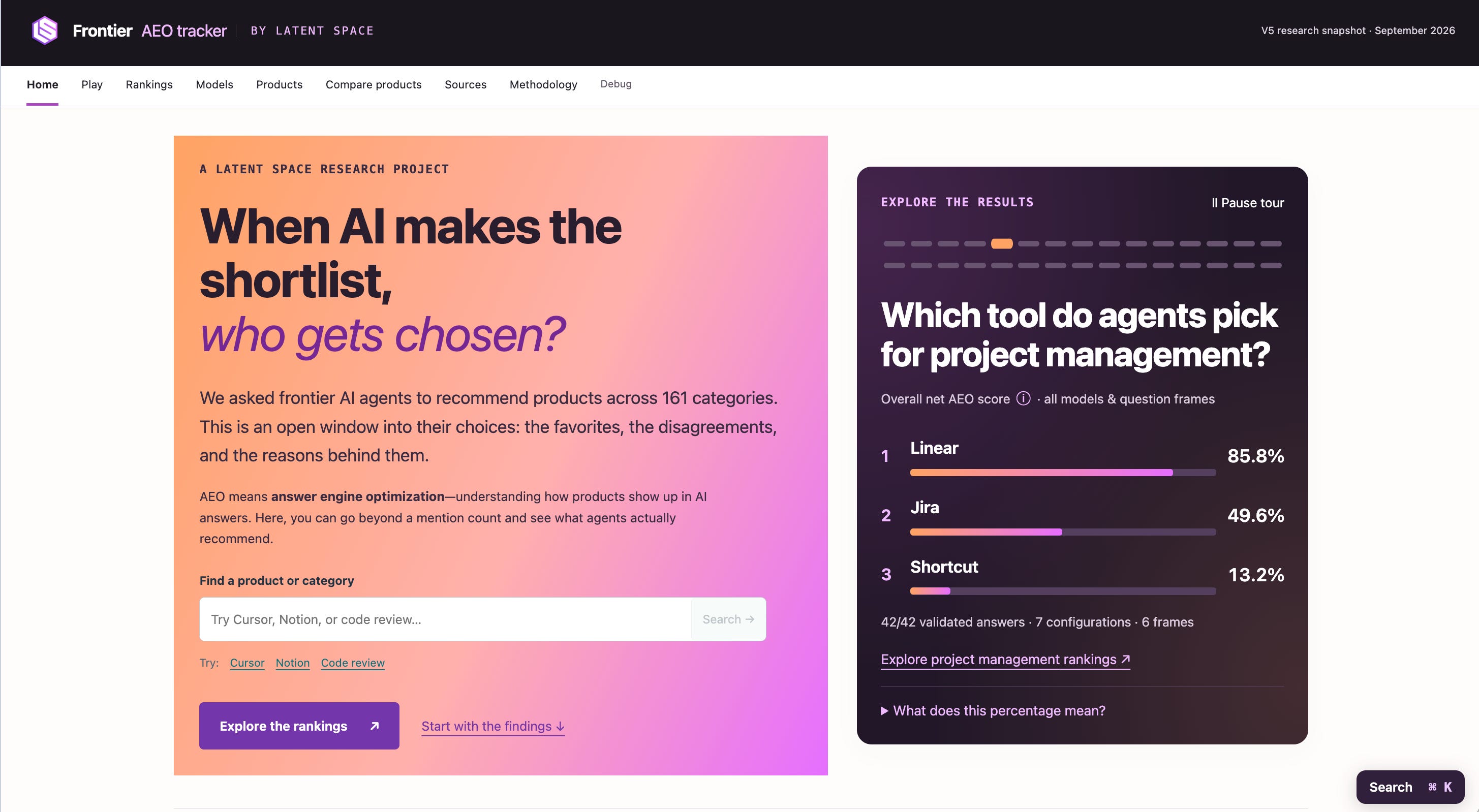
Latent Space has officially launched the Frontier AEO Tracker, marking the debut of its inaugural Astra project. This initiative is specifically designed to monitor and analyze Answer Engine Optimization (AEO) trends across leading frontier models, including Astra. Developed in response to high demand from founders and Developer Experience (DX) leaders, the tracker provides critical insights into the selection processes and behaviors of advanced AI systems. By focusing on what frontier models prioritize, the project aims to offer a comprehensive overview of the evolving AI landscape. This tool serves as a strategic resource for stakeholders looking to understand the mechanics of model-driven information retrieval and how to navigate the shifting paradigms of digital discovery in the age of frontier AI.

Latent Space
AI-Driven Economic Theory: How Fable 5 is Helping Redefine Aggregate Wage Modeling
Research Breakthrough

AI-Driven Economic Theory: How Fable 5 is Helping Redefine Aggregate Wage Modeling

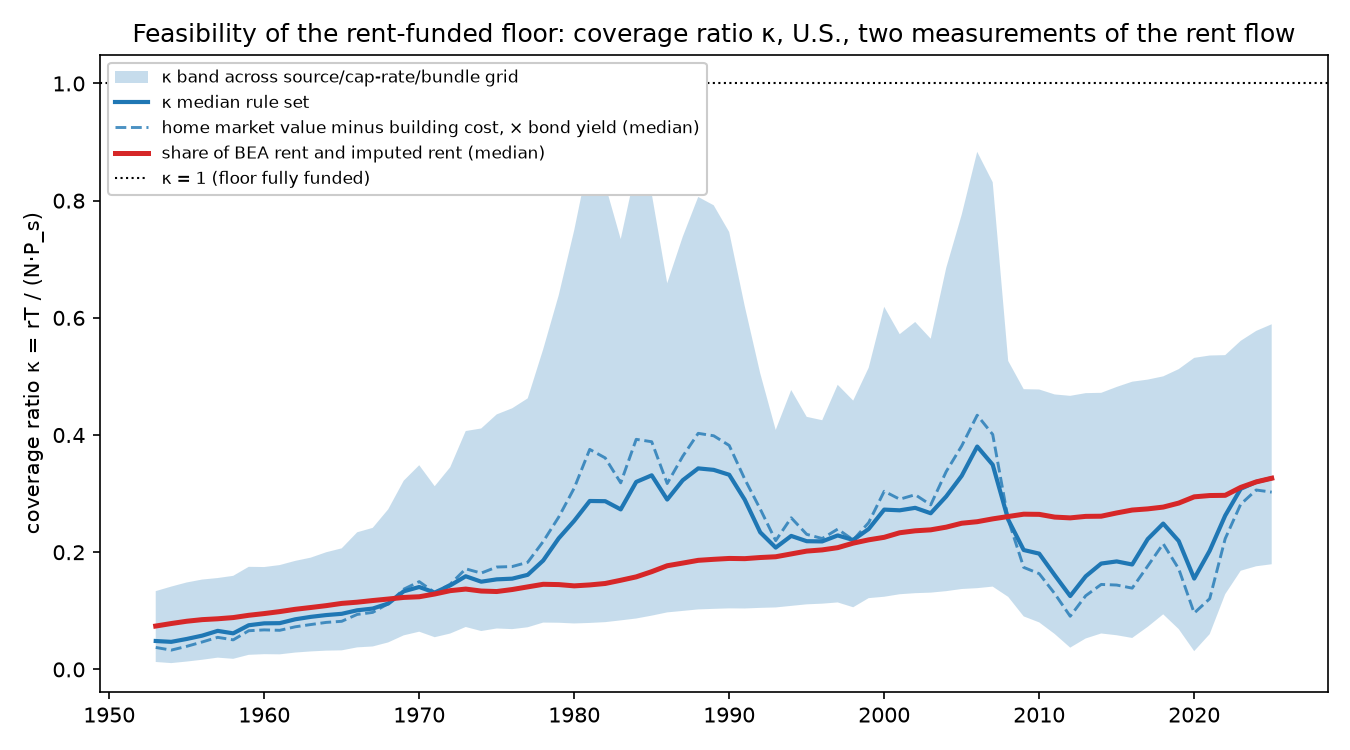
A new economic theory is emerging from an unconventional collaboration between human researchers and advanced AI models, including Opus and Fable 5. Originally starting as a personal data exercise exploring the relationship between taxes, benefits, and consumer behavior, the project has evolved into a formal academic pursuit in partnership with the Stockholm School of Economics. The research integrates the task-based model pioneered by Daron Acemoglu and Pascual Restrepo with classical economic principles and input-output recursion. By doing so, the authors aim to 'pin' the aggregate wage—a feat they argue current economic models struggle to achieve without relying on estimates or free parameters. This development highlights a significant shift in how AI is being utilized to challenge and refine long-standing theoretical frameworks in the social sciences.

Hacker News
Decoding the AI Avalanche: A Comprehensive Guide to Opaque Recurrence and Essential Industry Terminology
Industry News

Decoding the AI Avalanche: A Comprehensive Guide to Opaque Recurrence and Essential Industry Terminology

The rapid ascent of artificial intelligence has introduced a significant volume of new terminology, described by industry experts as an "avalanche" of terms and slang. To address this growing complexity, TechCrunch AI has released a specialized glossary curated by Natasha Lomas, Romain Dillet, Kyle Wiggers, and Lucas Ropek. This guide focuses on defining the most critical words and phrases that individuals are likely to encounter in the current technological landscape, including complex concepts such as "opaque recurrence." As the AI field continues to expand, understanding this evolving vocabulary is essential for navigating the technical and social implications of the technology. The glossary serves as a foundational resource for both professionals and enthusiasts attempting to keep pace with the industry's linguistic shifts.

TechCrunch AI
Why Your Next Smartphone Will Cost More: The Rise of Chipflation and Global Memory Shortages
Industry News

Why Your Next Smartphone Will Cost More: The Rise of Chipflation and Global Memory Shortages

As Apple prepares to debut its next generation of iPhones, consumers are facing an unwelcome reality: higher price tags. This shift is driven by a phenomenon known as "chipflation," characterized by soaring memory costs that have become unavoidable even for supply-chain giants. With a persistent memory crunch showing no signs of resolution, the increased production costs are being passed directly to the consumer. This analysis explores how the shortage of critical components like RAM, involving major suppliers such as Micron, is reshaping the pricing landscape of the mobile industry and why these supply chain pressures are reaching a breaking point for hardware manufacturers.

The Verge
Singapore’s First HSA-Registered AI Dental Screening Tool: Oral Link Sets New Healthtech Milestone
Industry News

Singapore’s First HSA-Registered AI Dental Screening Tool: Oral Link Sets New Healthtech Milestone

Oral Link, a Singapore-based dental AI startup, has achieved a significant regulatory milestone with the Health Sciences Authority (HSA). The company's AI dental screening tool has become the first of its kind to be registered by the HSA for direct consumer use in Singapore. This development marks a pivotal shift in how dental health can be monitored, moving diagnostic-level AI technology directly into the hands of consumers. By securing this registration, Oral Link establishes a precedent for AI-driven healthtech in the region, potentially streamlining early dental issue detection and improving oral health accessibility for the general public. The registration signifies a major step forward for the startup and the broader healthtech ecosystem in Southeast Asia.

Tech in Asia
a16z Guide to Scaling AI: Why Ambition and Engagement Outperform Simple Efficiency
Industry News

a16z Guide to Scaling AI: Why Ambition and Engagement Outperform Simple Efficiency

Anish Acharya, a partner at Andreessen Horowitz (a16z), has outlined a strategic vision for the future of artificial intelligence, warning that the industry's greatest risk is a lack of ambition. In his guide to scaling AI, Acharya emphasizes that for consumer AI products to achieve massive scale, they must move beyond being mere productivity tools. Instead of focusing solely on efficiency, developers should prioritize deep user engagement and the implementation of growth loops, drawing inspiration from the success of platforms like TikTok. This shift in focus from utility to interaction marks a pivotal moment for AI startups looking to capture long-term market value and user loyalty in an increasingly competitive landscape.

Tech in Asia
LLVM Project: An In-Depth Look at Modular and Reusable Compiler and Toolchain Technologies
Open Source

LLVM Project: An In-Depth Look at Modular and Reusable Compiler and Toolchain Technologies

The LLVM Project, a prominent collection of modular and reusable compiler and toolchain technologies, has recently gained significant traction on GitHub. As a foundational framework in the software development ecosystem, LLVM provides a suite of libraries and tools designed to optimize and transform code across various programming languages. This analysis explores the core principles of the LLVM Project, focusing on its modular architecture and the reusability of its components. By offering a flexible infrastructure for building compilers, LLVM enables developers to create efficient toolchains tailored to specific hardware and software requirements. The project's presence on GitHub Trending underscores its ongoing relevance and the community's interest in robust, scalable compiler infrastructure.

GitHub Trending
Humanizer: A New AI Agent Skill Designed to Eliminate AI Traces from Generated Text
Open Source

Humanizer: A New AI Agent Skill Designed to Eliminate AI Traces from Generated Text

The 'humanizer' project, recently trending on GitHub and developed by user blader, introduces a specialized AI agent skill aimed at removing the linguistic markers of artificial intelligence from text. As AI-generated content becomes ubiquitous, the demand for tools that can refine machine output into more natural, human-like prose has surged. This tool addresses the specific need for 'humanization'—a process that adjusts the structure, tone, and rhythm of AI text to bypass detection systems and improve readability. By functioning as a modular 'skill,' it can be integrated into broader AI agent workflows, representing a significant step in the evolution of sophisticated content creation tools that prioritize authenticity and the 'human touch' in an increasingly automated digital landscape.

GitHub Trending
LLVM Project: Advancing Software Development Through Modular and Reusable Compiler Technologies
Open Source

LLVM Project: Advancing Software Development Through Modular and Reusable Compiler Technologies

The LLVM project stands as a cornerstone of modern computing, offering a comprehensive collection of modular and reusable compiler and toolchain technologies. By prioritizing a library-based approach, LLVM enables developers to leverage high-performance components for building, optimizing, and translating programming languages across diverse platforms. This analysis explores the fundamental nature of the LLVM project as described in recent GitHub trending reports, focusing on its core identity as a modular framework. We examine how the project's commitment to reusability facilitates innovation in the software industry, providing a versatile toolkit that simplifies the complexities of compiler design. As a foundational element in the developer ecosystem, LLVM continues to define the standards for efficient and flexible toolchain architecture.

GitHub Trending
ECC: A New Performance Optimization System for AI Agent Frameworks Including Claude Code and Cursor
Industry News

ECC: A New Performance Optimization System for AI Agent Frameworks Including Claude Code and Cursor

ECC, a performance optimization system for AI agent frameworks, has emerged as a trending project on GitHub. Developed by user affaan-m, the system is designed to enhance the capabilities of leading AI development tools such as Claude Code, Codex, Opencode, and Cursor. ECC focuses on five core development pillars: skills, intuition, memory, security, and a research-first approach. By providing these specialized layers, the system aims to optimize the performance and reliability of autonomous agents in software engineering environments. This release marks a significant move toward more structured and high-performance agentic workflows, addressing critical needs for memory retention and security in AI-assisted coding.

GitHub Trending
Matt Pocock Releases 'Skills' Repository: A Curated Collection for Engineers from the .agents Directory
Open Source

Matt Pocock Releases 'Skills' Repository: A Curated Collection for Engineers from the .agents Directory

Matt Pocock, a prominent figure in the developer community, has recently unveiled a new GitHub repository titled 'skills.' This project is described as a collection of essential skills specifically designed for 'real engineers.' According to the repository's documentation, the content is sourced directly from Pocock's personal '.agents' directory, suggesting a focus on automated workflows, AI agent configurations, or specialized developer tools. As the repository gains traction on GitHub Trending, it highlights a growing interest in the intersection of traditional engineering and agentic automation. This analysis explores the significance of the repository's origin and its potential utility for the modern software engineering landscape.

GitHub Trending
Diagram-Design: 38 Specialized SVG and HTML Templates Optimized for AI-Driven Development Environments
Open Source

Diagram-Design: 38 Specialized SVG and HTML Templates Optimized for AI-Driven Development Environments

The 'diagram-design' repository, created by Cathryn Lavery, has emerged as a significant resource for developers utilizing AI coding assistants like Claude Code, Codex, and Pi. Offering 38 distinct editing diagram types, the project distinguishes itself by using self-contained HTML and SVG formats rather than relying on external libraries like Mermaid.js. By eliminating shadows and focusing on clean, high-quality visual structures, the project addresses the specific needs of AI-integrated workflows where portability and clarity are paramount. This analysis explores the technical choices behind the repository, its rejection of traditional diagramming tools in favor of lightweight alternatives, and its potential impact on how visual documentation is handled within modern AI development ecosystems.

GitHub Trending
NousResearch Unveils Hermes-Agent: A New Paradigm for AI Agents That Grow With Users
Open Source

NousResearch Unveils Hermes-Agent: A New Paradigm for AI Agents That Grow With Users

NousResearch has introduced a new project titled 'hermes-agent,' which has quickly gained traction on GitHub Trending. The project is defined by its core philosophy: creating an intelligent agent that 'grows with you.' This development marks a significant move by NousResearch to transition from static language models to dynamic, adaptive AI entities. By focusing on the co-evolution of the agent and the user, hermes-agent aims to redefine the relationship between humans and artificial intelligence. While the initial release emphasizes this growth-centric approach, it has already captured the attention of the open-source community, signaling a shift toward more personalized and evolving AI systems that adapt to individual user needs over time.

GitHub Trending
OpenAI Launches Codex Skills Directory on GitHub: A New Framework for AI Capabilities
Open Source

OpenAI Launches Codex Skills Directory on GitHub: A New Framework for AI Capabilities

OpenAI has officially released a new repository on GitHub titled "skills," which serves as a dedicated Codex Skills Directory. Published on September 7, 2026, the repository has quickly ascended the GitHub Trending charts, reflecting significant interest from the global developer community. The project is designed to provide a structured catalog of the functional capabilities and specific programming skills associated with the Codex model. By centralizing these "skills" in a directory format, OpenAI offers a clearer roadmap for understanding the practical applications and task-oriented strengths of its AI technology. This move signals a shift toward more granular and transparent documentation of AI model proficiencies, providing a vital resource for developers looking to integrate Codex into their workflows.

GitHub Trending
OpenCode: Anomalyco Launches New Open-Source Programming Agent on GitHub
Open Source

OpenCode: Anomalyco Launches New Open-Source Programming Agent on GitHub

OpenCode, a project developed by anomalyco, has recently surfaced as a trending open-source programming agent on GitHub. The project is defined by its core identity as an "open-source programming agent," aiming to provide developers with a transparent and accessible framework for AI-driven coding tasks. By appearing on GitHub Trending, OpenCode highlights a growing interest in autonomous agents specifically tailored for software development. This analysis explores the significance of OpenCode's open-source nature, its classification as a programming-centric agent, and the potential impact of such tools on the broader AI and software engineering landscape. As an open-source initiative, it offers a community-driven alternative to proprietary programming assistants, emphasizing the shift toward decentralized AI development tools.

GitHub Trending
Clipnote Official Launch: Okumura Daichi Debuts New Project on Product Hunt
Product Launch

Clipnote Official Launch: Okumura Daichi Debuts New Project on Product Hunt

On September 7, 2026, developer Okumura Daichi officially introduced 'Clipnote' to the global technology community through the Product Hunt platform. This launch marks a significant milestone for the developer, positioning the new project within one of the world's most influential ecosystems for product discovery and early adoption. While the initial announcement focuses on the debut itself, the appearance of Clipnote on Product Hunt signifies a strategic entry into the competitive software market of late 2026. As a platform known for surfacing innovative tools, Product Hunt serves as the primary stage for this release, highlighting the ongoing trend of independent developers utilizing community-driven discovery to gain visibility and user feedback during the early stages of a product's lifecycle.

Product Hunt