
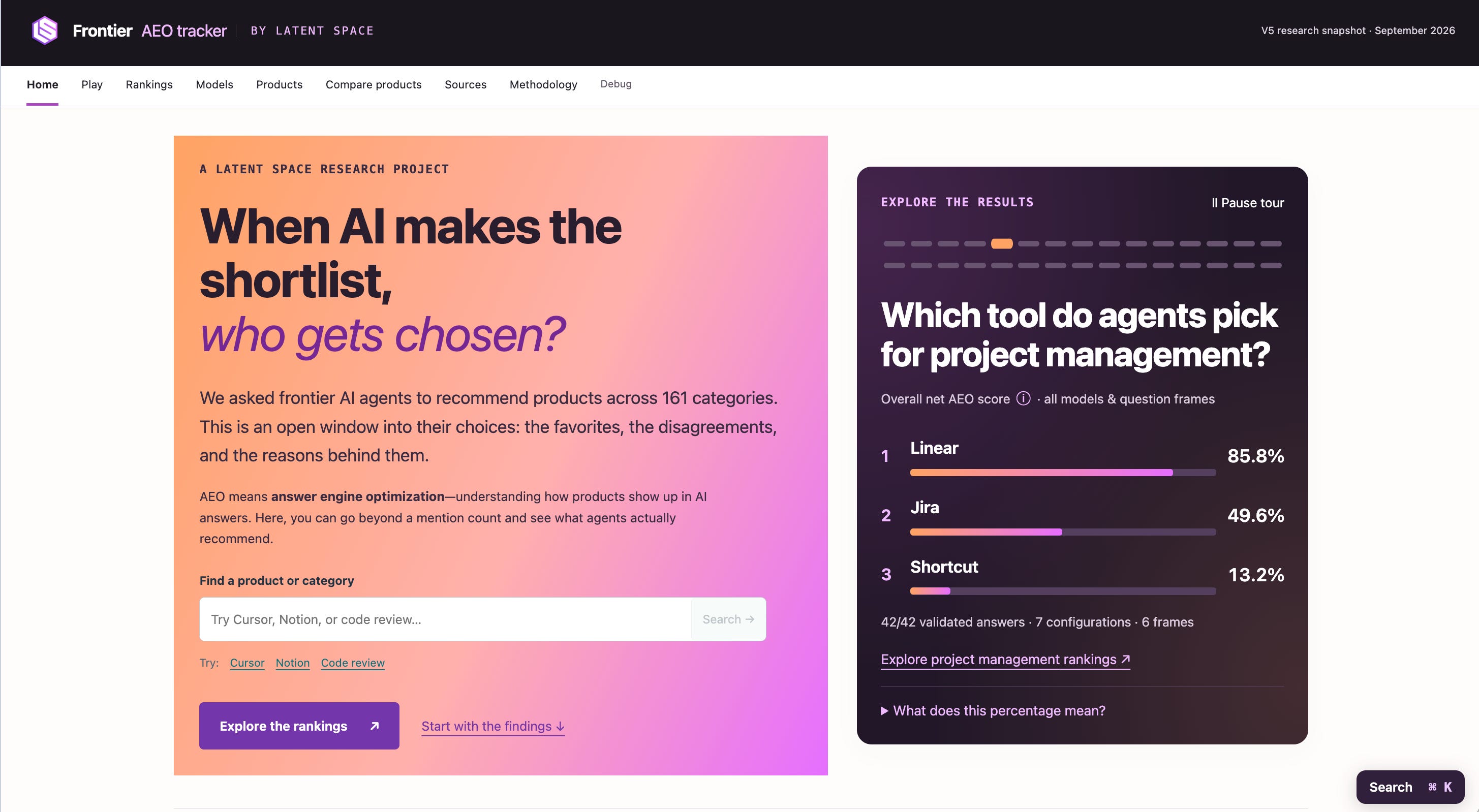
The Frontier AEO Tracker: Analyzing Astra Project Trends and Frontier Model Selections for DX Leaders
Latent Space has officially launched the Frontier AEO Tracker, marking the debut of its inaugural Astra project. This initiative is specifically designed to monitor and analyze Answer Engine Optimization (AEO) trends across leading frontier models, including Astra. Developed in response to high demand from founders and Developer Experience (DX) leaders, the tracker provides critical insights into the selection processes and behaviors of advanced AI systems. By focusing on what frontier models prioritize, the project aims to offer a comprehensive overview of the evolving AI landscape. This tool serves as a strategic resource for stakeholders looking to understand the mechanics of model-driven information retrieval and how to navigate the shifting paradigms of digital discovery in the age of frontier AI.
Key Takeaways
- Inaugural Astra Project: Latent Space introduces the Frontier AEO Tracker as its first major project under the Astra initiative.
- Focus on AEO Trends: The tracker is dedicated to analyzing Answer Engine Optimization (AEO), a critical area for modern AI discovery.
- High Industry Demand: The project addresses top-priority questions frequently raised by founders and Developer Experience (DX) leaders.
- Comprehensive Model Coverage: The tracker monitors Astra alongside every other major frontier model to identify broader industry patterns.
In-Depth Analysis
The Launch of the Astra Project and AEO Tracking
The introduction of the Frontier AEO Tracker represents a significant milestone for Latent Space as it unveils its first Astra project. This initiative is centered on Answer Engine Optimization (AEO), a field that is rapidly becoming essential for how information is curated and presented by artificial intelligence. By tracking these trends, the project aims to decode the specific preferences and algorithmic choices made by the world's most advanced frontier models. The focus on Astra, alongside other leading models, suggests a comparative approach intended to highlight both unique model behaviors and universal trends in the AI ecosystem.
Addressing the Needs of Founders and DX Leaders
According to the announcement, the decision to focus on AEO trends was driven by direct feedback from founders and Developer Experience (DX) leaders. For these stakeholders, understanding how frontier models "choose" and surface information is no longer a secondary concern but a primary strategic hurdle. As AI models increasingly act as the interface between users and data, the ability to optimize for these "answer engines" is vital. The Frontier AEO Tracker serves as a data-driven response to these inquiries, providing a structured way to observe how frontier models interact with and prioritize various types of content and data structures.
Understanding Frontier Model Selections
A core component of the tracker is its analysis of what Astra and other frontier models choose to emphasize. This involves a deep dive into the selection criteria that govern model outputs. By identifying these patterns, the tracker allows developers and business leaders to move beyond guesswork and toward a more informed strategy for visibility within AI-driven environments. The project's scope—covering "every other frontier model"—ensures that the insights are not limited to a single platform but reflect the broader shifts occurring across the entire frontier AI landscape.
Industry Impact
The emergence of the Frontier AEO Tracker signals a broader industry shift from traditional Search Engine Optimization (SEO) toward Answer Engine Optimization (AEO). As frontier models become the dominant method for information retrieval, the significance of understanding their internal selection logic cannot be overstated. This project provides the necessary framework for the industry to adapt to a model-centric world. For founders, it offers a roadmap for growth and user acquisition, while for DX leaders, it provides the technical context needed to build products that are easily discoverable and accurately represented by the next generation of AI.
Frequently Asked Questions
What is the Frontier AEO Tracker?
The Frontier AEO Tracker is the first project under the Astra initiative by Latent Space, designed to monitor and analyze trends in Answer Engine Optimization (AEO) across frontier AI models.
Why is AEO important for founders and DX leaders?
AEO is critical because it dictates how frontier models select and present information to users. Founders and DX leaders need this data to ensure their products and content are effectively surfaced by AI-driven search and answer engines.
Which models are covered by the tracker?
The tracker monitors the Astra model as well as all other major frontier models currently influencing the AI industry, providing a comprehensive view of selection trends.
