
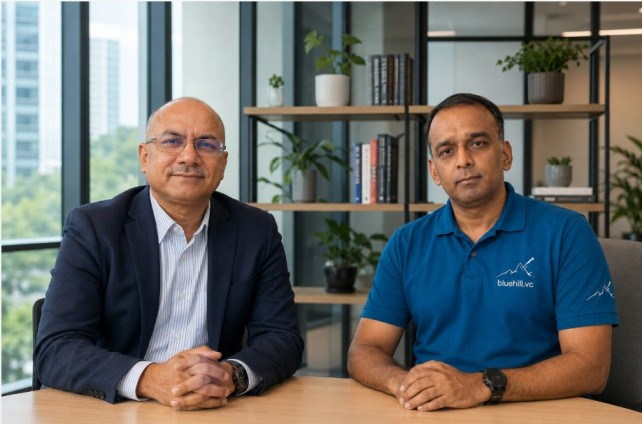
Bluehill Leads $1.1 Million Seed Funding Round for Indian Semiconductor Startup Makr to Accelerate Development
Indian semiconductor startup Makr has successfully secured $1.1 million in a seed funding round led by Bluehill. This strategic capital injection is designated for three primary operational pillars: the advancement of core technology development, the execution of rigorous customer validation processes, and the essential preparations required for full-scale commercial deployment. As an emerging player in the hardware sector, Makr's successful fundraising highlights a significant milestone in its transition from the design phase toward market readiness. The involvement of Bluehill as the lead investor underscores growing venture capital interest in early-stage semiconductor innovation. This funding provides Makr with the necessary runway to refine its technical architecture and validate its value proposition with potential clients before entering the competitive commercial landscape.
Key Takeaways
- Seed Funding Secured: Makr, an Indian semiconductor startup, has raised $1.1 million in its latest seed round.
- Lead Investor: The investment round was led by the venture firm Bluehill.
- Strategic Objectives: The capital is earmarked for technology development, customer validation, and commercial deployment preparation.
- Market Transition: The funding marks Makr's shift from initial concepts toward tangible market entry and customer-facing operations.
In-Depth Analysis
Strategic Allocation of Seed Capital for Technical Advancement
The $1.1 million seed round led by Bluehill represents a critical financial foundation for Makr. In the capital-intensive semiconductor industry, seed-stage funding is vital for moving beyond theoretical designs. Makr has explicitly stated that a portion of these funds will be directed toward technology development. This phase typically involves the refinement of semiconductor architectures, hardware-software integration, and the creation of functional prototypes. By securing this investment, Makr can allocate resources to the engineering talent and technical infrastructure necessary to advance its proprietary technology, ensuring that its hardware meets the high-performance standards required in the modern electronics market.
Navigating the Customer Validation Phase
A significant portion of the newly acquired capital is dedicated to customer validation. For a semiconductor startup, this stage is the bridge between a laboratory prototype and a viable commercial product. Customer validation involves engaging with potential industry partners to test the startup's technology in real-world scenarios. This process is essential for identifying specific use cases, gathering performance data, and ensuring that the product aligns with the technical requirements of end-users. By prioritizing this step, Makr is positioning itself to reduce market risk, ensuring that its final commercial offering is precisely tuned to the needs of its target audience.
Preparing for Commercial Deployment
The final pillar of Makr’s current strategy is the preparation for commercial deployment. This phase involves the transition from development and testing to manufacturing and distribution. Preparing for deployment requires establishing supply chain relationships, finalizing manufacturing partnerships, and developing a go-to-market strategy. The $1.1 million investment provides the necessary liquidity to handle the logistical complexities associated with launching hardware products. As Makr moves toward this stage, the focus will shift toward scalability and reliability, ensuring that the startup can meet the volume demands of the semiconductor market once its products are officially released.
Industry Impact
Strengthening the Early-Stage Hardware Ecosystem
The investment by Bluehill into Makr is a notable development for the semiconductor industry, particularly within the Indian startup ecosystem. Semiconductor ventures often face higher barriers to entry compared to software startups due to the significant costs associated with fabrication and hardware design. A successful $1.1 million seed round signals to other investors that there is a growing appetite for hardware-centric innovation. This funding not only supports Makr's immediate goals but also contributes to the broader trend of diversifying the tech landscape by supporting foundational hardware technologies that power various digital sectors.
Implications for Regional Innovation
By focusing on technology development and customer validation within the region, Makr is contributing to the localization of semiconductor expertise. The successful closure of this seed round suggests that regional startups are increasingly capable of attracting significant venture capital for complex engineering projects. As Makr progresses through its commercial deployment preparation, its journey will likely serve as a reference point for other emerging semiconductor firms, highlighting the importance of securing lead investors like Bluehill to navigate the early stages of the hardware product lifecycle.
Frequently Asked Questions
Question: Who is the lead investor in Makr's seed round?
The seed funding round for Makr was led by Bluehill, a venture capital firm focusing on early-stage investments.
Question: What are the primary goals Makr intends to achieve with the $1.1 million funding?
Makr intends to use the $1.1 million for three specific purposes: advancing its technology development, conducting customer validation, and preparing for the commercial deployment of its products.
Question: What stage of development is Makr currently in?
Based on the funding objectives, Makr is currently in the technology development and customer validation stage, while simultaneously making preparations to enter the commercial market.
