AI News on September 4, 2026

Protecting Engineering Expertise: Why AI Efficiency Could Threaten the Next Generation of Specialists
Industry News

Protecting Engineering Expertise: Why AI Efficiency Could Threaten the Next Generation of Specialists

In a thought-provoking analysis, Richard Mitchell, systems engineer and CEO of AuraSpark Technologies, warns that the rapid pursuit of AI efficiency may come at a significant cost: the erosion of human expertise. Drawing critical parallels from the aviation and nuclear power industries, Mitchell highlights the dangers of over-reliance on automation. As AI takes over complex engineering tasks, there is a growing concern that the next generation of experts will lack the foundational skills and hands-on experience necessary to manage systems when technology fails. The article emphasizes that preserving human skill sets is not just a matter of professional development, but a safety-critical necessity in high-stakes environments. This shift requires a strategic balance between leveraging AI for productivity and ensuring that human oversight remains robust and informed by deep technical knowledge.

Hacker News
Benchmarking AI Coding Agents: A Deep Dive into Tool Selection Across 17,000 Experimental Runs
Industry News

Benchmarking AI Coding Agents: A Deep Dive into Tool Selection Across 17,000 Experimental Runs

A comprehensive study has analyzed how prominent AI coding agents, including Claude, Codex, and Cursor, select third-party tools and services during software development tasks. By analyzing thousands of public GitHub repositories, researchers established a balanced panel of 75 repositories across 10 different programming languages, utilizing real-world statistics to ensure the data was not biased toward open-source startups. The experiment employed four distinct developer personas—Vibe-coder, Junior engineer, Senior engineer, and Enterprise engineer—to test how varying levels of professional requirement and constraint affect AI decision-making. With 1,163 prompt variations and thousands of runs conducted in ephemeral sandboxes, the study provides a rigorous framework for understanding the logic and preferences of AI agents when tasked with implementing features like email services or invoice generation in complex codebases.

Hacker News
Product Launch

OpenAI Unveils GPT-6 Astra: A New Era for the Generative Pre-trained Transformer Series

OpenAI has officially announced the latest iteration in its flagship AI series, titled GPT-6 Astra. The announcement, indexed on September 3, 2026, marks a significant leap in the versioning of the company's Large Language Models (LLMs). Moving beyond the GPT-5 era, this new model introduces the 'Astra' designation, suggesting a new branding strategy or a specific architectural focus for the sixth generation. While the initial indexing provides the foundational name and confirmation of the model's existence, it sets the stage for a major shift in the artificial intelligence landscape. This analysis explores the implications of the GPT-6 Astra announcement and its positioning within OpenAI's rapidly evolving product ecosystem.

Hacker News
Cerebras Inference Platform Achieves Record Speeds with Qwen 3.8 27B and OpenAI GPT OSS 120B
Industry News

Cerebras Inference Platform Achieves Record Speeds with Qwen 3.8 27B and OpenAI GPT OSS 120B

Cerebras Systems has announced a significant performance update to its inference platform, featuring the Qwen 3.8 27B and OpenAI GPT OSS 120B models. According to the latest documentation, the Qwen 3.8 27B model now operates at approximately 1500 tokens per second, while the GPT OSS 120B model reaches an impressive 3000 tokens per second. These models are available through various access tiers, including free trials and pay-as-you-go options, with context windows extending up to 131k. A key highlight of this release is Cerebras' commitment to model quality; all models served via public endpoints are unpruned versions. The platform utilizes selective weight-only quantization for storage to maintain high precision during operations, ensuring that quality-sensitive layers remain at full precision through on-the-fly dequantization.

Hacker News
Google Research Leverages Transfer Learning to Improve Genomic Prediction for Underrepresented Populations
Research Breakthrough

Google Research Leverages Transfer Learning to Improve Genomic Prediction for Underrepresented Populations

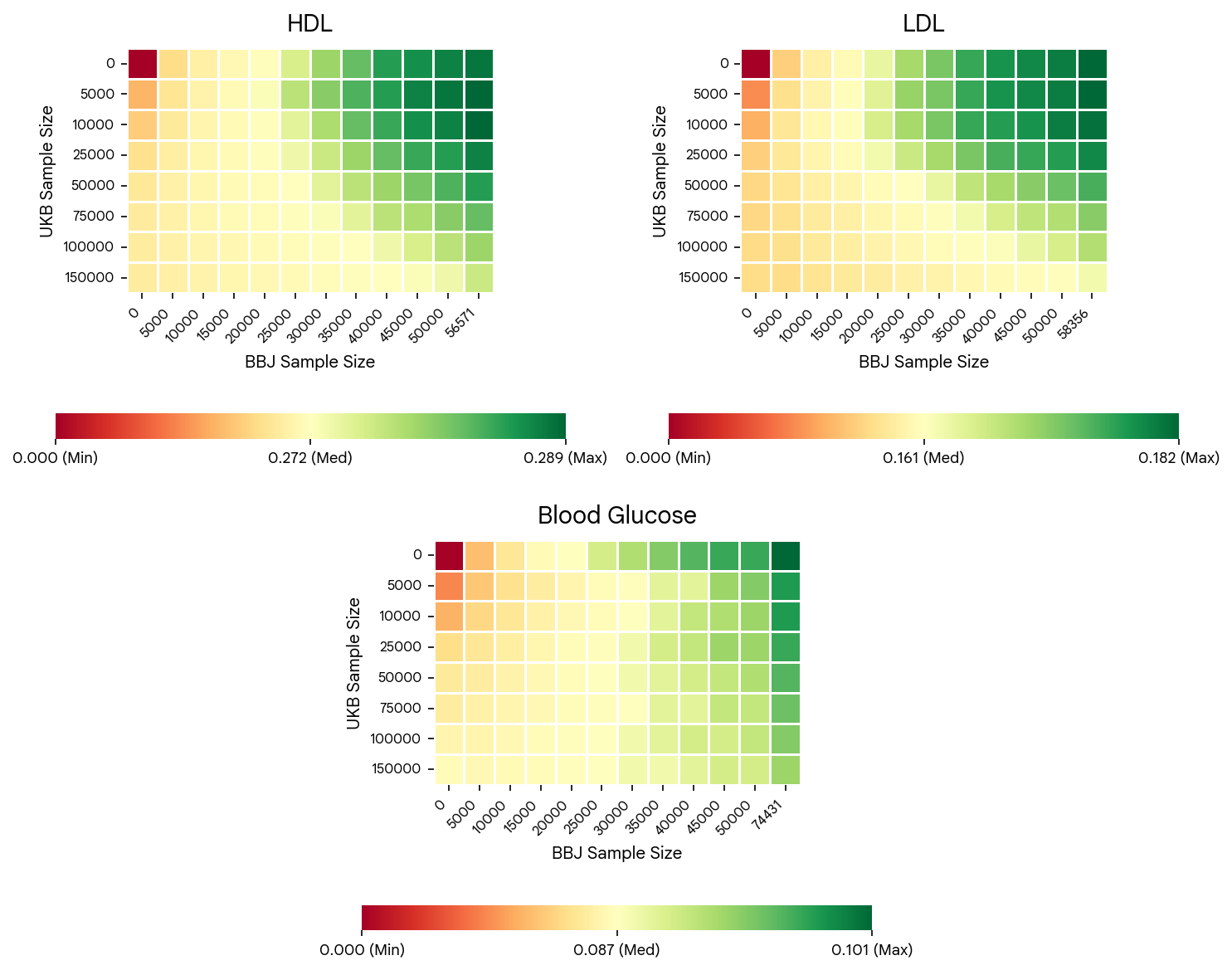
Google Research has introduced a significant advancement in bioinformatics by applying transfer learning to genomic prediction, specifically targeting underrepresented populations. Historically, genomic studies have suffered from a lack of ancestral diversity, leading to health prediction models that are less accurate for non-European groups. By utilizing transfer learning, researchers can now adapt models trained on large, data-rich datasets to provide more accurate predictions for smaller, underrepresented cohorts. This approach aims to mitigate the 'data poverty' in genomics and ensure that the benefits of precision medicine, such as polygenic risk scores, are distributed more equitably across global populations. The research underscores the potential of AI to bridge gaps in healthcare data and improve diagnostic outcomes for diverse demographic groups worldwide.

Google Research Blog
OpenAI Unveils GPT-6 Astra: A Generational Leap Marking the Dawn of the Artificial General Intelligence Era
Industry News

OpenAI Unveils GPT-6 Astra: A Generational Leap Marking the Dawn of the Artificial General Intelligence Era

OpenAI has officially introduced its latest flagship model, GPT-6 Astra, signaling what the company describes as the beginning of the AGI era. This new model represents a significant advancement in artificial intelligence, offering a "generational leap" in capabilities across several critical domains, including cybersecurity, software engineering, and scientific research. Notably, GPT-6 Astra is the first model to surpass OpenAI's "critical cybersecurity capability threshold," a benchmark designed to ensure safety while pushing the boundaries of autonomous computer use and professional task execution. The release underscores OpenAI's commitment to developing highly capable systems that can handle complex, real-world workflows in professional and scientific environments, setting a new standard for the industry's progression toward general intelligence.

The Verge
NVIDIA and Microsoft Unveil RTX Spark PCs at IFA 2026 to Accelerate Local AI Agent Performance
Product Launch

NVIDIA and Microsoft Unveil RTX Spark PCs at IFA 2026 to Accelerate Local AI Agent Performance

At the IFA 2026 event, NVIDIA announced a strategic collaboration with Microsoft and various partners to transition frontier intelligence from the cloud to local hardware. The partnership focuses on delivering faster inference speeds and introducing new tools designed to simplify the setup and execution of AI agents on NVIDIA-powered devices. A major highlight of the announcement is the upcoming release of NVIDIA RTX Spark Windows PCs in October. These compact systems are specifically engineered for AI enthusiasts, developers, and creators, providing a dedicated platform for high-performance local AI tasks. By optimizing the synergy between NVIDIA hardware and Windows software, the initiative aims to make advanced AI more accessible and efficient for users requiring localized processing power.

NVIDIA Newsroom
DeepMind Announces WeatherNext 3: Its Most Advanced and Accurate Global Weather AI Model
Product Launch

DeepMind Announces WeatherNext 3: Its Most Advanced and Accurate Global Weather AI Model

DeepMind has officially introduced WeatherNext 3, marking a significant milestone in the field of AI-driven meteorology. As the organization's most advanced and accurate global weather AI model to date, WeatherNext 3 represents a major leap in forecasting capabilities. The model is designed to provide high-precision weather predictions on a global scale, emphasizing DeepMind's commitment to advancing environmental science through sophisticated artificial intelligence. This announcement highlights the model's status as a premier tool for global atmospheric modeling, aiming to set a new benchmark for accuracy in the industry.

DeepMind Blog
Industry News

OpenAI Launches Daybreak for Frontline Defenders: A $1 Billion Commitment to Cyber AI and Essential Services

OpenAI has officially introduced "Daybreak for Frontline Defenders," a landmark initiative backed by a $1 billion commitment aimed at protecting essential services. This program is designed to significantly expand access to frontier cyber AI technologies, providing the tools necessary for robust digital defense. In addition to technology access, the initiative includes a comprehensive focus on training and support for the personnel responsible for maintaining critical infrastructure. By empowering frontline defenders with advanced AI capabilities, OpenAI seeks to strengthen the security posture of services that are vital to societal stability. This massive investment underscores the growing intersection of artificial intelligence and cybersecurity, highlighting a strategic effort to provide high-level resources to those on the front lines of service protection.

OpenAI Blog
NeoMME: An Efficient Multimodal-Native and Multilingual Encoder Announced on Hugging Face
Industry News

NeoMME: An Efficient Multimodal-Native and Multilingual Encoder Announced on Hugging Face

On September 3, 2026, the Hugging Face Blog introduced NeoMME, a new AI model described as an efficient multimodal-native and multilingual encoder. The announcement highlights a shift toward models that can natively handle various data types and multiple languages while maintaining computational efficiency. Although specific technical benchmarks were not detailed in the initial release, the model's architecture aims to provide a streamlined approach to encoding tasks across different modalities and linguistic contexts. As a multimodal-native tool, NeoMME is positioned to enhance how AI systems process integrated data streams, potentially offering a more cohesive framework for global AI applications.

Hugging Face Blog
NBA 2K27 Debuts on GeForce NOW Featuring NVIDIA DLSS 5 3D-Guided Neural Rendering Technology
Product Launch

NBA 2K27 Debuts on GeForce NOW Featuring NVIDIA DLSS 5 3D-Guided Neural Rendering Technology

NVIDIA has announced its September lineup for GeForce NOW, headlined by the arrival of NBA 2K27. This latest entry in the iconic basketball series introduces NVIDIA DLSS 5, featuring 3D-Guided Neural Rendering. Developed through a strategic collaboration between NVIDIA, Visual Concepts, and 2K, this technology is designed to provide unprecedented lifelike lighting and material detail on the virtual court. NBA 2K27 leads a significant expansion of the cloud gaming service, with a total of 26 new games scheduled to join the library throughout the month. This update underscores NVIDIA's commitment to integrating cutting-edge AI rendering techniques into its streaming platform, offering members high-fidelity gaming experiences without the need for local high-end hardware. The announcement highlights the ongoing evolution of the GeForce NOW Thursday initiative and the deepening partnership between NVIDIA and major game publishers.

NVIDIA Newsroom
Industry News

Legora Leverages GPT-6 Astra to Review 41 Financial Documents in Minutes with High Accuracy

Legora has successfully utilized OpenAI's GPT-6 Astra to streamline its financial review workflow. By processing 41 documents in just minutes, the system demonstrated its capability to identify all four intentionally planted errors within the files. This implementation resulted in a significant performance improvement of nearly 40% for the financial-review process. This case study highlights the efficiency and precision gains achievable through the integration of advanced AI models in complex document analysis tasks, showcasing how GPT-6 Astra can handle high-volume data review while maintaining rigorous accuracy standards in professional financial environments.

OpenAI Blog
Industry News

Playco Achieves 50% Reduction in Manual Fixes for Game Prototyping Using OpenAI's GPT-6 Astra

Playco has reported a significant breakthrough in game development efficiency by integrating OpenAI's GPT-6 Astra model into its prototyping workflow. According to a recent update from the OpenAI Blog, Playco successfully developed three distinct themed game prototypes starting from a single "grey box" foundation. The transition to GPT-6 Astra has resulted in a 50% reduction in the manual fixes required compared to the previous model used by the studio. This development highlights the increasing precision of generative AI in technical environments, specifically within the gaming industry, where rapid iteration and reduced technical debt are critical for innovation. By minimizing the need for human intervention in the prototyping phase, Playco demonstrates the potential for GPT-6 Astra to streamline complex creative workflows.

OpenAI Blog
NVIDIA to Acquire Hugging Face in Landmark $12.9 Billion Deal to Scale Global AI Infrastructure
Industry News

NVIDIA to Acquire Hugging Face in Landmark $12.9 Billion Deal to Scale Global AI Infrastructure

In a transformative move for the artificial intelligence ecosystem, NVIDIA has announced a definitive agreement to acquire Hugging Face for $12,930,300,000. The announcement, made by NVIDIA CEO Jensen Huang, underscores a strategic commitment to scaling Hugging Face’s platform and reinforcing its underlying infrastructure. By combining NVIDIA’s resources with Hugging Face’s established community, the acquisition aims to democratize AI access for developers and institutions on a global scale. The deal recognizes the decade-long achievements of founders Clem Delangue, Julien Chaumond, and Thomas Wolf, who have built Hugging Face into a central hub for AI collaboration. This acquisition represents one of the most significant investments in AI software infrastructure to date, signaling a new era of integrated hardware and software development for the industry.

NVIDIA Newsroom
Bluehill Leads $1.1 Million Seed Funding Round for Indian Semiconductor Startup Makr to Accelerate Development
Industry News

Bluehill Leads $1.1 Million Seed Funding Round for Indian Semiconductor Startup Makr to Accelerate Development

Indian semiconductor startup Makr has successfully secured $1.1 million in a seed funding round led by Bluehill. This strategic capital injection is designated for three primary operational pillars: the advancement of core technology development, the execution of rigorous customer validation processes, and the essential preparations required for full-scale commercial deployment. As an emerging player in the hardware sector, Makr's successful fundraising highlights a significant milestone in its transition from the design phase toward market readiness. The involvement of Bluehill as the lead investor underscores growing venture capital interest in early-stage semiconductor innovation. This funding provides Makr with the necessary runway to refine its technical architecture and validate its value proposition with potential clients before entering the competitive commercial landscape.

Tech in Asia
ByteDance Plans Massive 5-6GW Data Center Cluster in Inner Mongolia's Jining District
Industry News

ByteDance Plans Massive 5-6GW Data Center Cluster in Inner Mongolia's Jining District

ByteDance, the parent company of TikTok, is reportedly planning a significant expansion of its digital infrastructure with a new data center hub in Inner Mongolia. According to industry sources, the project is expected to reach a massive capacity of 5-6 gigawatts (GW). The planned cluster will be situated in the Jining district, a region increasingly recognized for its strategic importance in the data center industry. This move underscores ByteDance's growing requirements for high-performance computing power and large-scale data storage to support its global ecosystem. The scale of the 5-6GW project represents one of the most ambitious infrastructure developments in the sector, highlighting a long-term commitment to regional expansion and technological capacity.

Tech in Asia
Product Launch

Omi: The Emergence of an Open-Source AI Necklace and Personal Companion on Product Hunt

Omi, a novel open-source AI necklace designed to function as a personal companion, has been introduced by developer Nik Shevchenko on Product Hunt. As a wearable device categorized as an AI "friend," Omi represents a growing trend in the intersection of artificial intelligence and hardware. By utilizing an open-source framework, the project invites community participation and transparency in the development of personal AI assistants. The launch highlights a shift toward accessible, wearable AI technology that prioritizes user interaction through a necklace form factor. While specific technical specifications remain centered on its open-source nature, Omi's debut marks a significant entry into the competitive landscape of AI-driven consumer electronics and personal companion devices.

Product Hunt
Google Research Unveils TimesFM: A Specialized Pretrained Foundation Model for Time Series Forecasting
Research Breakthrough

Google Research Unveils TimesFM: A Specialized Pretrained Foundation Model for Time Series Forecasting

Google Research has officially introduced TimesFM (Time Series Foundation Model), a groundbreaking pretrained model specifically engineered for time series forecasting. As a foundation model, TimesFM represents a shift from traditional, task-specific forecasting methods toward a more generalized approach, leveraging large-scale pretraining to understand temporal patterns. Developed by the Google Research team and hosted on GitHub, this model aims to provide a robust framework for predicting future data points across various domains. By utilizing a pretrained architecture, TimesFM allows for sophisticated temporal analysis without the need for extensive training on individual datasets from scratch. This release highlights the expanding influence of foundation models beyond natural language processing and into the critical field of numerical and sequential data analysis, offering a new tool for researchers and developers worldwide.

GitHub Trending
Chrome DevTools MCP: Bridging the Gap Between Programming Agents and Browser Developer Tools
Open Source

Chrome DevTools MCP: Bridging the Gap Between Programming Agents and Browser Developer Tools

The Chrome DevTools team has introduced 'chrome-devtools-mcp,' a project specifically designed to empower programming agents with the capabilities of Chrome's developer tools. By leveraging the Model Context Protocol (MCP), this tool provides a structured interface for AI agents to interact with web environments, perform debugging tasks, and inspect browser data. Recently appearing on GitHub Trending, the repository highlights a significant shift toward making professional development tools accessible to autonomous AI entities. This integration aims to streamline the workflow for AI-driven software engineering by allowing Large Language Models (LLMs) to utilize the same diagnostic power that human developers have relied on for years, marking a new milestone in the evolution of AI-assisted web development and browser-based automation.

GitHub Trending
Ponytail: Teaching AI Agents the Philosophy of the Laziest Senior Developer for Efficient Coding
Open Source

Ponytail: Teaching AI Agents the Philosophy of the Laziest Senior Developer for Efficient Coding

Ponytail, a new project by developer DietrichGebert, has emerged on GitHub Trending with a provocative premise: training AI agents to think like the "laziest senior developer in the room." The project centers on the classic software engineering adage that the best code is the code that is never written. By shifting the focus from high-volume code generation to minimalist problem-solving, Ponytail aims to redefine how AI agents approach software development tasks. This approach prioritizes efficiency and the reduction of technical debt by encouraging AI to find the most direct, low-maintenance solutions rather than over-engineering complex systems. As AI agents become more integrated into development workflows, Ponytail offers a philosophical framework that emphasizes quality and restraint over sheer output volume.

GitHub Trending
Sequoia-X V2: An Automated A-Share Quantitative Stock Selection System Featuring Technical Pattern Scanning and Feishu Integration
Open Source

Sequoia-X V2: An Automated A-Share Quantitative Stock Selection System Featuring Technical Pattern Scanning and Feishu Integration

Sequoia-X is an advanced automated stock selection system specifically designed for the A-share market. Now in its second version (V2), the system focuses on scanning a variety of technical patterns automatically once the market closes. By streamlining the quantitative analysis process, Sequoia-X identifies potential stock opportunities based on predefined technical criteria and delivers these results directly to users through Feishu (Lark) notifications. Developed by sngyai and hosted on GitHub, this open-source tool represents a specialized solution for traders seeking to automate their daily market screening and post-market analysis workflows within the Chinese equity landscape.

GitHub Trending
NousResearch Unveils Hermes-Agent: A New Paradigm for AI Agents That Grow with Users
Open Source

NousResearch Unveils Hermes-Agent: A New Paradigm for AI Agents That Grow with Users

NousResearch, a prominent collective in the open-source AI community, has introduced a new project titled 'hermes-agent.' Currently trending on GitHub, the project is defined by its core philosophy: being an intelligent agent that grows alongside the user. While technical documentation is in its early stages, the announcement signals a strategic move toward personalized, adaptive AI systems. Building on the reputation of the Hermes series of large language models, hermes-agent aims to transition from static conversational interfaces to dynamic, evolving entities. This development highlights a growing industry trend toward long-term user-AI synergy and the democratization of agentic workflows through open-source contributions.

GitHub Trending
Superlinked Introduces sie: An Open-Source Inference Server and Production Cluster for AI Agents
Open Source

Superlinked Introduces sie: An Open-Source Inference Server and Production Cluster for AI Agents

Superlinked has announced the release of "sie," a specialized open-source project designed to provide the necessary infrastructure for AI agents. The tool functions as both an inference server and a production cluster, specifically tailored to handle the various models required by intelligent agents. By offering an open-source alternative for model hosting and management, sie aims to streamline the transition from development to production environments. This release, which has gained traction on GitHub, addresses a critical need in the AI ecosystem for robust, scalable, and accessible infrastructure that supports the complex requirements of agentic workflows and model deployment.

GitHub Trending
VoiceStudio: The Open-Source and Localized Powerhouse Challenging ElevenLabs in AI Voice Synthesis
Open Source

VoiceStudio: The Open-Source and Localized Powerhouse Challenging ElevenLabs in AI Voice Synthesis

VoiceStudio has emerged as a formidable open-source alternative to ElevenLabs, offering a completely localized solution for advanced audio tasks. Developed by debpalash and gaining significant traction on GitHub, the platform distinguishes itself by supporting an expansive library of 646 languages. VoiceStudio provides a comprehensive suite of tools, including high-fidelity voice cloning, voice design, video dubbing, and automated transcription. By enabling these features to run locally, it addresses critical concerns regarding data privacy and subscription costs associated with cloud-based proprietary models. This project represents a significant step forward in democratizing professional-grade AI voice technology for creators, developers, and linguists worldwide, facilitating everything from simple dictation to complex audiobook production.

GitHub Trending