Integrating LLM Translation into Your Scikit-Learn Pipelines with Scikit-LLM
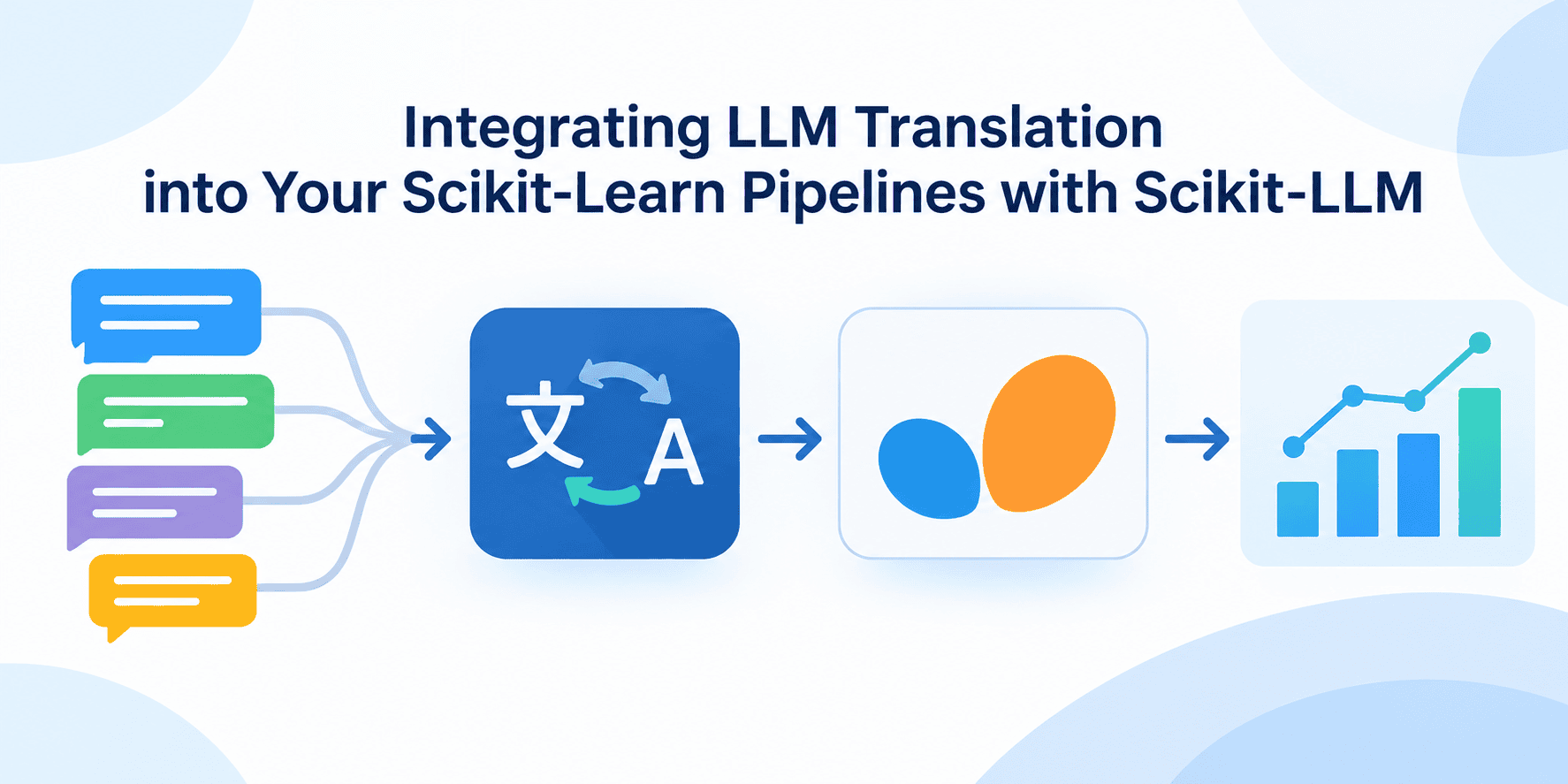
Discover how to construct a two-stage scikit-learn pipeline for multilingual text classification using Scikit-LLM. In a few simple steps, learn to integrate pre-trained language models handlers designed for translation and zero-shot classification to seamlessly process and analyze multilingual data within standard machine learning workflows.
Key Takeaways
- Build a two-stage scikit-learn pipeline for multilingual text classification.
- Utilize Scikit-LLM to handle pre-trained language models for translation tasks.
- Apply zero-shot classification capabilities within traditional machine learning workflows.
- Follow a simple, step-by-step approach to handle multi-language text data efficiently.
In-Depth Analysis
Building a Two-Stage Scikit-Learn Pipeline
Traditional machine learning pipelines built with scikit-learn often struggle with native handling of unstructured multilingual text without complex preprocessing. By incorporating the Scikit-LLM library, developers can construct a streamlined, two-stage pipeline. This integration bridges the gap between classic machine learning workflows and modern natural language processing capabilities, allowing seamless execution of multi-step text processing tasks.
Leveraging Pre-Trained Language Models for Translation and Classification
The architecture relies on two distinct pre-trained language models managed through Scikit-LLM. The first stage handles text translation, converting multilingual inputs into a standardized format. The second stage executes zero-shot classification on the translated text. This combination empowers data scientists to address complex multilingual text classification challenges efficiently using a unified pipeline structure.
Industry Impact
The integration of large language model capabilities—such as translation and zero-shot classification—into traditional frameworks like scikit-learn represents a significant step forward for practical machine learning applications. It allows developers and data practitioners to leverage advanced generative and pre-trained models within familiar, production-ready pipelines without needing to overhaul existing software architectures.
Frequently Asked Questions
What is Scikit-LLM used for in this context?
Scikit-LLM is used to handle pre-trained language models that perform text translation and zero-shot classification within a scikit-learn pipeline.
How many stages are in the described classification pipeline?
The pipeline consists of two stages: one for translation and another for zero-shot classification of multilingual text.
Do I need separate models for every language?
By utilizing a translation stage powered by Scikit-LLM, text from multiple languages can be translated and processed through a unified classification workflow.