
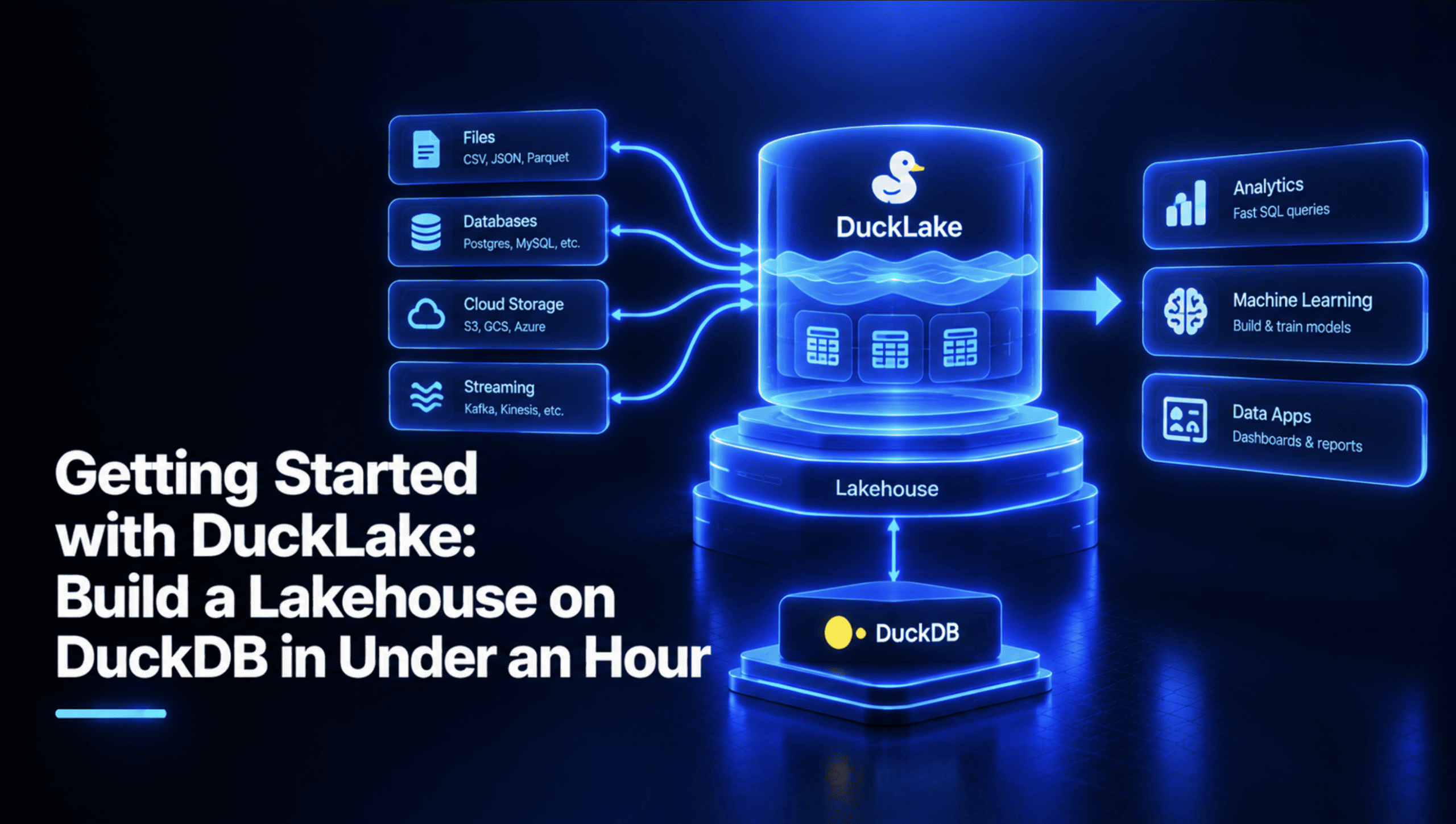
DuckLake 1.0: Building Stable Lakehouse Architectures on DuckDB
Discover DuckLake, the open lakehouse table format developed by the DuckDB team. Launched in April 2026, DuckLake offers a stable, backward-compatible framework that separates table metadata into a SQL database while utilizing Parquet files for data storage.
Key Takeaways
- DuckLake is an open lakehouse table format created by the DuckDB team.
- The architecture employs a dual-storage approach: metadata is stored in a SQL database, while actual data is maintained in Parquet files.
- Version 1.0 of DuckLake was shipped in April 2026, establishing a stable specification.
- The format provides a guarantee of backward compatibility, which is crucial for architectural stability.
In-Depth Analysis
The DuckLake Architectural Framework
DuckLake introduces a structured approach to the lakehouse paradigm by clearly separating metadata management from data storage. By utilizing a SQL database to track table metadata, the system allows for the structured querying and management of table information. Concurrently, the use of Parquet files for data storage leverages a widely adopted, efficient, and columnar storage format. This separation of concerns is a foundational aspect of the DuckLake design, allowing it to function as a bridge between the flexibility of file-based storage and the organization of relational database management.
Stability and Version 1.0
The release of DuckLake 1.0 in April 2026 marks a significant point in the project's development. In the context of data engineering, versioning is critical for production reliability. The DuckDB team has explicitly provided a stable specification and guaranteed backward compatibility with this release. This commitment to stability is essential for organizations building long-term data infrastructure, as it provides assurance against breaking changes in future updates, enabling more predictable data pipeline maintenance.
Industry Impact
The introduction of DuckLake provides users of the DuckDB ecosystem with a formal, supported approach to building lakehouses. By standardizing this format, the DuckDB team facilitates a consistent method to manage data sets while maintaining the performance and flexibility characteristics of Parquet-based storage. The guarantee of backward compatibility suggests that this format is intended for sustainable, long-term architectural use cases within data pipelines, helping teams leverage DuckDB more effectively in lakehouse environments.
Frequently Asked Questions
What is the core storage design of DuckLake?
DuckLake separates its storage architecture by keeping table metadata within a SQL database, while storing the actual data in Parquet files.
When was DuckLake 1.0 released, and what does it guarantee?
DuckLake 1.0 was shipped in April 2026. It guarantees a stable specification and backward compatibility.


