AI News on June 15, 2026

Meituan Releases LongCat-Next: Open-Sourcing a Native Multimodal Model for Physical World AI Interaction
Open Source

Meituan Releases LongCat-Next: Open-Sourcing a Native Multimodal Model for Physical World AI Interaction

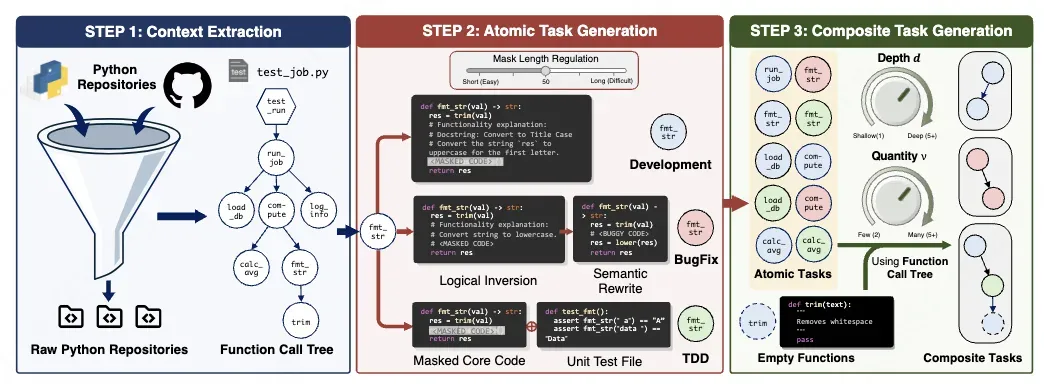
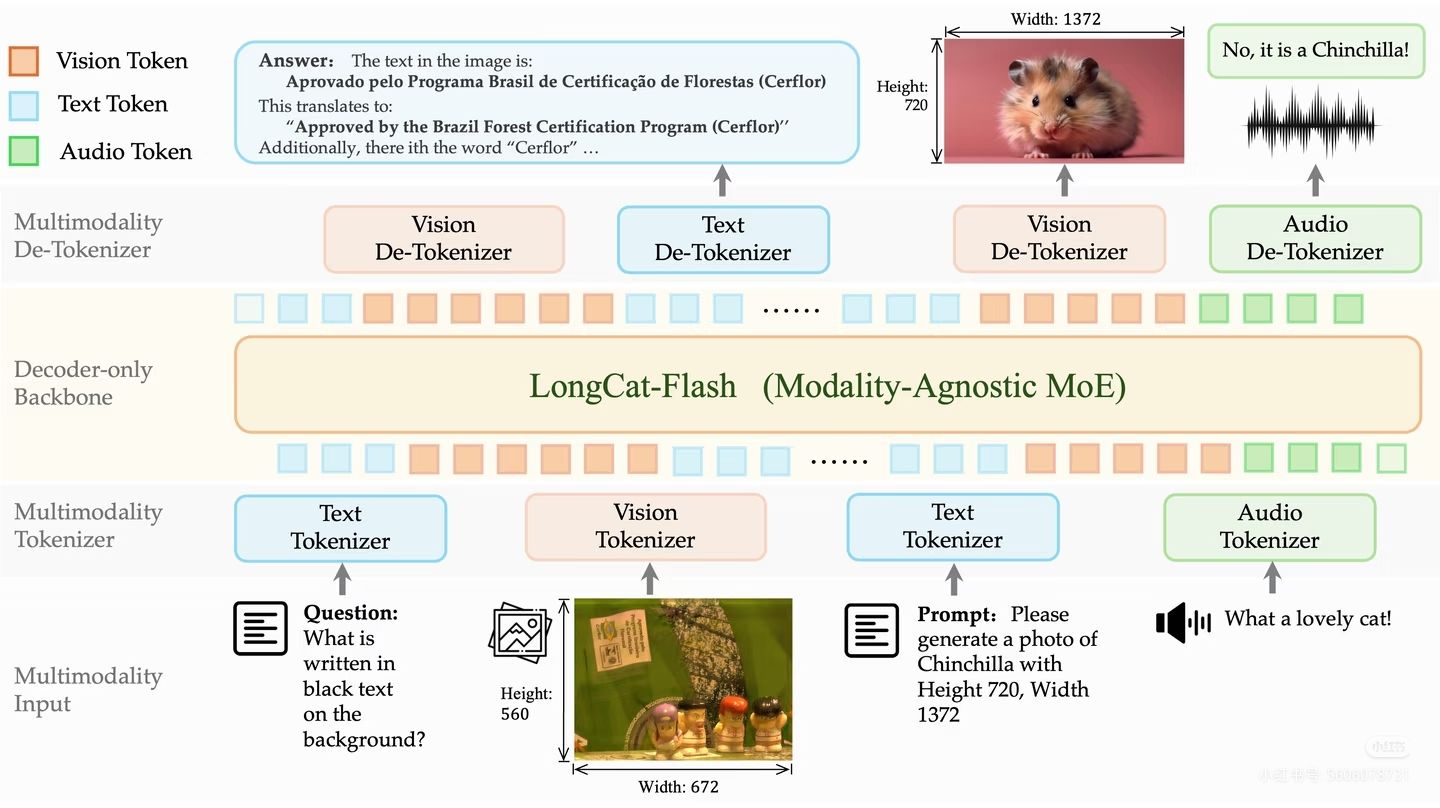
Meituan's technical team has announced the release and open-sourcing of LongCat-Next, a native multimodal model designed to bridge the gap between artificial intelligence and the physical world. By treating vision and speech as native languages rather than secondary inputs, LongCat-Next aims to enhance AI's ability to perceive, understand, and interact with real-world environments. The release includes the core model and its discrete tokenizer, providing the global developer community with the essential tools to build more sophisticated, context-aware AI systems. This initiative underscores Meituan's commitment to advancing AI capabilities in practical, physical applications through open-source collaboration and research transparency.

美团技术团队
Meituan Showcases AI Innovations at ACL 2026: Advancing Large Model Evaluation and Reasoning Paradigms
Research Breakthrough

Meituan Showcases AI Innovations at ACL 2026: Advancing Large Model Evaluation and Reasoning Paradigms

The Meituan technical team has announced the acceptance of six research papers at ACL 2026, a premier international conference in computational linguistics and natural language processing (NLP). These papers represent a significant stride in Meituan's AI research, covering a diverse range of cutting-edge topics. The research focuses on critical areas such as large model evaluation frameworks, complex process reasoning, and the optimization of competition-level mathematical thinking. Furthermore, the papers delve into reinforcement learning optimizations and the emerging field of generative recommendation systems. By contributing to these specialized domains, Meituan aims to establish a new generation paradigm for generative AI, bridging the gap between theoretical research and practical industrial applications. This selection underscores Meituan's commitment to advancing the capabilities of Large Language Models (LLMs) and their integration into complex real-world workflows.

美团技术团队
Meituan Open-Sources LongCat-Video-Avatar 1.5: Advancing Digital Human Video for Commercial-Grade Applications
Open Source

Meituan Open-Sources LongCat-Video-Avatar 1.5: Advancing Digital Human Video for Commercial-Grade Applications

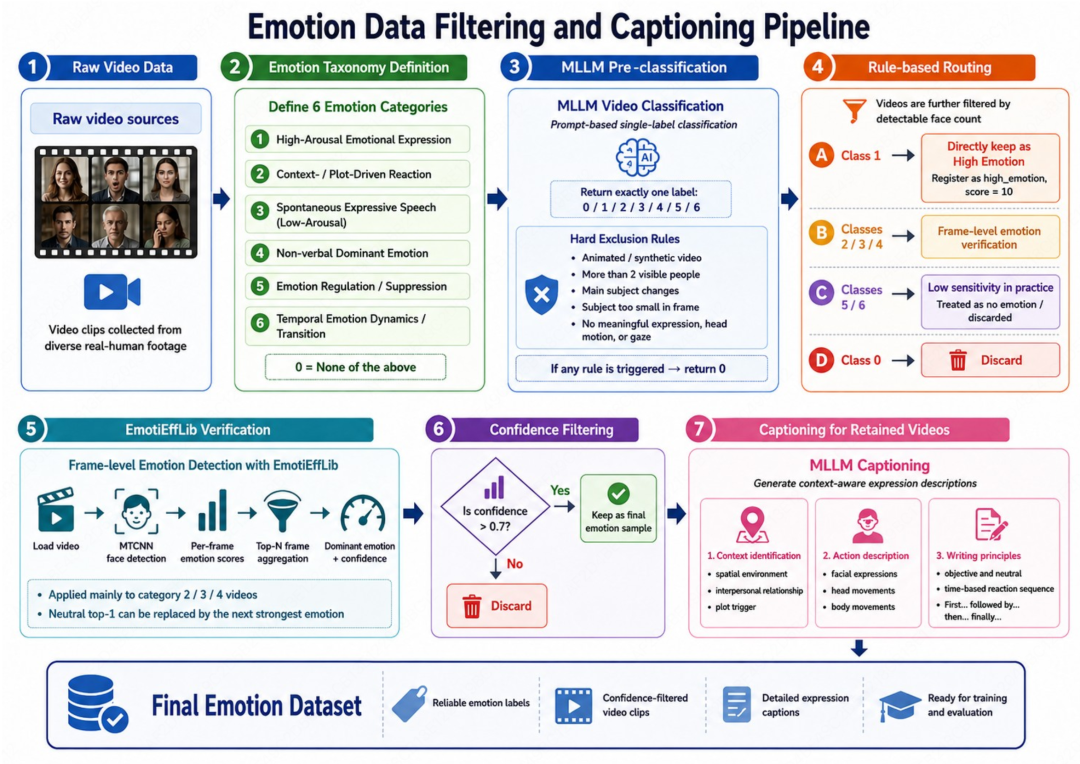
Meituan's technical team has officially announced the open-source release of LongCat-Video-Avatar 1.5, a significant evolution in digital human video modeling. Moving beyond experimental State-of-the-Art (SOTA) benchmarks, this version is specifically designed for commercial-grade reliability and performance. The update introduces comprehensive improvements across five critical dimensions: lip-synchronization, physical plausibility, long-video stability, multi-person interaction, and inference efficiency. By addressing the complexities of real-world commercial scenarios, LongCat-Video-Avatar 1.5 enables the generation of natural, high-quality digital human content. This release marks a strategic shift from controlled laboratory demonstrations to versatile, large-scale applications, facilitating the creation of personalized digital personas for a wide range of professional environments.

美团技术团队
Meituan LongCat Releases General 365 Reasoning Benchmark: Top Models Struggle to Surpass 63% Accuracy
Research Breakthrough

Meituan LongCat Releases General 365 Reasoning Benchmark: Top Models Struggle to Surpass 63% Accuracy

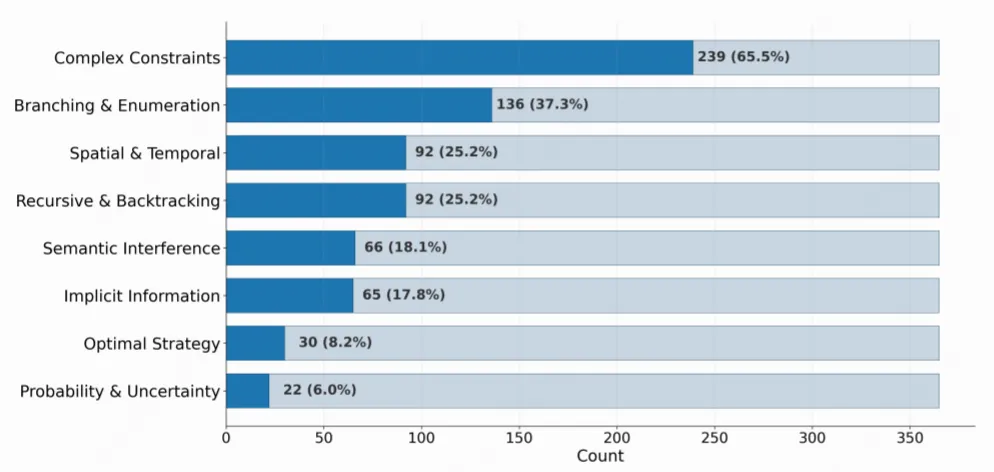
The Meituan LongCat team has officially open-sourced General 365, a new benchmark designed to evaluate the reasoning capabilities of large language models. In a comprehensive assessment involving 26 mainstream AI models, the results highlight a significant performance gap in complex reasoning. Gemini 3 Pro, currently the top-performing model in this evaluation, achieved an accuracy rate of only 62.8%. Notably, the vast majority of the models tested failed to reach the 60% accuracy threshold, which is considered the passing mark for this benchmark. This release aims to establish a more rigorous standard for AI reasoning, exposing the current limitations of even the most advanced models in the industry.

美团技术团队
Managing AI Coding with Agent Evaluation Thinking: A 310,000-Line Refactoring Case Study
Industry News

Managing AI Coding with Agent Evaluation Thinking: A 310,000-Line Refactoring Case Study

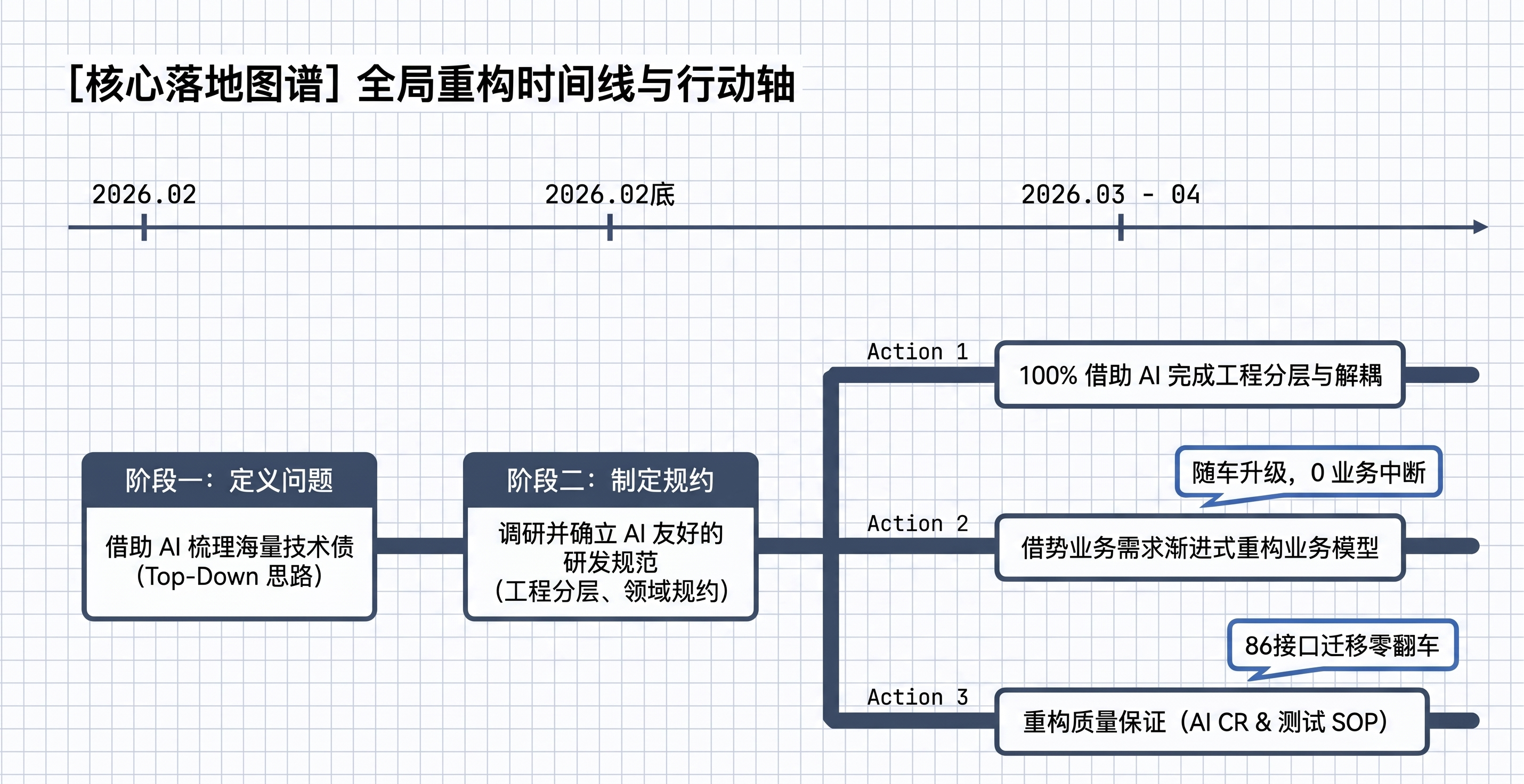
Meituan's technical team has shared a groundbreaking approach to managing AI-driven software development, centered on the successful refactoring of 310,000 lines of code. As AI-generated code now accounts for over 90% of development in specific contexts, the primary challenge has shifted from increasing coding speed to establishing effective constraints. Without unified standards, AI risks amplifying technical chaos and debt. To mitigate this, Meituan implemented 'Agent Evaluation Thinking,' a framework that includes technical debt sorting, rule construction, a standardized refactoring SOP, and a Pre-PR mechanism. This strategy successfully transforms high-cost, specialized refactoring projects into continuous, daily iterative actions, ensuring long-term system stability and maintainability in an AI-dominant coding environment.

美团技术团队
LARYBench Released: Defining the ImageNet for Embodied Action Representation and Measuring Generalization from Human Videos
Research Breakthrough

LARYBench Released: Defining the ImageNet for Embodied Action Representation and Measuring Generalization from Human Videos

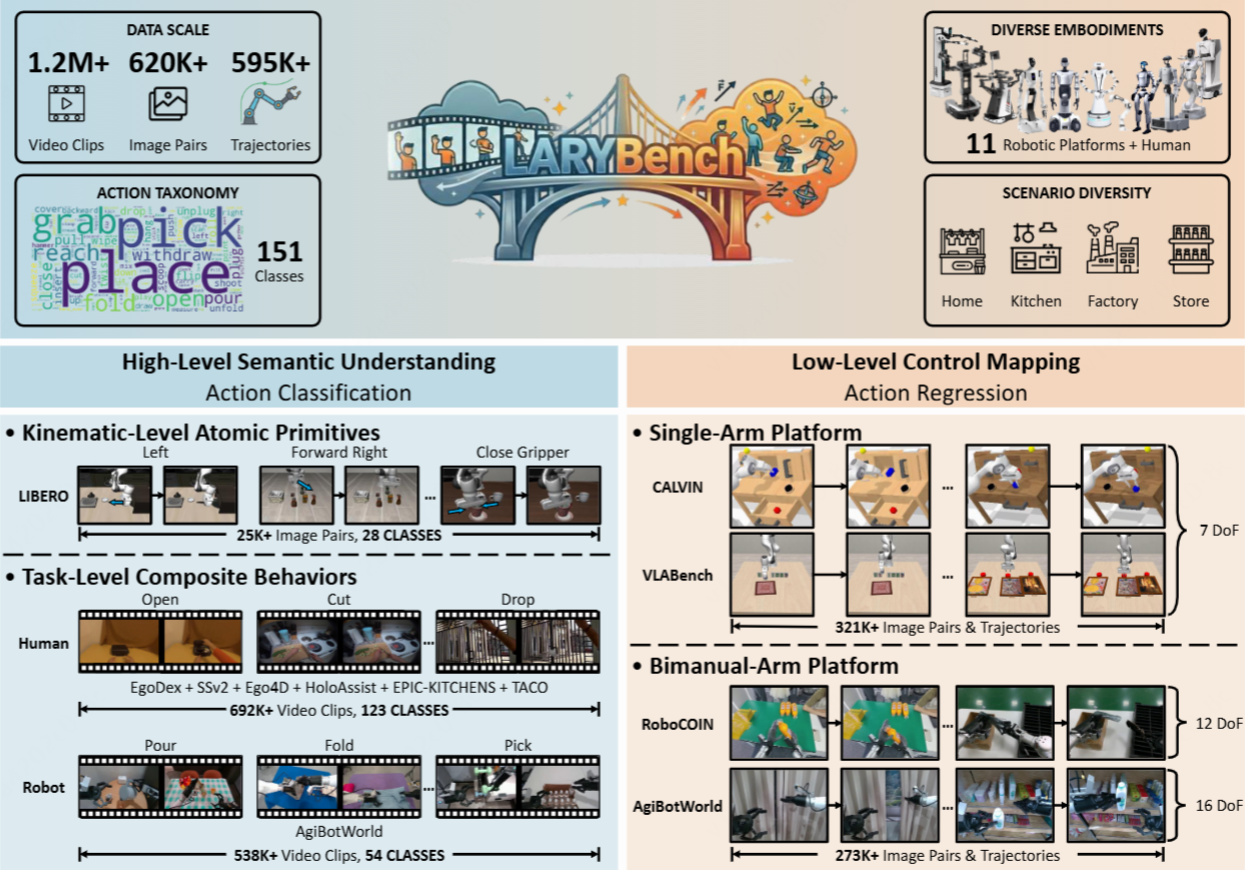
The Meituan Technical Team has officially released LARYBench (Latent Action Representation Yielding Benchmark), a systematic evaluation framework designed to advance the development of general latent action representations. Positioned as the 'ImageNet' for the field of embodied AI, LARYBench provides a standardized methodology for learning from large-scale visual data. The benchmark's initial experimental results reveal a significant shift in AI performance: general vision models consistently outperform specialized embodied AI expert models in both action generalization and control precision. Crucially, the research demonstrates that sophisticated embodied action representations can emerge naturally from large-scale human video data, suggesting a new path for training robots and autonomous systems without relying solely on specialized, task-specific datasets.

美团技术团队
Meituan LongCat Team Unveils LongCat-AudioDiT: Revolutionizing Zero-Shot TTS via Direct Waveform Latent Space Diffusion
Research Breakthrough

Meituan LongCat Team Unveils LongCat-AudioDiT: Revolutionizing Zero-Shot TTS via Direct Waveform Latent Space Diffusion

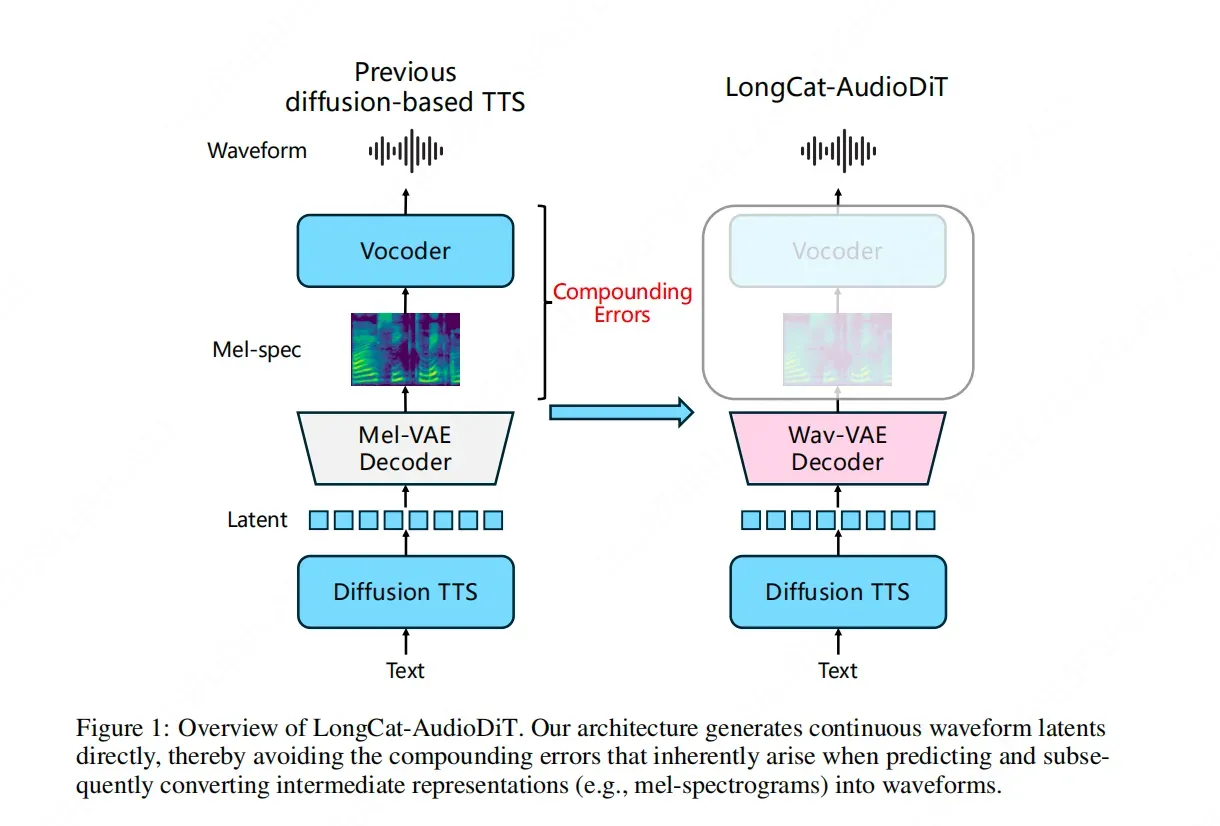
The Meituan LongCat team has officially released LongCat-AudioDiT, a pioneering model designed to overcome the technical limitations of zero-shot Text-to-Speech (TTS) voice cloning. By fundamentally redesigning the synthesis pipeline, the team has moved away from traditional intermediate representations like Mel-spectrograms. Instead, LongCat-AudioDiT operates directly within the waveform latent space using a diffusion-based architecture. This approach is specifically engineered to eliminate cascade errors caused by multi-stage data conversion, allowing the AI to learn the inherent laws of sound directly. This breakthrough promises to set a new upper limit for the fidelity and accuracy of voice cloning technology, providing a more streamlined and robust solution for high-quality audio generation.

美团技术团队
Meituan Technical Team Unveils LongCat-Flash-Prover: An Open-Source Model for Rigorous Mathematical Theorem Proving
Open Source

Meituan Technical Team Unveils LongCat-Flash-Prover: An Open-Source Model for Rigorous Mathematical Theorem Proving

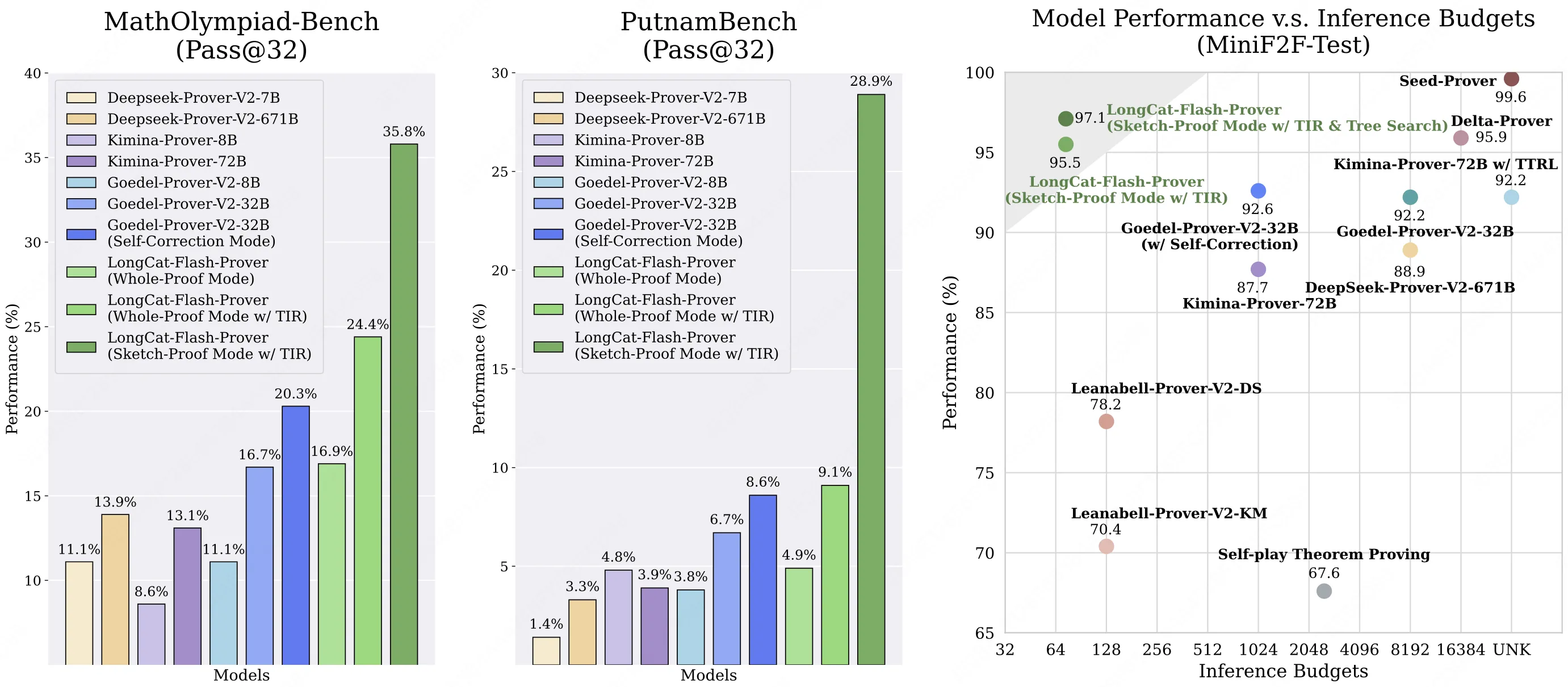
The Meituan Technical Team has announced the release of LongCat-Flash-Prover, an open-source model specifically designed for mathematical formalization and theorem proving. Unlike traditional AI models that focus on providing correct numerical answers, LongCat-Flash-Prover addresses the challenge of complex reasoning by emphasizing strict logical chains. The model aims to overcome the limitations of natural language ambiguity, which can often lead to the collapse of a mathematical proof. By focusing on formalization, this tool represents a shift in AI development from "guessing answers" to achieving "rigorous proof," providing a specialized solution for one of the most challenging areas of automated reasoning.

美团技术团队
Superpowers: A New Framework for Composable Programming Agent Skills and Methodology
Open Source

Superpowers: A New Framework for Composable Programming Agent Skills and Methodology

Superpowers, a project recently highlighted on GitHub by developer 'obra', introduces a comprehensive software development methodology and framework specifically designed for programming agents. The system is built upon a foundation of composable skills and specific initial instructions, aiming to provide a structured and effective environment for agent-based development. By focusing on a modular approach where skills can be combined and directed through initial parameters, Superpowers seeks to standardize the way developers build and deploy autonomous agents within the coding ecosystem. This framework represents a significant step toward formalizing agentic workflows, moving beyond simple code generation toward a more robust, methodology-driven approach to AI-assisted software engineering.

GitHub Trending
LMCache Emerges as a High-Performance KV Cache Layer to Significantly Enhance Large Language Model Efficiency
Open Source

LMCache Emerges as a High-Performance KV Cache Layer to Significantly Enhance Large Language Model Efficiency

LMCache has recently gained attention as a specialized KV (Key-Value) cache layer designed to optimize the performance of Large Language Models (LLMs). Positioned as a high-speed infrastructure component, LMCache aims to "supercharge" model inference by addressing the computational bottlenecks inherent in standard LLM processing. As an open-source project featured on GitHub Trending, it focuses on providing the fastest possible caching mechanism to reduce latency and improve throughput for AI applications. This analysis explores the significance of KV caching in modern AI architectures and how LMCache positions itself as a critical tool for developers seeking to maximize the efficiency of their LLM deployments without compromising on speed or resource management.

GitHub Trending
Agentsview: A High-Performance Local-First Analytics and Cost Tracking Tool for AI Programming Agents
Product Launch

Agentsview: A High-Performance Local-First Analytics and Cost Tracking Tool for AI Programming Agents

Agentsview is a newly launched local-first conversational intelligence and analytics platform designed to support the rapidly growing ecosystem of AI programming agents. Compatible with industry-leading tools such as Claude Code and Codex, as well as over 20 other agents, it offers a centralized solution for developers to browse, search, and track costs across their AI-assisted workflows. Positioned as a 100x faster alternative to the existing ccusage tool, Agentsview prioritizes performance and data privacy through its local-first architecture. By providing granular insights into session history and API expenditures, the tool addresses the critical need for observability and financial management in modern AI-driven software development, ensuring developers can optimize their resource usage without compromising on speed or security.

GitHub Trending
Agent Skills: Implementing Production-Grade Engineering Workflows and Quality Gates for AI Coding Agents
Open Source

Agent Skills: Implementing Production-Grade Engineering Workflows and Quality Gates for AI Coding Agents

The 'Agent Skills' project, introduced by Addy Osmani, marks a significant step in the evolution of AI-driven software development by providing production-grade engineering skills for AI coding agents. This initiative focuses on encoding essential workflows, quality gates, and industry best practices into the operational logic of autonomous agents. By moving beyond simple code generation, Agent Skills aims to ensure that AI agents can handle complex engineering tasks with the same rigor and reliability expected in professional production environments. The project addresses the critical need for structured processes in AI development, ensuring that generated code meets high standards of quality and maintainability. This development highlights a shift towards more sophisticated, reliable, and standardized autonomous engineering tools within the global developer community.

GitHub Trending
LG Innotek Forecasts Growth Through AI-Driven iPhone Demand and Expanded FC-BGA Substrate Production at Gumi Plant
Industry News

LG Innotek Forecasts Growth Through AI-Driven iPhone Demand and Expanded FC-BGA Substrate Production at Gumi Plant

LG Innotek is strategically positioning itself to capitalize on the burgeoning demand for artificial intelligence within the smartphone sector, specifically focusing on AI-driven iPhone growth. A central element of this strategy is the company's Gumi manufacturing facility, which reached a significant milestone by commencing the mass production of Flip Chip Ball Grid Array (FC-BGA) substrates in February 2024. This move represents a critical shift in the company's production capabilities, aligning its output with the high-performance requirements of modern AI hardware. By integrating advanced substrate manufacturing with the anticipated rise in AI-capable mobile devices, LG Innotek aims to strengthen its position within the global electronics supply chain. The commencement of operations at the Gumi plant serves as a foundational step in meeting the evolving technological needs of the industry.

Tech in Asia
European Commission Allocates 10 Billion Euros to Bolster AI Factories and Infrastructure Through 2027
Industry News

European Commission Allocates 10 Billion Euros to Bolster AI Factories and Infrastructure Through 2027

The European Commission has announced a significant financial commitment to the artificial intelligence sector, earmarking 10 billion euros (approximately US$11.6 billion) to support the development of AI Factories. This investment initiative is designed to span a seven-year period, beginning in 2021 and concluding in 2027. The funding aims to strengthen the European Union's technological infrastructure and foster a competitive environment for AI innovation. Alongside this investment, the Commission is actively reviewing the impact of regulatory measures, specifically focusing on the implications of curbs related to Anthropic. This strategic move highlights the EU's dual approach of providing substantial financial backing while simultaneously evaluating the regulatory landscape to ensure sustainable growth within the industry.

Tech in Asia
Industry News

The Jqwik Anti-AI Affair: Creator Johannes Link Defends Ethical Protest Against AI Coding Agents

Johannes Link, the veteran programmer behind the property-based testing tool jqwik and contributor to major projects like JUnit 5 and Groovy, has addressed the controversy surrounding 'anti-AI' code added to his repository. Link describes the addition of specific logging code as an intentional act of 'self-defence' and a moral statement against the proliferation of AI coding agents. While the code was not designed to function verbatim in real-world environments, its inclusion was meant to signal ethical disapproval to developers who utilize AI tools to interact with his work. With a career spanning 45 years, Link emphasizes that his decision is a logical extension of his commitment to ethical software development and the wellbeing of the programming community. The incident underscores a growing ideological rift in the open-source ecosystem regarding the impact of artificial intelligence.

Hacker News
FBI Launches 22,000 Square-Foot 'Cyber Range' in Alabama to Simulate Real-World Digital Attacks
Industry News

FBI Launches 22,000 Square-Foot 'Cyber Range' in Alabama to Simulate Real-World Digital Attacks

The FBI has officially established a specialized Cyber Range in Huntsville, Alabama, designed to simulate complex cyberattacks within a realistic physical environment. Spanning 22,000 square feet, this facility serves as a modern digital counterpart to the Bureau's renowned tactical training site, Hogan's Alley. The range features a meticulously constructed replica of a small town, complete with critical infrastructure such as a hospital, gas station, convenience store, and fully furnished residential homes. This initiative, referred to as a kinetic cyber range, aims to provide law enforcement and cybersecurity professionals with a high-fidelity setting to train against modern digital crimes. By bridging the gap between virtual threats and their physical consequences, the FBI enhances its readiness to protect essential services and private property from sophisticated cyber adversaries.

The Verge
Industry News

Understanding Chaosnet: The Decentralized Local Network Architecture of the 1975 MIT Lisp Machine System

Chaosnet, a pioneering local network system developed in 1975 by the MIT Artificial Intelligence Laboratory, represents a significant milestone in decentralized computing. Originally designed as the internal communication medium for the Lisp Machine system, Chaosnet facilitates high-speed, reliable interaction between personal processors and shared resources such as central file systems, printers, and tape drives. By eliminating centralized control, the network ensures robust performance and reliability across distances of up to two kilometers. This historical architecture allowed the Lisp Machine system to combine the benefits of dedicated personal computing—providing rapid interactive response for programs several million words in size—with the collaborative advantages of traditional time-sharing systems. Today, Chaosnet remains a vital case study in the evolution of local area networks and distributed research environments.

Hacker News
AI Companies Accelerate Public Market Entry to Capitalize on the SpaceX IPO Wave
Industry News

AI Companies Accelerate Public Market Entry to Capitalize on the SpaceX IPO Wave

The artificial intelligence sector is currently experiencing a strategic shift as numerous companies accelerate their plans to enter the public markets. According to recent industry observations, AI startups are actively seeking to leverage the market momentum generated by the SpaceX IPO. This phenomenon, described as "riding the SpaceX IPO wave," indicates a competitive race among AI firms to secure public listings while investor sentiment remains high. The trend highlights a broader movement where the success of major technology and aerospace milestones serves as a catalyst for late-stage AI startups. This analysis explores the dynamics of this race to go public and the significance of external market triggers in shaping the financial trajectories of emerging AI organizations.

TechCrunch AI