Meituan Showcases AI Innovations at ACL 2026: Advancing Large Model Evaluation and Reasoning Paradigms
The Meituan technical team has announced the acceptance of six research papers at ACL 2026, a premier international conference in computational linguistics and natural language processing (NLP). These papers represent a significant stride in Meituan's AI research, covering a diverse range of cutting-edge topics. The research focuses on critical areas such as large model evaluation frameworks, complex process reasoning, and the optimization of competition-level mathematical thinking. Furthermore, the papers delve into reinforcement learning optimizations and the emerging field of generative recommendation systems. By contributing to these specialized domains, Meituan aims to establish a new generation paradigm for generative AI, bridging the gap between theoretical research and practical industrial applications. This selection underscores Meituan's commitment to advancing the capabilities of Large Language Models (LLMs) and their integration into complex real-world workflows.
Key Takeaways
- Meituan successfully had six research papers accepted at the ACL 2026 conference, highlighting its leadership in NLP and AI research.
- The research spans critical technical directions, including large model evaluation, complex process reasoning, and mathematical thinking optimization.
- Innovations in reinforcement learning and generative recommendation systems are central to Meituan's latest academic contributions.
- The collective work aims to build a new paradigm for generative AI, focusing on both capability assessment and reasoning efficiency.
In-Depth Analysis
Advancing Evaluation and Complex Reasoning Frameworks
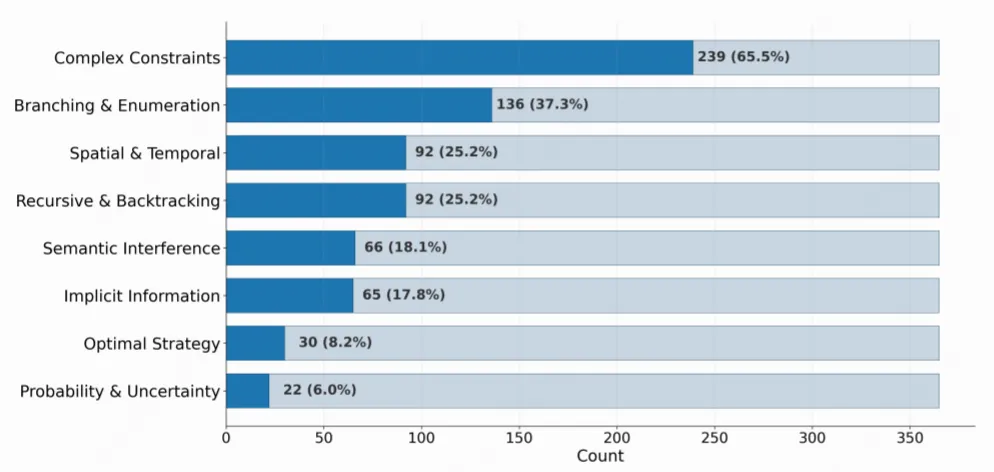
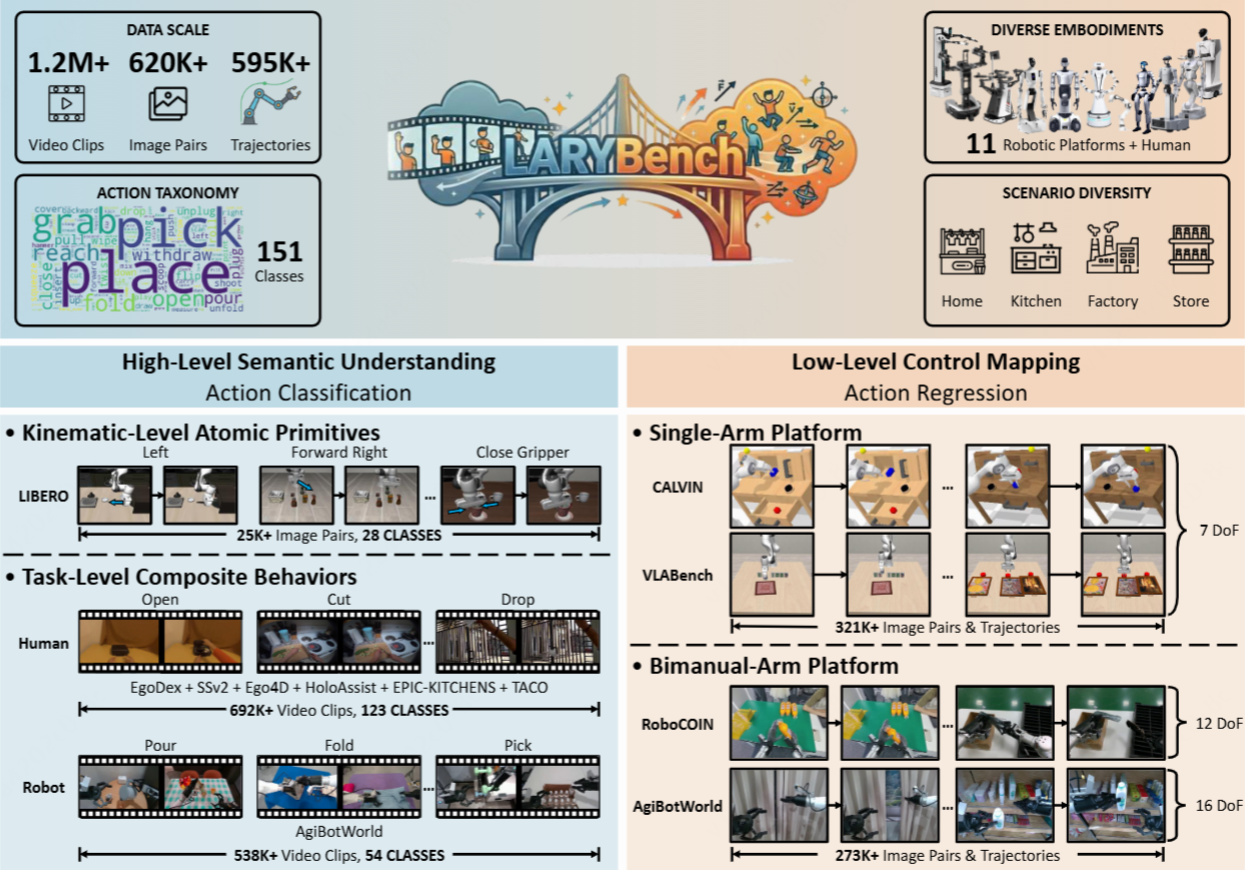
At the core of Meituan's contributions to ACL 2026 is a focus on the fundamental capabilities of Large Language Models (LLMs). One of the primary challenges in the current AI landscape is the accurate evaluation of these models. Meituan's research addresses this by exploring new methodologies for large model evaluation. As models become more sophisticated, traditional benchmarks often fail to capture the nuances of their performance. The papers accepted at ACL 2026 suggest a shift toward more robust and comprehensive evaluation frameworks that can better measure a model's true utility in diverse scenarios.
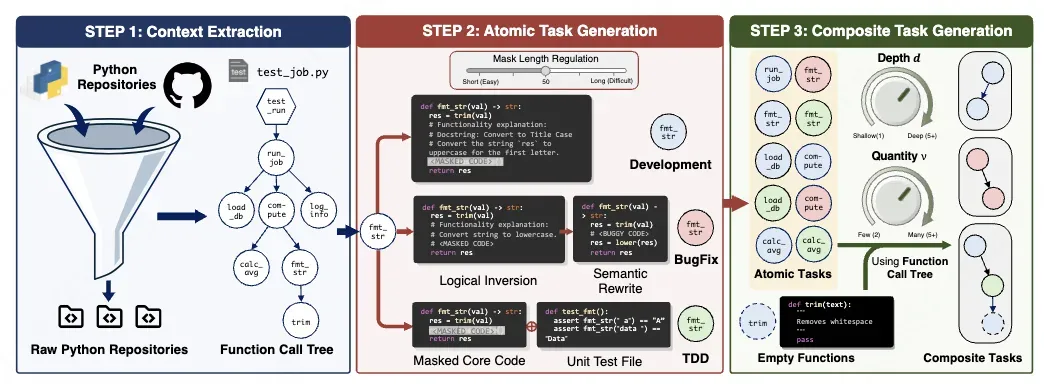
Parallel to evaluation is the challenge of complex process reasoning. Meituan has dedicated research to improving how models handle multi-step tasks and logical sequences. This is particularly relevant for industrial applications where an AI must navigate intricate workflows rather than simply providing single-turn responses. By optimizing complex process reasoning, Meituan is enhancing the ability of AI to act as a reliable assistant in professional and operational environments, ensuring that the logic remains consistent across extended interactions.
Mathematical Optimization and Reinforcement Learning
Another significant pillar of Meituan's research involves competition-level mathematical thinking. Mathematical reasoning is often considered a benchmark for high-level cognitive abilities in AI. Meituan's work in this area focuses on optimizing how models approach and solve complex mathematical problems, pushing the boundaries of what generative models can achieve in structured, logical domains. This research is not merely academic; it has direct implications for any field requiring precise calculation and logical derivation.
Furthermore, the team has explored reinforcement learning (RL) optimization. Reinforcement learning is a critical component in fine-tuning models to align with human preferences and specific task requirements. Meituan's research into RL optimization indicates a focus on making the training process more efficient and the resulting models more performant. By refining these optimization techniques, Meituan contributes to the development of models that are not only smarter but also more adaptable to the specific constraints of real-world deployment.
The Shift Toward Generative Recommendation Systems
Meituan's research also highlights a transformative shift in the field of recommendation systems. Traditionally, recommendation engines have relied on discriminative models to predict user preferences. However, Meituan is exploring "generative recommendation," a new paradigm where the system can generate personalized content or suggestions in a more fluid and context-aware manner. This approach leverages the power of generative AI to create a more interactive and intuitive user experience. By integrating generative capabilities into recommendation logic, Meituan is paving the way for systems that can understand user intent with much higher granularity, potentially revolutionizing how users interact with digital platforms.
Industry Impact
The inclusion of these six papers in ACL 2026 signifies a major contribution to the global AI community. For the industry, Meituan's focus on evaluation and reasoning addresses the "black box" problem of LLMs, providing clearer pathways for companies to deploy AI with confidence. The advancements in mathematical thinking and reinforcement learning offer tools for creating more specialized and reliable AI agents. Perhaps most importantly, the move toward generative recommendation systems signals a new era for e-commerce and service platforms, where AI does not just filter options but actively constructs personalized solutions for users. These research directions collectively reinforce the trend of moving from general-purpose AI to highly optimized, task-specific generative paradigms.
Frequently Asked Questions
Question: What is the significance of ACL 2026 for Meituan?
ACL (Association for Computational Linguistics) is a top-tier international conference in the field of NLP. Having six papers accepted demonstrates Meituan's high level of technical expertise and its influence on the global academic and industrial AI landscape.
Question: What are the main research areas covered by Meituan's papers?
The papers cover six key areas: large model evaluation, complex process reasoning, competition-level mathematical thinking optimization, reinforcement learning optimization, and generative recommendation systems.
Question: How does generative recommendation differ from traditional recommendation?
While traditional recommendation systems focus on ranking existing items based on user data, generative recommendation uses generative AI to create or synthesize personalized suggestions and content, offering a more flexible and contextually aware user experience.