Back to List
Microsoft Research Explores the Intersection of Artificial Intelligence and Global Environmental Sustainability
Research BreakthroughSustainabilityArtificial IntelligenceMicrosoft Research

Microsoft Research Explores the Intersection of Artificial Intelligence and Global Environmental Sustainability

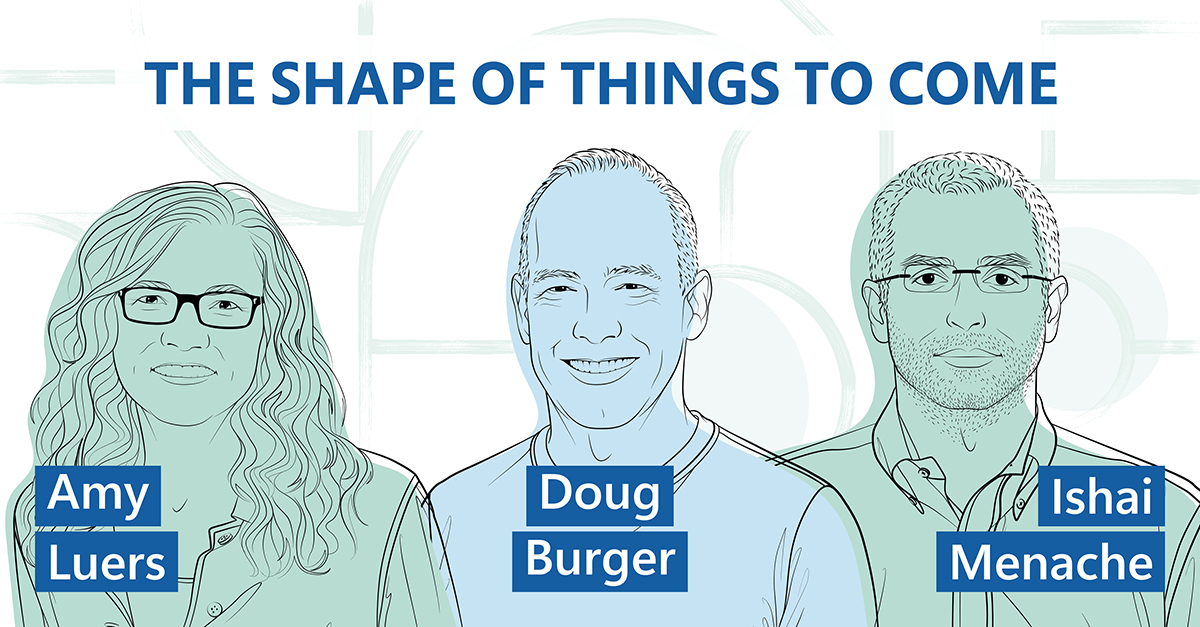
In a recent podcast episode from Microsoft Research, experts Doug Burger, Amy Luers, and Ishai Menache discuss the critical question of whether artificial intelligence can be leveraged to create a more sustainable world. Published on April 20, 2026, the discussion features insights from leading researchers on the potential role of AI technologies in addressing environmental challenges. The conversation explores the balance between AI's computational demands and its capacity to optimize global systems for sustainability. While the original source provides the framework for this high-level dialogue among industry experts, it highlights Microsoft's ongoing commitment to researching technological solutions for ecological preservation and resource management in an increasingly digital era.

Microsoft Research

Key Takeaways

  • Expert Dialogue: Features insights from Microsoft researchers Doug Burger, Amy Luers, and Ishai Menache.
  • Sustainability Focus: Investigates the potential for AI to drive global environmental solutions.
  • Strategic Research: Highlights Microsoft Research's role in exploring the intersection of technology and ecology.

In-Depth Analysis

The Role of AI in Environmental Stewardship

The discussion led by Doug Burger, Amy Luers, and Ishai Menache centers on the transformative potential of artificial intelligence in the realm of sustainability. As global environmental challenges become more complex, the researchers explore how AI models and data-driven insights can be applied to resource management and conservation efforts. The conversation suggests that the path to a more sustainable world may be significantly influenced by how we deploy and scale intelligent systems.

Balancing Innovation and Impact

A critical component of the Microsoft Research podcast involves evaluating the feasibility of 'AI-ing' our way to sustainability. This involves not only the application of AI to solve external problems but also considering the internal efficiencies of the technology itself. The experts provide a platform for questioning the current trajectory of AI development and its long-term alignment with global ecological goals, emphasizing a research-driven approach to these systemic issues.

Industry Impact

The insights shared by the Microsoft Research team signal a growing trend in the tech industry to align high-performance computing with environmental responsibility. By publicly discussing the limitations and possibilities of AI in sustainability, Microsoft sets a precedent for how major technology firms might integrate ecological considerations into their core research agendas. This focus is likely to influence future developments in green computing and the application of machine learning in climate science and sustainable infrastructure.

Frequently Asked Questions

Question: Who are the primary contributors to this sustainability discussion?

The discussion features Doug Burger, Amy Luers, and Ishai Menache, all of whom are associated with Microsoft Research and bring expertise in computing and environmental strategy.

Question: What is the central theme of the Microsoft Research podcast published on April 20, 2026?

The central theme is exploring whether artificial intelligence can be effectively utilized to foster a more sustainable global environment.
Related News

Meituan Showcases AI Innovation at ACL 2026 with Six Papers on Large Model Evaluation and Reasoning Optimization
Research Breakthrough

Meituan Showcases AI Innovation at ACL 2026 with Six Papers on Large Model Evaluation and Reasoning Optimization

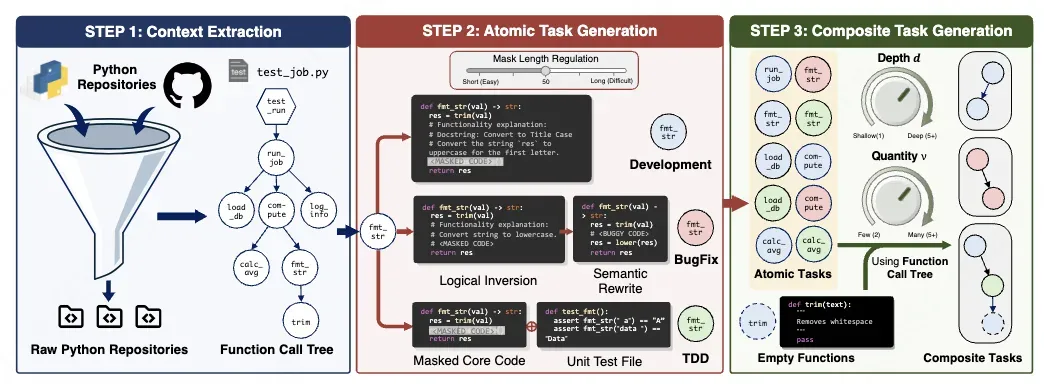
Meituan's technical team has achieved significant recognition at ACL 2026, a premier international conference for computational linguistics and natural language processing. The team had six papers accepted, covering a broad spectrum of cutting-edge AI research. These papers delve into critical areas such as large-scale model evaluation, complex process reasoning, and the optimization of competition-level mathematical thinking. Additionally, the research explores advancements in reinforcement learning and generative recommendation systems. This selection highlights Meituan's commitment to building a new paradigm for generative AI, focusing on both theoretical depth and practical application within the NLP domain. The accepted works represent a comprehensive approach to enhancing the intelligence and reliability of modern AI systems.

LARYBench Launch: Defining the ImageNet for Embodied Action Representation and Measuring Generalization from Human Video Data
Research Breakthrough

LARYBench Launch: Defining the ImageNet for Embodied Action Representation and Measuring Generalization from Human Video Data

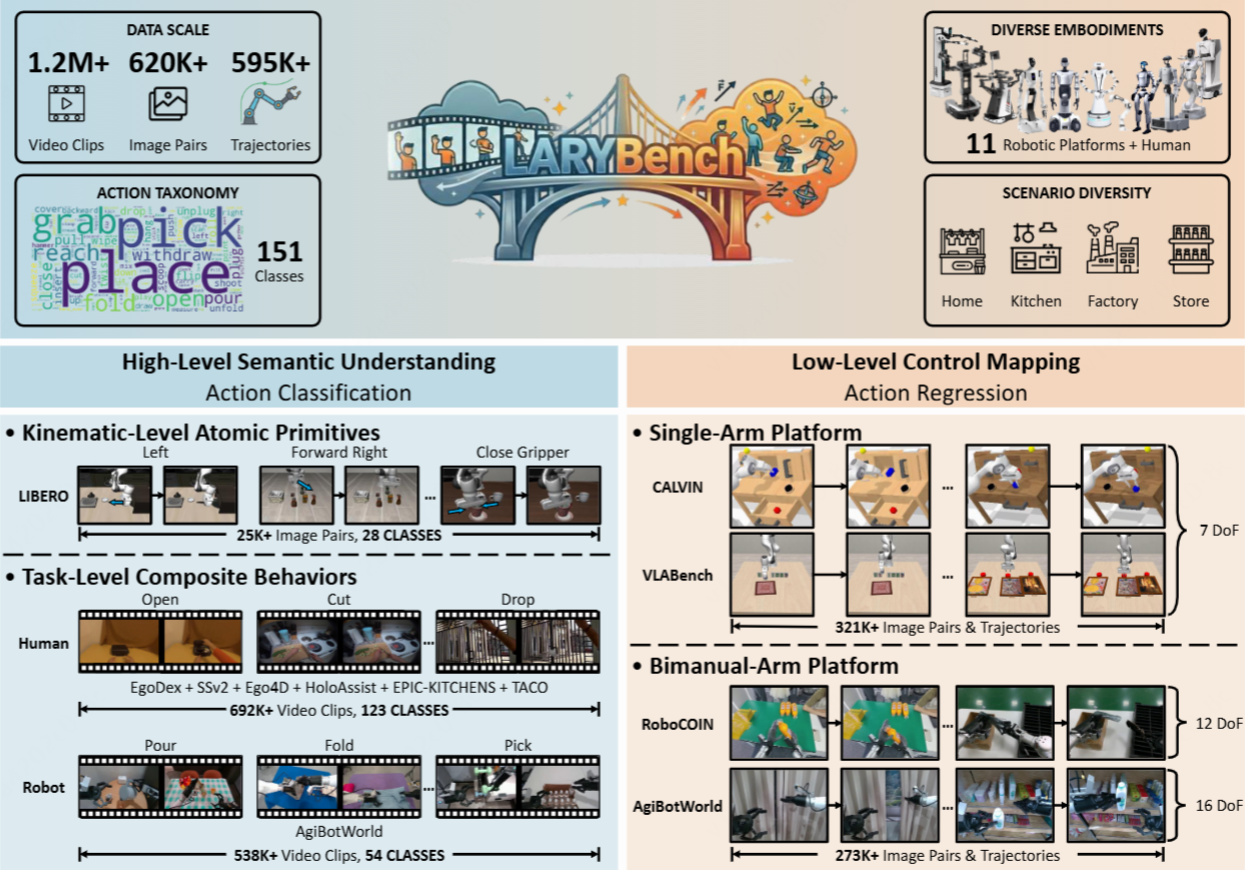
The Meituan Technology Team has officially introduced LARYBench (Latent Action Representation Yielding Benchmark), a systematic evaluation framework designed to guide the learning of general latent action representations from large-scale visual data. This benchmark represents a significant milestone in the field of embodied AI, often compared to the 'ImageNet' moment for action representation. Experimental results provided by the team indicate that general vision models significantly outperform specialized embodied AI expert models in both action generalization and control precision. Crucially, the research demonstrates that embodied action representations can emerge naturally from extensive human video datasets, offering a new methodology for training robotic systems without relying solely on specialized, task-specific data.

Meituan LongCat Team Launches LongCat-AudioDiT to Redefine Zero-Shot TTS Voice Cloning Limits
Research Breakthrough

Meituan LongCat Team Launches LongCat-AudioDiT to Redefine Zero-Shot TTS Voice Cloning Limits

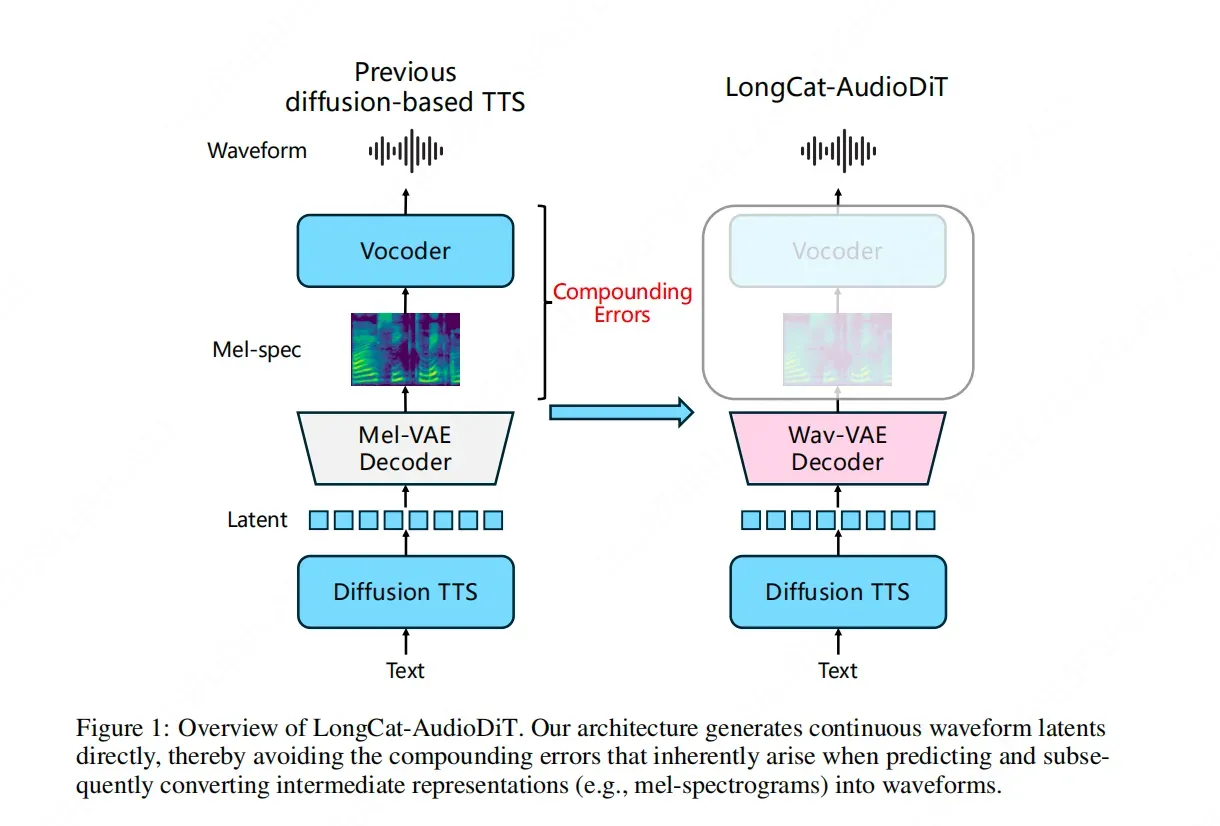
The Meituan LongCat team has officially unveiled LongCat-AudioDiT, a revolutionary Text-to-Speech (TTS) model designed to push the boundaries of zero-shot voice cloning. By fundamentally altering the synthesis pipeline, the model abandons traditional intermediate representations such as Mel-spectrograms. Instead, it operates directly within the waveform latent space using a diffusion-based framework. This strategic shift is intended to eliminate the cascade errors typically caused by multiple stages of data conversion. By allowing the AI to learn the inherent patterns and laws of sound directly, LongCat-AudioDiT aims to provide a more seamless and authentic voice cloning experience, addressing long-standing technical bottlenecks in the field of audio synthesis and zero-shot learning.