Google Research Introduces SymptomAI: Advancing Conversational AI for Everyday Symptom Assessment
Google Research has announced the development of SymptomAI, a novel conversational AI agent specifically designed for everyday symptom assessment. This initiative represents a significant intersection of general science and artificial intelligence, aiming to provide users with a structured, dialogue-based approach to understanding their health concerns. By focusing on conversational interfaces, SymptomAI seeks to bridge the gap between complex medical information and user-friendly health evaluations. The research highlights the potential for AI agents to assist in the preliminary stages of health monitoring, offering a more interactive and accessible method for individuals to track and describe their symptoms. This development underscores Google's ongoing commitment to applying advanced AI research to practical, everyday health challenges, potentially transforming how the public interacts with digital health tools.
Key Takeaways
- Introduction of SymptomAI: Google Research has unveiled a new conversational AI agent focused on symptom assessment.
- Conversational Focus: The system utilizes a dialogue-based interface to help users evaluate and describe their health symptoms.
- Everyday Application: The research specifically targets "everyday" health scenarios, emphasizing accessibility for the general public.
- Scientific Foundation: The project is rooted in general science and AI research, aiming to improve the accuracy and utility of digital health assessments.
In-Depth Analysis
The Evolution of Conversational Health Interfaces
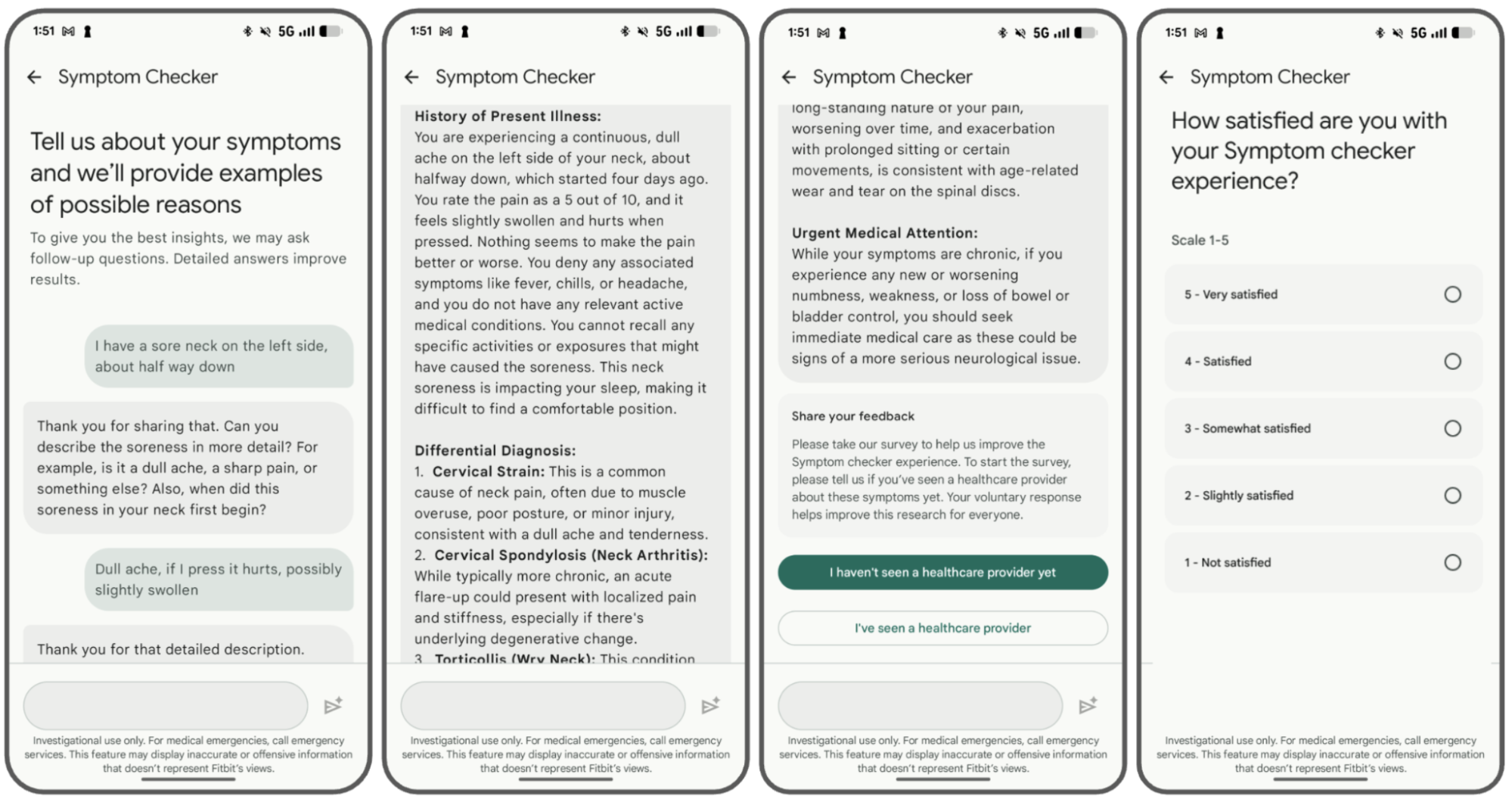
The introduction of SymptomAI by Google Research marks a pivotal shift in how digital health tools are conceptualized. Traditionally, symptom checkers have relied on static forms or decision trees that require users to navigate through a series of predetermined questions. SymptomAI, however, leverages conversational AI to create a more fluid and natural interaction. By utilizing a dialogue-based agent, the system can potentially capture more nuance in how users describe their physical conditions. This conversational approach is designed to mimic the way a person might explain their symptoms to a professional, allowing for a more comprehensive preliminary assessment. The focus on "everyday" symptoms suggests that the tool is intended for common health concerns, providing a first point of contact for individuals seeking to understand their well-being before pursuing further medical advice.
Bridging General Science and AI in Health Assessment
The development of SymptomAI is categorized under general science research, indicating a rigorous approach to the underlying logic of symptom evaluation. The challenge in creating a conversational agent for health lies in the complexity of medical language and the variability of human description. Google Research appears to be addressing this by applying advanced AI models to the specific domain of symptom assessment. The goal is to create a system that is not only linguistically capable but also scientifically grounded. By focusing on everyday symptom assessment, the research aims to refine how AI interprets subjective human experiences—such as pain, discomfort, or fatigue—and translates them into structured data that can be used for health monitoring. This integration of AI with general scientific principles is crucial for ensuring that the agent remains a reliable tool for personal health management.
The Role of AI in Personal Health Management
SymptomAI represents a broader trend in the AI industry toward personalized health assistants. The ability of an AI agent to engage in a back-and-forth conversation allows it to ask clarifying questions, which is a significant improvement over one-way data entry. For example, if a user mentions a headache, the agent can follow up with questions about duration, location, or accompanying symptoms. This iterative process helps in narrowing down potential issues and provides the user with a clearer picture of their health status. The emphasis on "everyday" use cases highlights the intent to make these sophisticated AI tools a part of a user's regular routine, potentially leading to earlier detection of health trends and better-informed conversations with healthcare providers.
Industry Impact
The launch of research into SymptomAI has several implications for the AI and healthcare industries:
- Standardization of Digital Health Dialogue: By developing a specialized agent for symptom assessment, Google is setting a benchmark for how conversational AI should handle health-related queries. This could lead to industry-wide standards for safety, privacy, and accuracy in health AI.
- Accessibility of Health Information: SymptomAI could significantly lower the barrier to health literacy. By providing a conversational interface, it makes health assessment more accessible to individuals who may find traditional medical databases or complex symptom checkers difficult to navigate.
- Advancement in Natural Language Understanding (NLU): The specific requirements of health assessment—such as understanding medical terminology and subjective descriptions—will likely drive further innovations in NLU and context-aware AI models.
- Integration into Ecosystems: As a product of Google Research, SymptomAI may eventually be integrated into broader digital ecosystems, providing a seamless link between search, personal health tracking, and professional medical consultation.
Frequently Asked Questions
Question: What is SymptomAI?
SymptomAI is a conversational AI agent developed by Google Research designed to assist users with everyday symptom assessment through a dialogue-based interface.
Question: How does SymptomAI differ from traditional symptom checkers?
Unlike traditional checkers that use static forms, SymptomAI uses conversational AI to engage in a natural dialogue, allowing for more nuanced descriptions and clarifying questions during the assessment process.
Question: What is the primary goal of the SymptomAI research?
The primary goal is to apply general science and AI research to create a reliable, accessible, and user-friendly tool for evaluating everyday health symptoms, helping individuals better understand their health status.