Towards a Quantum Computer That Learns From Its Errors: Google Research and Machine Intelligence
Google Research has announced a significant step in the evolution of quantum computing, focusing on systems that can learn from their own errors. This development, categorized under Machine Intelligence, represents a shift from traditional error correction methods toward more autonomous, intelligent quantum systems. By enabling quantum hardware to identify and adapt to errors, this research aims to overcome one of the most persistent challenges in the field: the high sensitivity of qubits to environmental noise. The integration of machine intelligence suggests a future where quantum processors are not only faster but also inherently more reliable through self-learning mechanisms. This approach could potentially accelerate the timeline for practical, large-scale quantum applications by addressing the stability issues that currently limit the technology's scalability.
Key Takeaways
- Autonomous Error Correction: Google Research is moving toward quantum systems that can independently learn from and adapt to operational errors.
- Machine Intelligence Integration: The research leverages machine intelligence to enhance the reliability and stability of quantum computing hardware.
- Addressing Quantum Noise: The primary focus is on mitigating the errors caused by the inherent sensitivity of quantum bits (qubits).
- Future Scalability: This self-learning approach is a critical step toward making large-scale, practical quantum computing a reality.
In-Depth Analysis
The Shift Toward Self-Learning Quantum Systems
The title of the latest update from Google Research, "Towards a quantum computer that learns from its errors," signals a transformative approach to quantum error management. In the current landscape of quantum computing, the fragility of qubits is the primary obstacle to progress. Qubits are prone to decoherence and operational faults caused by even the slightest environmental interference. Traditionally, error correction has relied on complex, resource-intensive codes that require many physical qubits to protect a single logical qubit.
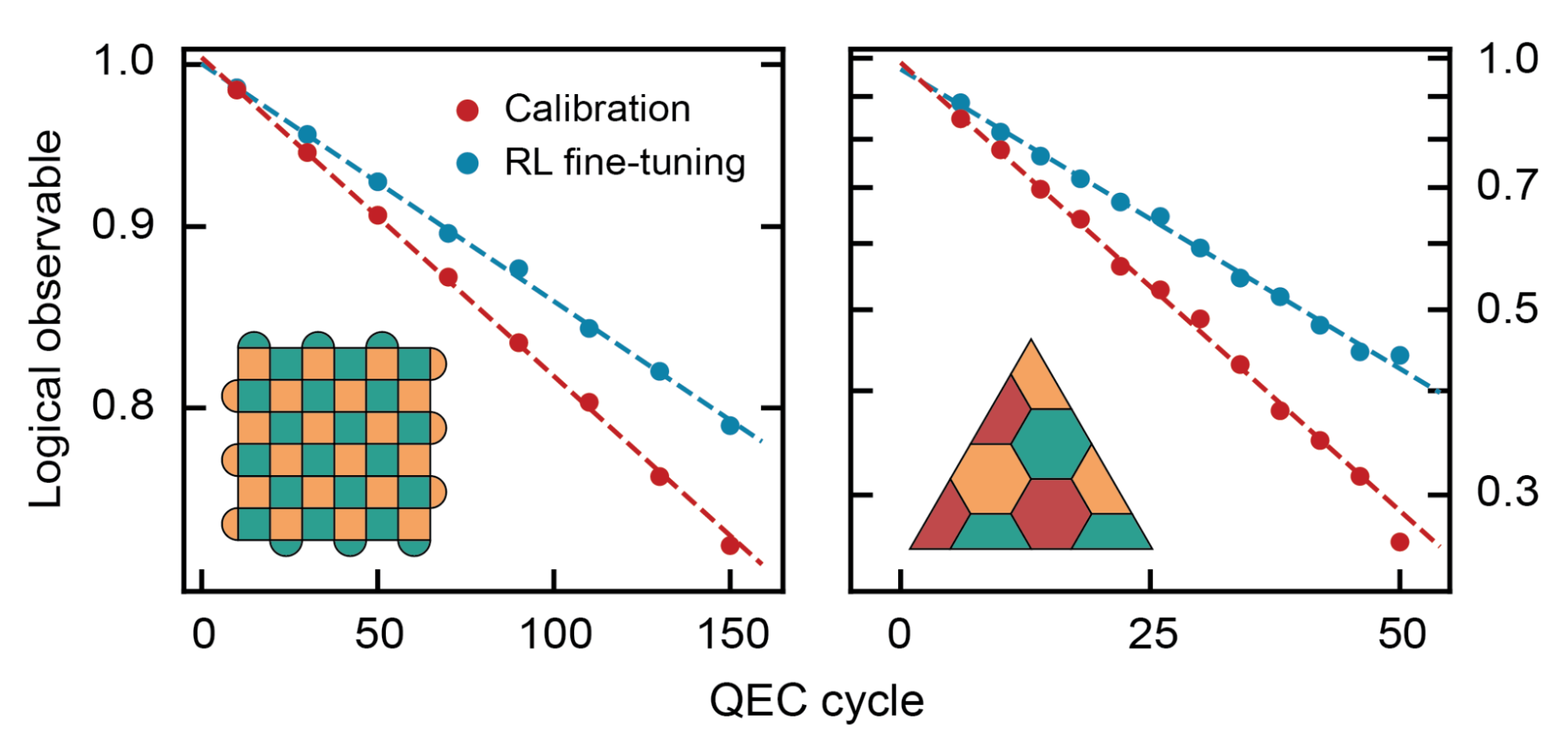
However, the move toward a system that "learns" from its errors suggests the application of machine intelligence to identify patterns in noise and error rates. Instead of relying solely on static correction algorithms, a learning-based system can potentially adapt to the specific noise profile of its environment. This implies a more dynamic and efficient way of maintaining quantum states, which is essential for performing long, complex calculations that are currently impossible due to error accumulation.
The Role of Machine Intelligence in Quantum Stability
Categorizing this research under "Machine Intelligence" highlights the intersection of two of the most advanced fields in modern science. The integration of machine learning techniques within the quantum stack allows for a more nuanced understanding of how errors occur. By analyzing the data generated during quantum operations, machine intelligence can help the system predict and preemptively mitigate errors before they propagate through a calculation.
This synergy between machine intelligence and quantum hardware is a significant departure from using quantum computers merely to run AI algorithms. Instead, it positions AI as a foundational component of the quantum hardware itself. This "intelligent" hardware layer could significantly reduce the overhead required for error correction, potentially lowering the barrier to achieving "quantum advantage"—the point where a quantum computer can solve problems that are intractable for classical systems.
Industry Impact
The implications of a quantum computer that learns from its errors are profound for the entire technology industry. First, it addresses the scalability bottleneck. If quantum systems can become more self-reliant in managing errors, the physical resource requirements for building a fault-tolerant quantum computer could decrease significantly. This would accelerate the commercialization of quantum technologies in fields such as cryptography, material science, and complex system modeling.
Furthermore, this research reinforces Google's position at the forefront of the quantum race. By successfully merging machine intelligence with quantum error correction, they are setting a new standard for how quantum hardware is developed. For the broader AI industry, this demonstrates a critical use case for machine learning in solving fundamental physics and engineering challenges, potentially leading to a new era of "AI-designed" or "AI-managed" hardware across various sectors.
Frequently Asked Questions
Question: What does it mean for a quantum computer to "learn" from its errors?
In this context, it refers to the use of machine intelligence to analyze error patterns and noise within the quantum system. Instead of just fixing errors as they happen using pre-set rules, the system uses data to improve its ability to identify, predict, and mitigate those errors over time, making the hardware more stable.
Question: Why is machine intelligence necessary for quantum error correction?
Quantum errors are incredibly complex and can vary based on the environment and the specific hardware. Machine intelligence is well-suited for identifying subtle patterns in large datasets, making it an ideal tool for managing the unpredictable noise that affects qubits, which traditional static algorithms might struggle to handle efficiently.
Question: How does this research affect the future of quantum computing?
By making quantum computers more resilient to errors through self-learning, this research paves the way for more reliable and scalable systems. It could shorten the time required to develop a practical quantum computer capable of solving real-world problems in science and industry.