Odyssey Releases Agora-1: The First Multi-Agent World Model for Real-Time Shared Simulations and Gaming
Odyssey has announced the release of Agora-1, a pioneering multi-agent world model designed to facilitate real-time, shared simulations for multiple participants. Unlike previous world models limited to single-agent interactions, Agora-1 supports up to four players—human or AI—within a unified environment. Using the classic game GoldenEye as a testing ground, the model generates high-fidelity simulations, maintains a shared world state, and streams pixels to all participants simultaneously. This development positions Agora-1 as a 'learned game engine,' with potential applications spanning robotics, defense, and education. By overcoming the limitations of single-participant models, Agora-1 represents a significant step forward in how AI can simulate complex, interactive environments for collaborative or competitive experiences.
Key Takeaways
- Multi-Agent Capability: Agora-1 is the first in a series of world models that allows up to four participants (human or AI) to interact within the same simulation simultaneously.
- Real-Time Generation: The model functions as a 'learned game engine,' generating pixels and maintaining a shared world state in real-time based on player actions.
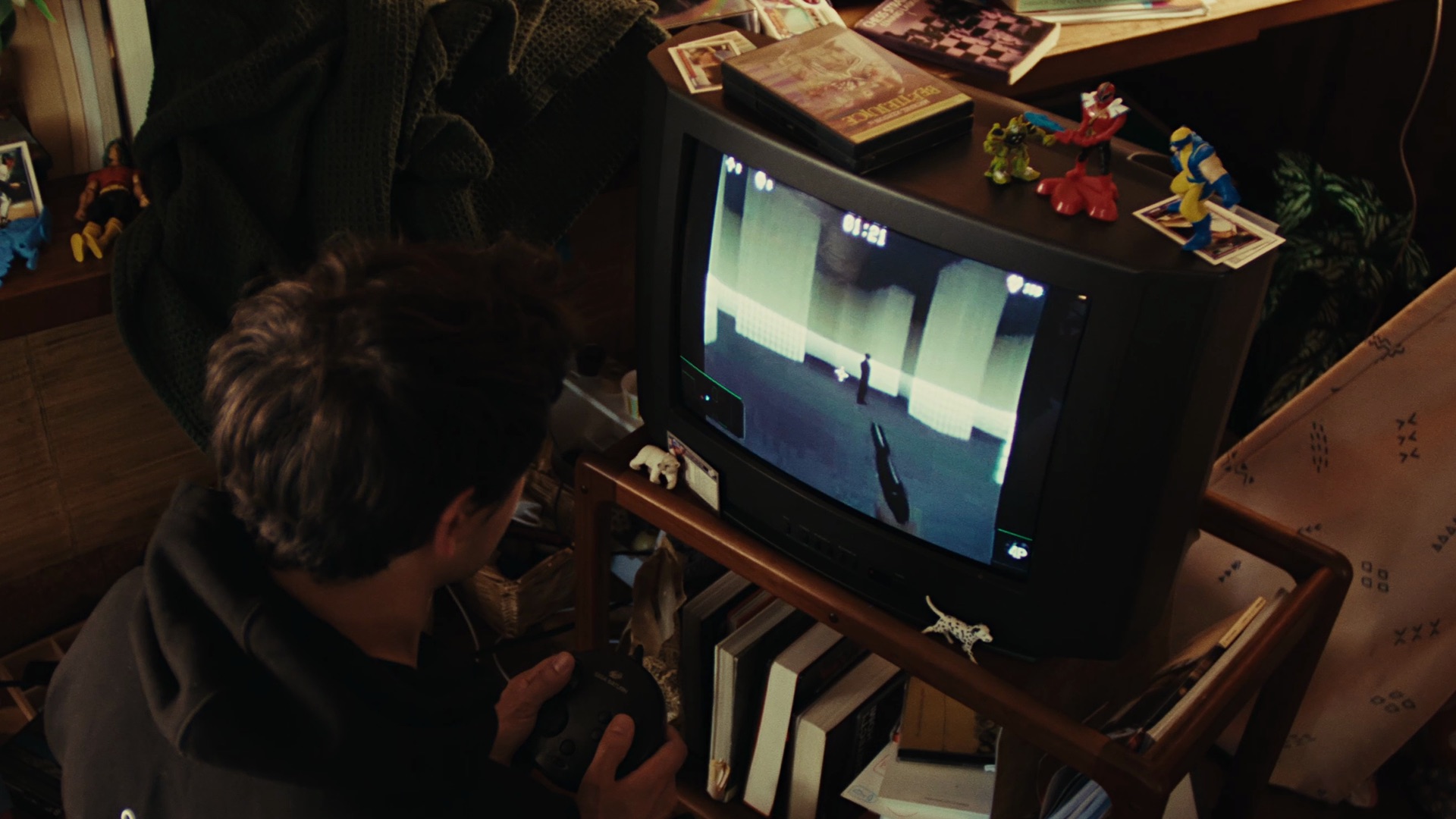
- GoldenEye Benchmark: Odyssey utilized the classic game GoldenEye to demonstrate the model's ability to handle shared deathmatch simulations.
- Broad Industry Application: Beyond gaming, the technology is designed for use in robotics, defense, education, and the development of foundation models.
- Evolution of World Models: Agora-1 moves beyond the 'split-screen' or single-participant limitations of previous models like Multiverse and Solaris.
In-Depth Analysis
Breaking the Single-Agent Barrier in World Models
Historically, world models have been powerful tools for generating high-fidelity simulations of arbitrary environments. However, a significant technical bottleneck has been their limitation to a single active participant. Traditional models were designed to predict the next state of an environment based on the actions of one agent, making them unsuitable for collaborative or competitive multi-user scenarios. Agora-1 addresses this limitation by introducing a multi-agent framework. By allowing multiple participants to share the same world simulation, Odyssey is expanding the utility of world models from isolated environments to interactive, social, and complex ecosystems. This shift is critical for fields that require multi-entity coordination, such as team-based robotics or large-scale defense simulations.
The Concept of a Learned Game Engine
One of the most striking aspects of Agora-1 is its function as a 'learned game engine.' In traditional gaming, a software engine uses coded rules, physics, and rendering pipelines to create a world. Agora-1, however, generates the experience through a neural model. It simulates player interactions directly from their actions, maintains a consistent world state across all participants, and streams the resulting pixels to every player in real-time. This approach suggests a future where environments are not hard-coded but are instead generated and maintained by AI. The use of GoldenEye—a game with a rich history in the gaming community—serves as a proof of concept for this technology. By successfully running a shared deathmatch simulation, Agora-1 demonstrates that AI can handle the high-stakes, low-latency requirements of real-time multi-player interaction.
Comparative Approaches to Multi-Agent Interaction
The development of Agora-1 follows several earlier attempts to solve the multi-agent problem in AI simulations. The original news highlights models such as Multiverse and Solaris. Multiverse attempted to handle multiple agents by concatenating their states into a single 'split-screen' representation, which essentially treated multiple players as a single combined world state. While innovative, this approach differs from the unified, shared world state offered by Agora-1. By moving away from concatenated representations and toward a truly shared simulation where every participant interacts with the same generated world simultaneously, Agora-1 provides a more seamless and integrated experience. This evolution is necessary for creating simulations that feel natural to human participants and provide high-fidelity training data for AI agents.
Industry Impact
The introduction of Agora-1 has far-reaching implications across several sectors. In the gaming industry, it paves the way for entirely AI-generated multiplayer experiences, potentially reducing the need for traditional rendering engines in certain contexts. In robotics and defense, the ability to simulate multi-agent interactions in real-time allows for more sophisticated training of autonomous systems that must operate in environments populated by other agents. Furthermore, in education, Agora-1 could enable shared, immersive simulations where multiple students interact within a generated historical or scientific environment. As a foundation for future research, Agora-1 sets a new standard for how world models can be utilized to create complex, shared human-AI experiences.
Frequently Asked Questions
Question: What makes Agora-1 different from previous world models?
Agora-1 is specifically designed for multi-agent interaction, allowing up to four participants to share the same real-time simulation. Previous models were largely limited to a single participant or used less integrated methods like split-screen concatenation to simulate multiple agents.
Question: How does Agora-1 function as a 'learned game engine'?
Unlike traditional game engines that rely on manual coding and rendering, Agora-1 uses a world model to generate pixels and maintain the world state in real-time. It interprets player actions and simulates the resulting environment dynamically, streaming the output to all participants simultaneously.
Question: What are the primary use cases for Agora-1?
While demonstrated through a GoldenEye deathmatch simulation, Agora-1 is intended for a wide range of applications including robotics, defense, education, gaming, and the advancement of AI foundation models.