ESMFold2 and the Bitter Lesson: Alex Rives on Datasets, World Models, and the Future of Programmable Biology
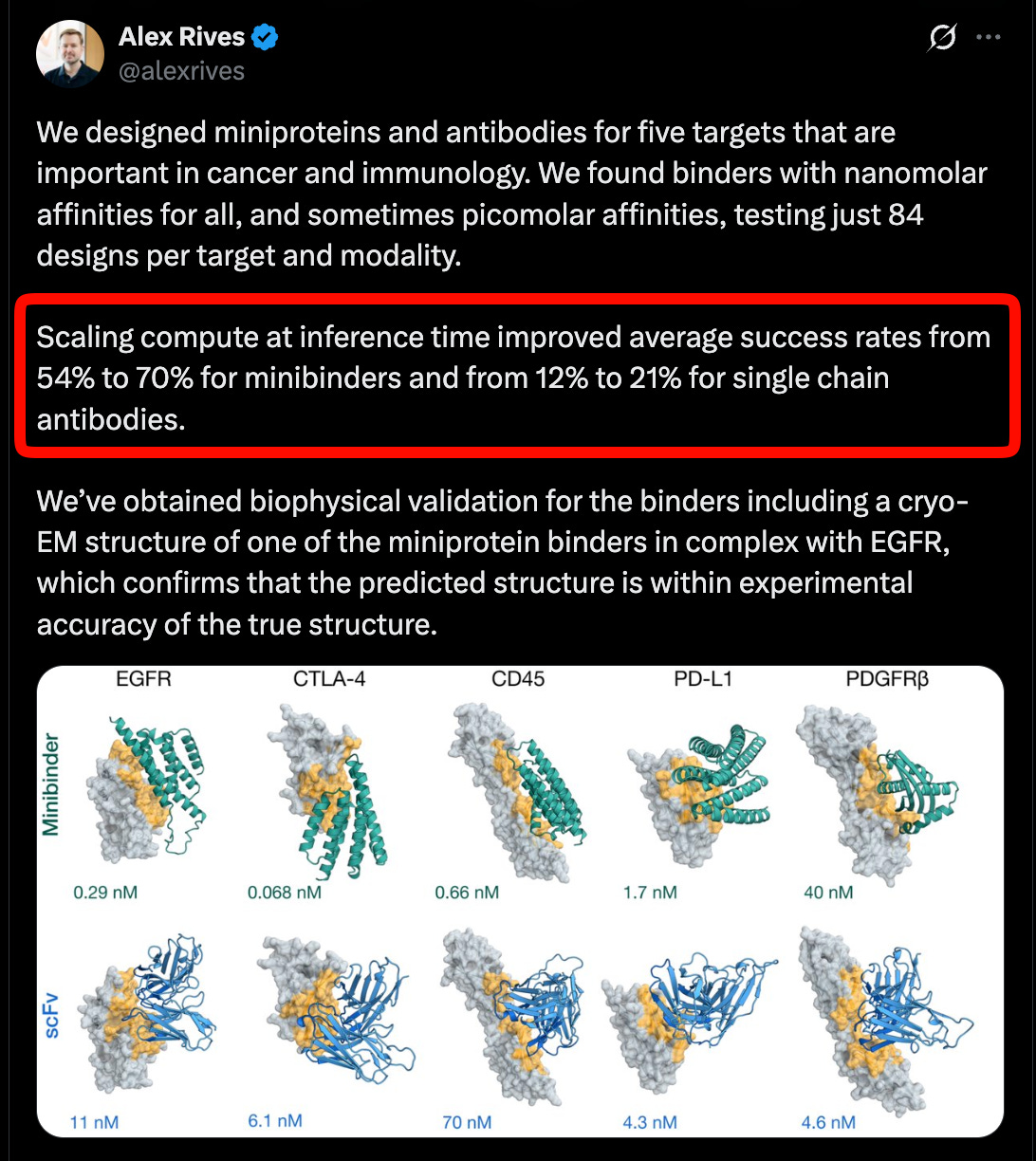
In a recent discussion hosted by Latent Space, Alex Rives from BioHub introduced ESMFold2, signaling a transformative shift in computational biology. The core of the discussion revolves around the application of "The Bitter Lesson" to protein research, emphasizing the transition from human-designed inductive biases to large-scale, data-driven models. By exploring the tension between datasets and architectural constraints, Rives highlights how biological world models are paving the way for programmable biology. This approach suggests that the future of protein folding and biological engineering lies in the ability of AI to internalize complex biological rules directly from massive datasets, rather than relying on manual feature engineering. The emergence of ESMFold2 represents a significant milestone in the quest to treat biology as a programmable system, leveraging computational power to unlock new frontiers in research.
Key Takeaways
- The Bitter Lesson in Biology: ESMFold2 exemplifies the shift toward scaling and data-driven learning over manual biological rule-setting.
- Data vs. Inductive Bias: A central theme is the diminishing role of human-engineered inductive biases in favor of massive, high-quality datasets.
- Biological World Models: The development of models that can simulate and understand the underlying logic of biological systems.
- Programmable Biology: The ultimate objective is to transition from biological discovery to a systematic, programmable approach to engineering life.
In-Depth Analysis
The Shift from Inductive Bias to Massive Datasets
The introduction of ESMFold2 by Alex Rives at BioHub marks a pivotal moment in the evolution of protein modeling, specifically through the lens of "The Bitter Lesson." This concept suggests that in the long run, methods that leverage computation and large datasets eventually outperform those that rely on human-designed inductive biases. In the context of ESMFold2, this implies a move away from hard-coded biological rules and toward architectures that can learn the complexities of protein folding directly from raw data.
The tension between datasets and inductive bias is a fundamental challenge in AI-driven science. Historically, researchers relied on specific structural constraints and domain-specific knowledge to guide models. However, as ESMFold2 demonstrates, the increasing availability of biological data allows for a more generalized approach. By prioritizing the scale of the dataset, the model can identify patterns and structural nuances that might be overlooked by human intuition. This shift does not render biological knowledge obsolete but rather changes its role from a primary architectural constraint to a secondary validation tool, allowing the model's internal logic to be shaped by the data itself.
World Models and the Path to Programmable Biology
A significant portion of the discussion centers on the concept of "world models" applied to the biological domain. Unlike traditional models that might focus on a single task, a biological world model aims to capture the broader context and governing principles of biological systems. For ESMFold2, this means understanding the "world" of proteins—how they interact, fold, and function within a larger system. By building these comprehensive representations, researchers can move beyond simple prediction and toward a deeper understanding of biological causality.
This progression leads directly to the concept of programmable biology. If a model can accurately represent the biological world, it becomes possible to treat biological systems as programmable entities. Programmable biology represents a shift from the traditional "trial and error" method of discovery to a more engineering-centric approach. In this framework, researchers can design proteins and biological pathways with specific functions, much like writing code for a computer. ESMFold2 serves as a foundational tool in this transition, providing the predictive accuracy and structural insights necessary to make biological programming a reality. The integration of world models into this workflow ensures that the designed biological components function predictably within the complex environment of a living cell.
Industry Impact
The implications of ESMFold2 and the insights shared by Alex Rives are profound for both the AI and biotechnology industries. First, it validates the strategy of scaling as a primary driver of progress in specialized scientific fields. As BioHub and other organizations continue to produce and curate massive biological datasets, the gap between traditional experimental methods and computational predictions is expected to close rapidly. This will likely lead to an acceleration in drug discovery, materials science, and synthetic biology.
Furthermore, the focus on programmable biology suggests a future where the barriers to biological engineering are significantly lowered. By providing a more accessible and accurate way to model protein structures, ESMFold2 enables a wider range of researchers to engage in high-level biological design. This democratization of biological engineering could lead to a surge in innovation, as the focus shifts from understanding how proteins fold to designing what they can do. For the AI industry, this reinforces the importance of developing domain-specific world models that can handle the unique complexities of scientific data, moving beyond the general-purpose models that have dominated the landscape thus far.
Frequently Asked Questions
Question: What is the significance of "The Bitter Lesson" for ESMFold2?
In the context of ESMFold2, "The Bitter Lesson" refers to the observation that general-purpose AI methods that leverage massive computation and data tend to outperform those that rely on specialized human knowledge or inductive biases. For protein folding, this means that ESMFold2 prioritizes learning from vast datasets over being restricted by pre-defined biological rules, leading to more robust and scalable models.
Question: How does programmable biology differ from traditional biological research?
Traditional biological research often focuses on discovery through observation and experimentation to understand existing systems. Programmable biology, supported by models like ESMFold2, shifts the focus toward engineering. It treats biological components as programmable units that can be designed and optimized for specific functions, similar to how software is developed, allowing for more precise and predictable biological interventions.
Question: What role do world models play in ESMFold2?
World models in ESMFold2 are used to create a comprehensive internal representation of biological systems. Instead of just predicting a single protein structure, these models attempt to understand the underlying logic and environment of biological interactions. This holistic understanding is crucial for moving from simple structural prediction to the complex design tasks required for programmable biology.